Leadership1 publisher3 min readPublished
Binance withdrew its EU license bid before the Greek regulator ever ruled
The Wall Street Journal reports that ECB President Christine Lagarde urged Greece's prime minister to reject the application. Binance pulled out before any decision issued, so there is no refusal it can contest.
The Board Room · Leadership desk
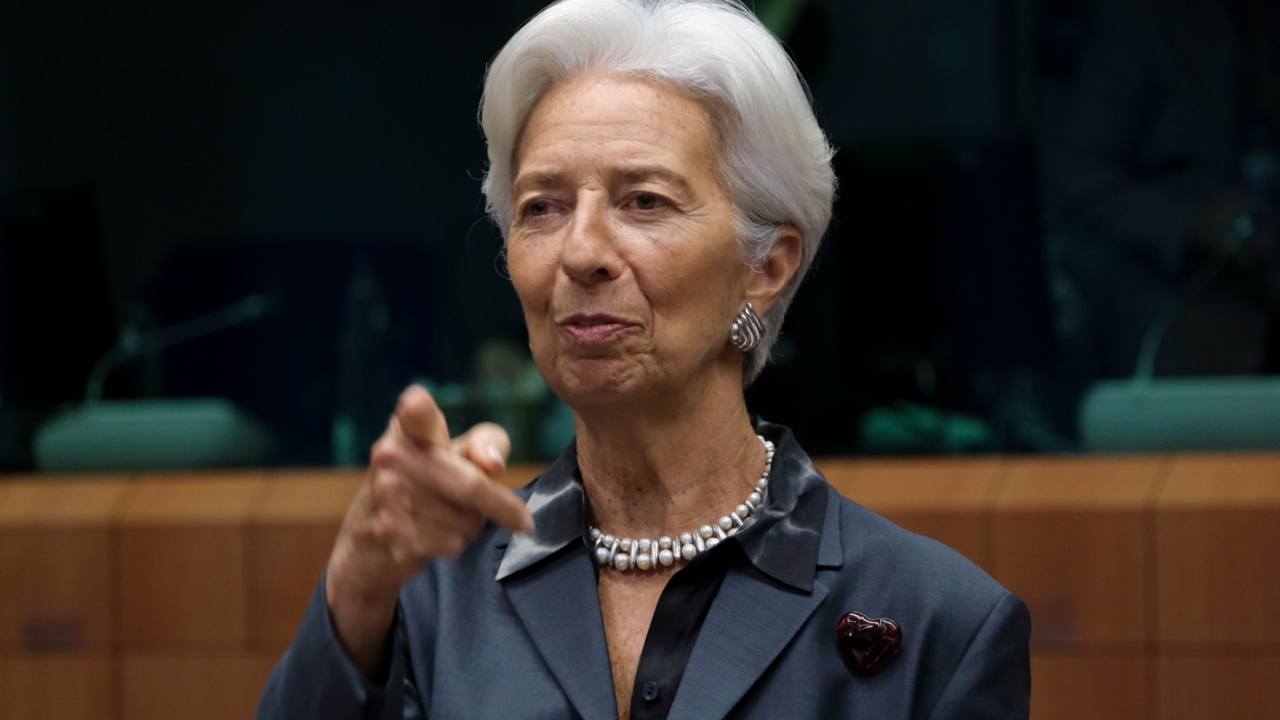
What happened
- The Wall Street Journal reported on Sept. 18 that ECB President Christine Lagarde urged Greek Prime Minister Mitsotakis to reject Binance's bid for a Europe-wide license under MiCA.
- By late May Greek officials had told Binance the file was complete, and the company had a press release, an Athens photo shoot with the prime minister and an office lease ready to go.
- When MiCA's transition period closed on July 1, Binance's French entity halted spot, margin and futures trading, leaving roughly 2 million users withdrawing assets instead of trading.
- Neither the ECB nor Greek authorities have publicly confirmed that Lagarde intervened in the application.
Compiled by The Board RoomSomething wrong?How this is made
Why it matters
- decision Any firm planning to passport in from one small member state now has to price an objection from an institution that has no vote in the licensing process.
- exposure Binance's remaining EU access rests on a reading of reverse solicitation that ESMA rejects, while the ACPR presses on control gaps found on site.
- contradiction The same file supports two readings, a political veto and an ordinary supervisory rejection, and only the Journal's anonymous sourcing separates them.
MiCA's passport is what made a Greek file a European one. Authorization from a single member state carries across all 27 [4], so the Hellenic Capital Market Commission was deciding for the whole bloc [4]. The European Central Bank has no formal say in that; licensing sits with national regulators [5]. Greek authorities told ESMA in early June that they intended to approve the bid [6].
The sequence is more instructive than the phone call. The reversal took about a week, and Binance withdrew its application on June 24, before the Greek regulator issued any decision [7]. The MiCA transition period closed on July 1 [9], seven days later [24]. Because no decision issued, there are no published reasons and no formal refusal for Binance to contest.
Binance pleaded guilty in the United States in 2023 over money-laundering and sanctions violations, and by the account the Journal reported, that plea was what the objection rested on [11]. France's ACPR has separately pressed the exchange on anti-money-laundering control gaps found during on-site checks [14]. But the plea did not stop Greek officials from telling Binance its application was complete [3], or from telling ESMA that they intended to approve it [6].
Both reported objections sit outside what an applicant can fix in its paperwork. The first was institutional: according to the Journal's account, Lagarde preferred to wait for the possibility that ESMA would take over EU-wide crypto licensing instead of letting one national regulator hand out a bloc-wide permit [10]. The second was monetary. A larger Binance footprint in Europe meant faster adoption of dollar-denominated stablecoins at the moment the ECB is trying to build an alternative [12], and that alternative is years out: a digital euro pilot is possible in 2027, with first issuance penciled in for 2029 [13], two years after a pilot that has not started [25].
What Binance runs in the EU in the meantime is a patchwork. It leans on MiCA's reverse solicitation carve-out, a narrow provision for customers who approach an unlicensed foreign firm entirely on their own initiative [15], and routes some EU trades through an Abu Dhabi entity that MiCA treats as a third country with no passporting rights [16]. ESMA's position is that the exemption covers genuinely unsolicited contact, not a customer base built over years of marketing and app downloads [17]. One report found new EU accounts were still being opened without a license [18].
The exchange says it remains "committed to doing business in the EU on a long-term, compliant basis" [19] and calls MiCA authorization an important step, with France's AMF now the realistic path [20]. Chief executive Richard Teng has warned that Europe risks its crypto lead if the MiCA rollout fragments [22], and has said the company expects a license in the coming months; no application has been confirmed as filed [21]. Binance still cleared more than 45% of global spot volume as of late August [23].
What to watch
- Whether Binance files with France's AMF, and whether the ACPR's anti-money-laundering findings appear in that decision.
- Whether ESMA is given EU-wide crypto licensing authority, which would match the first objection reported by the Journal.
- Whether the ECB or Greek authorities confirm or deny on the record that Lagarde intervened.