Product1 distinct publisher3 min readPublished
The truck-mounted cameras have produced about 1,800 courtesy notices since April, clustered in the city's lower-income southern quadrant, and one councilmember wants the funding cut before a December hearing.
The Product Desk · Product desk

Compiled by The Product DeskSomething wrong?How this is made
Dallas code enforcement is now working through a queue of ranked addresses that arrived without an inspector ever standing in front of a house, and in December a council hearing will ask the city to defend it [5].
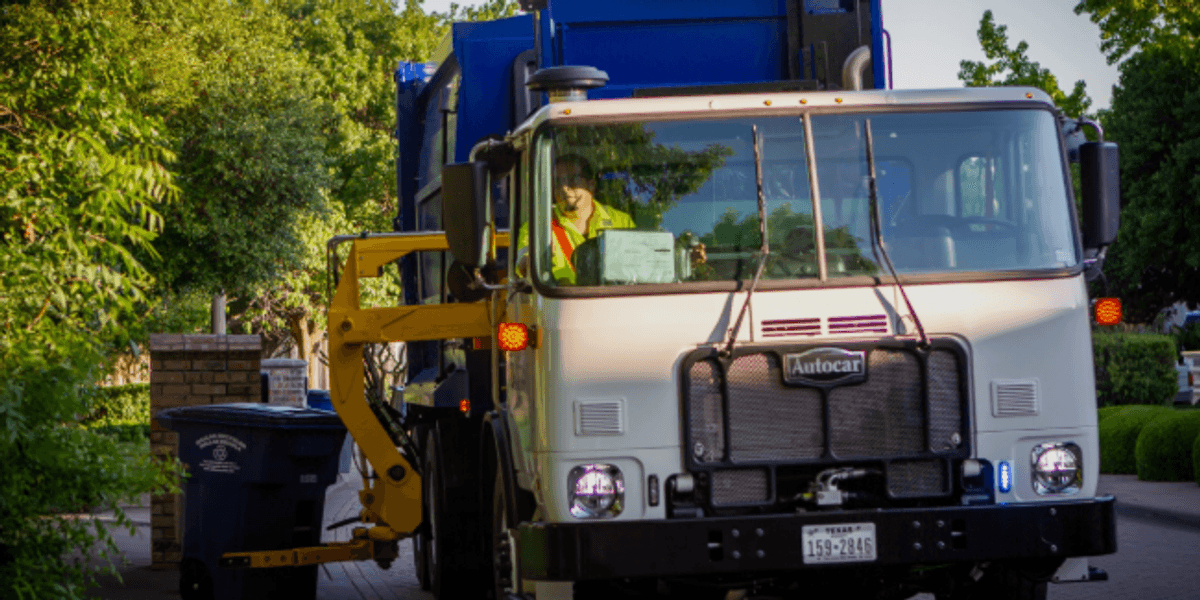
The mechanism deserves precision. A camera mounted on the driver's side of a city vehicle, positioned for the best view of the neighbourhood [6], photographs whatever the route passes, and a model trained on graffiti, collapsed roofs, broken windows and other signs of dilapidation converts the frame into a score [7]. Detection is bounded by the route rather than by a complaint or an inspection plan. About 8.6 percent of the properties photographed have drawn a notice so far [2], and the concentration of flagged violations in the southern quadrant [4] has two available readings: property conditions differ across the city, or truck coverage does. The December hearing can establish which, and the answer decides whether a blight score is evidence or a record of where garbage trucks spend their mornings.
Now separate the thing being pitched from the thing being done. City Detect sells "detailed, up-to-date insights on housing [and] roadside conditions" [8] to governments short of staff and budget [9], on a stated mission to revolutionise how local governments understand their built environment [16]. What Dallas is operating is a letter generator: about 1,800 warnings, each one an obligation with a fee behind it [2]. A wrong insight costs the city nothing, while a wrong notice costs a homeowner the time and paperwork to answer it. One sits on a dashboard; the other lands as a docket entry.
City Detect's FAQ answers the question it prefers to be asked, saying images are captured in public spaces with no expectation of privacy and that legally there are no privacy concerns, comparable to Google Street View [12], with faces and licence plates blurred by default and nothing routed into law enforcement databases [13]. Those are answers to a legal challenge. The 166 Flock Safety contract cancellations Secure Justice counted in a single month [15] were procurement decisions, and the investigation Senator Josh Hawley opened into that company last week [14] is a political proceeding. In this category, the contract risk sits with councils rather than with courts.
Before signing one of these contracts, a city should press on a few things. Does the model's output leave the building as information or as an obligation, and if a score can produce a letter with a fee attached, does the appeal path run as fast as the detection. Who audits the sampling frame, given that a sensor riding a fixed route makes the route the sample. And what the vendor is actually paid for: City Detect says it earns nothing per citation [13], which removes the crudest incentive and leaves renewal, and renewal arguments get made with volume.
At the December hearing, "21,000 properties reviewed" will be presented as productivity, the same way engagement numbers get presented as value. Dallas is paying roughly $833,000 a year for the scoring [1], and the measure of that spend is how many of the 1,800 notices closed without a fee and how many of those properties were still in good order months later. Neither figure has been reported. Until one is, the city knows how many letters it sent and not much else about what the letters did.
Ranked by verification strength, evidence, and original report placement.
Since April, more than 21,000 properties across Dallas, Texas have been photographed by AI-powered cameras fixed to city garbage trucks and assigned a "blight score", according to a Wednesday report from the city's local NBC affiliate.
Around 1,800 "courtesy notices" have been issued by the Dallas municipal government to owners of lower-scoring properties, warning them to clean up or start paying fees.
The program is reportedly funded through a three-year, $2.5 million city contract with City Detect.
The zip codes with the highest number of civic code violations flagged by the cameras were concentrated in Dallas's lower-income southern quadrant.
Dallas city councilmember Chad West proposed an amendment to cut funding for the City Detect partnership, which he said could end up as "a tax on the poor", but agreed to table the proposal until after a city council hearing on the AI cameras scheduled for December.
City Detect's cameras are typically installed on the driver's side of a city vehicle to afford the best view of the neighborhood, and look a little like a helmet-mounted GoPro.
Distinct publishers with included, body-backed reporting in this cluster.
gizmodo.com
1 article · September 3, 2026
Follow any of these and your For You feed starts watching them — no settings page required.
product
Florida revokes every highway plate-reader permit with a memo signed by an assistant secretary1 distinct publisher
invest
Flock's $8.3B rests on data rights its biggest customers are now redlining1 distinct publisher
build
Several dozen Alpharetta cameras write permissions for 2,000 outside organizations1 distinct publisher
product
Flock's cameras now watch a drawn zone for anyone matching a typed description1 distinct publisher
Evidence-backed comparisons of source perspectives and observed adoption signals. Read the methodology
Which Builder, Operator, and Investor concerns the observed source mix emphasized—not a truth score.
Evidence, demonstrated adoption, hype gap, incentives, and confidence are assessed independently, each on its own current evidence. How these are measured.
One relay, no paper
Every hard number in this story — 21,000 properties, 1,800 notices, the three-year $2.5 million contract, the southern-quadrant clustering — arrives through Gizmodo summarising a local NBC broadcast that is described but never linked, and Gizmodo hedges the contract figure with "reportedly." The other half of the sourcing is City Detect's marketing site, quoted straight. No procurement record, no scoring documentation, no city official, no company response to the criticism.
Live on the route, seventeen cities deep
Whatever the sourcing gaps, this is not a pilot slide: trucks have been grading yards since April, roughly 1,800 letters are in mailboxes, and the vendor claims at least sixteen other city customers. The far end of the funnel is what nobody has counted — how many notices became fees, and how much residents have actually paid.
Framing outruns the file
"Big Brother on Wheels" and "coming to a city near you" promise more than the record delivers. The documented output so far is warning letters about weeds, graffiti and broken windows; the visceral abuses on the page — officers using plate readers to follow ex-partners — belong to Flock Safety, a different company with a different sensor, and are borrowed as atmosphere. The genuinely sharp findings are quieter: the flags cluster in the poorest quadrant, and a councilmember thinks that makes it a tax on the poor. Neither has been tested against an actual fee ledger.
Reassurance written by the seller
Ask who benefits from each sentence. The privacy answer — public spaces, no expectation of privacy, just like Google Street View — is lifted from the vendor's own FAQ, as is the promise not to bill per citation. City Detect's pitch is explicitly aimed at cities that cannot staff inspections, and Dallas sits at the end of a process that generates fees. Chad West, meanwhile, is heading into a December hearing with a phrase built for it. None of these parties is lying; all of them are positioned.
Direction solid, magnitudes borrowed
We can say with reasonable comfort that Dallas is grading front yards from refuse trucks, that the flags fall hardest in the south, and that the funding is contested before a December hearing. We cannot say what it has cost any resident, how accurate the scoring is, or whether the $2.5 million figure survives contact with the procurement file — because one outlet, working from a broadcast, is the whole record.