Product1 distinct publisher3 min readPublished
Flock's August retention and audit promises sit on top of a suite that can now hunt people by written description, controls WIRED found log an abusive search as it happens rather than stopping it. The risk of a wrong result lands on the officer who typed the words.
The Product Desk · Product desk

build
WIRED reconstructed Flock's person-search guardrails from files served before login1 distinct publisher
build
Flock cut retention to seven days and published the number that made 30 indefensible1 distinct publisher
security
Flock's CEO told cops the abortion-search story was 'entirely false.' The affidavit says otherwise1 distinct publisher
build
Flock's OS Investigate starts the search before there is a suspect1 distinct publisher
Compiled by The Product DeskSomething wrong?How this is made
What comes back when an officer types a description is a ranking rather than an identification. Every image a camera captures is stored as a set of numbers describing what it shows, the words in the search box are converted the same way, and a model puts the nearest footage at the top [19]. The filters, thresholds and extra instructions that shape that order stay on Flock's servers [20], and WIRED reports that much of what governs any given search runs there rather than in the client code it was able to read [9].
The August package shortens default retention, requires a case code on every search, and adds automated auditing [8]. All three act on a search that has already run [21], which is the same thing WIRED concluded from the code: the guardrails may discourage some abusive uses, but they log those searches as they happen rather than stopping them [10]. Flock says the package becomes mandatory only by the end of the year [8], so a department going live this quarter is running the expanded capability with the controls still optional [22].
The screen sitting in front of a search is itself a judgment made somewhere else. Flock's system scores the officer's wording against sensitive categories including race and religion, and political, social and cultural expression is the only one that will not stop a search [14]. Tom Bowman, policy counsel with the Center for Democracy and Technology's security surveillance project, told WIRED that this is one of the most protected areas under the First Amendment and "seems like that actually has the least concern from a policing perspective" [15]. Experts told WIRED the model decides, out of the department's sight, which descriptions an officer may search for, and that no screen operating at that scale is accurate [11]. WIRED sent 16 questions and got a statement saying queries are evaluated against content policies, with nothing on how the model was built or what separates one verdict from another [16][17].
The buyer for the watchlist is a detective with a witness description and no plate [2]. The person answering for it is a chief in front of a council that approved plate cameras and has since watched other councils vote them back out [6]. A grid worth drawing before renewal: one axis is whether a control refuses a search or only records it, the other is whether your department can inspect the control or only Flock can. Case codes and audit logs you actually receive sit in the quadrant that is worth paying for. The sensitive-content screen sits in the other one, recording and vendor-side, and its error rate is measurable only inside the company [12]. The Texas deputy who ran more than 83,000 cameras for a woman who had an abortion [5] is the case that decides which quadrant you care about, because a record of that search shows it happened, it does nothing to have kept it from happening.
Ranked by verification strength, evidence, and original report placement.
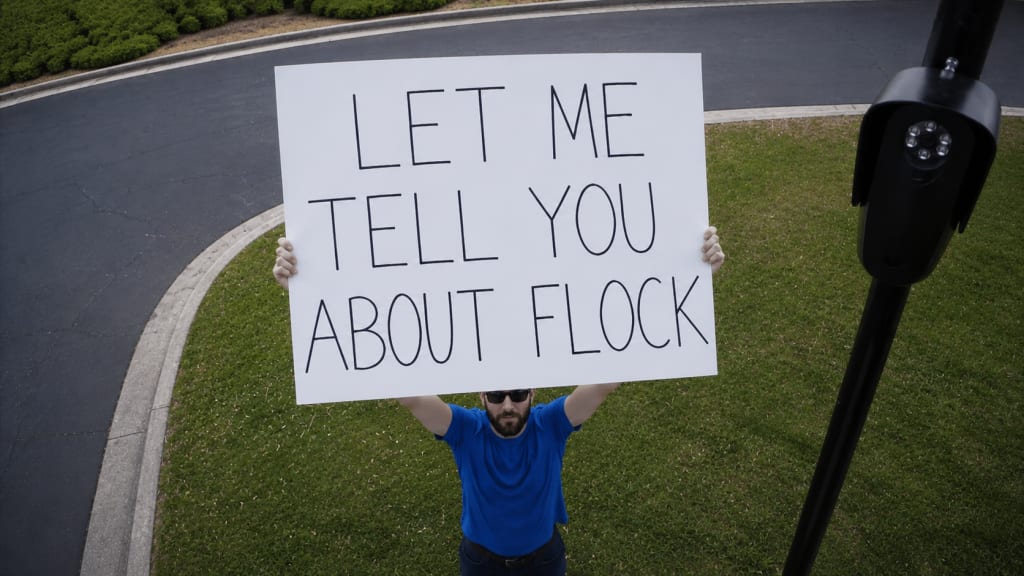
Flock Safety's latest search tools give police several ways to find people on camera, not just the license plates on their cars.
Among Flock's tools is an AI-powered watchlist: an officer can cordon off an area of a city and make the cameras inside it run a continuous, automated search for anyone fitting a written description.
WIRED collected and analyzed Flock's software and created a mockup of what officers see when interacting with the system.
The Flock software suite is now at the center of dozens of police-stalking cases.
Two members of Congress wrote to Flock CEO Garrett Langley after a Texas deputy searched more than 83,000 cameras for a woman who had an abortion.
Over the past year police departments across the country have canceled Flock contracts, and city councils that once approved Flock have quietly voted the cameras back out.
Distinct publishers with included, body-backed reporting in this cluster.
1 article · September 3, 2026
Follow any of these and your For You feed starts watching them — no settings page required.
Evidence-backed comparisons of source perspectives and observed adoption signals. Read the methodology
Which Builder, Operator, and Investor concerns the observed source mix emphasized—not a truth score.
Evidence, demonstrated adoption, hype gap, incentives, and confidence are assessed independently, each on its own current evidence. How these are measured.
Real code, front half only
The technical findings rest on files Flock's own web app hands to a browser before anyone logs in — primary material, not a briefing — and WIRED is explicit about where that material stops. The model that judges a description, its thresholds, the instructions behind it, and every department setting sit on servers the reporting could not see, and the company's reply to 16 detailed questions describes none of them. Firm about what shipped to the client; structurally blind past the login screen.
Widely fielded, locally retreating
Nothing about this is prospective. Flock says the plain-language search has been on sale for years, 404 Media caught officers using it on clothing and tattoos in July, and one Texas deputy reached across more than 83,000 cameras — a number you cannot produce from a thin footprint. The same passage carries the countervailing motion: departments cancelling and councils voting the cameras back out, which is adoption running in both directions at once.
Safeguard language outruns the safeguards
The overstatement is not WIRED's; the reporting is disciplined about the difference between what it read and what it inferred. It belongs to the August announcement. Shorter retention, mandatory case codes, and automated auditing are three measures that, taken together, improve the record of a search that has already run. Sold as safeguards on how the technology can be used, they promise prevention; described as accounting for use, they are close to accurate.
A vendor grading its own homework
Flock shipped its guardrail package in the same season as congressional letters to its CEO, a state finding against it, and a run of lost municipal contracts — and the rubric it grades against runs on its own servers, where no customer or reporter can read it. The critique reaches the page through the Center for Democracy and Technology, an organization whose brief is precisely this fight. WIRED, for its part, owns both the collection method and the mockup that gives the story its shape.
Documented interface, unverified judgment layer
Two forces pull against each other. The interface behaviour is read off the code, which is as good as this genre usually manages, and Flock's own warning language is quoted rather than paraphrased. But no second newsroom has repeated the collection, no one has measured the error rate of the sensitive-content screen, and the finding that carries the most weight — political and cultural expression as the sole category that merely warns — is an inference from client-side logic that the company neither confirms nor explains.