Product1 publisher2 min readPublished
iPhone 18 Pro review: $100 pricier, with a variable-aperture camera that rewards manual shooters
TechRadar puts the generation's biggest gain in the camera, where four selectable apertures and Pro controls pay off for anyone who takes charge of a shot, while the new chip felt level with last year's.
The Product Desk · Product desk
What happened
- TechRadar's review of the iPhone 18 Pro and 18 Pro Max lists the increase of $100, £100 or AU$100 over last year's Pro models among the phones' cons.
- The main 48-megapixel Fusion camera now has a variable aperture that shoots at f/1.48, f/1.8, f/2.8 or f/4.0, alongside new Pro controls in the Camera app.
- The A20 Pro is Apple's first 2-nanometer chip in an iPhone, and the reviewer wrote that it feels largely neck and neck with the A19 Pro in daily use.
- The battery gains are Apple's own figures as relayed by the review: the 18 Pro outlasts the 17 Pro Max, and the 18 Pro Max sets an iPhone battery-life record.
- The review concludes that neither phone is a night-and-day upgrade and tells owners of a 17 Pro or 17 Pro Max they probably do not need to upgrade.
Compiled by The Product DeskSomething wrong?How this is made
Why it matters
- cost The increase applies to every unit in a refresh, including the handsets that will only ever be pointed and pressed.
- capability Aperture becomes a decision taken at the shutter, so a working shooter can set depth of field and get starburst effects in camera.
- constraint Because sensor resolution has not moved on any of the three lenses, there is little in this generation that reaches a user who never opens the Pro controls.
- decision With feature parity across the two sizes and display diagonal the main difference, the procurement question is which staff need it.
From f/1.48 to f/4.0 is 2 x log2(4.0 / 1.48), or about 2.9 stops of aperture range on the main 48-megapixel Fusion camera [2][14]. The four settings are unevenly spaced: roughly 0.56 of a stop between f/1.48 and f/1.8, then 1.27 to f/2.8, then 1.03 to f/4.0 [15]. The narrow end is what produces the starburst from a point light that TechRadar describes [17].
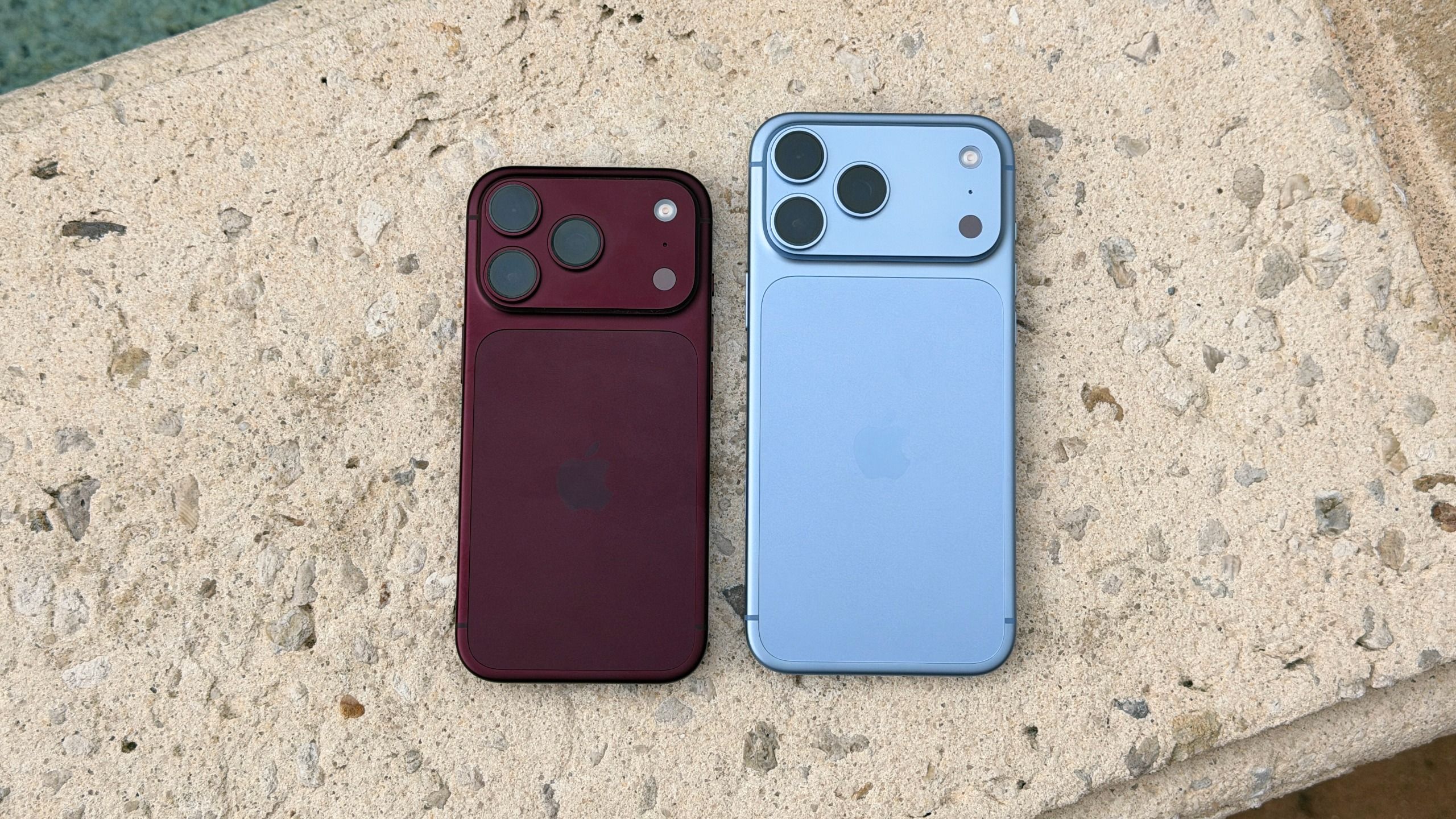
TechRadar's reviewer spent a week with a Burgundy iPhone 18 Pro and a Glacier 18 Pro Max and shot hundreds of photos and dozens of videos [11]. The review's finding on image quality is conditional. Some images match what the previous-generation Pros produced, and the better-looking ones arrived "especially when you take control" [5].
The rest of the parts list is thinner. Sensor resolution is unchanged at 48 megapixels across the main, ultra-wide and telephoto lenses [3]. TechRadar's verdict puts the biggest leap in the cameras, crediting the variable aperture and the Pro controls it calls "finally useful" [4]. The cons list runs to two entries, and one is that the design has not changed much [10]. The review also credits improved thermal management, a smaller Dynamic Island and the arrival of Siri AI [12].
Ask whether this person's work is judged on the image that comes out, and whether they have ever changed a camera setting on purpose. For the person who answers yes twice, the money buys a tool they will use this week, because aperture becomes a choice made at the shutter. The person who is paid for images but shoots on auto gets the parity the reviewer reported against last year's Pros [5]. The keen amateur whose job has nothing to do with photography is making a personal purchase. For everyone else on the order, the change they will notice is a smaller Dynamic Island and a new colour [12][11].
At $100 a handset, a ten-person creative team pays $1,000 more this cycle [16]. Whether that comes back depends on how many of the ten will ever move the aperture off auto.
What to watch
- Independent battery testing measured against Apple's record claim for the 18 Pro Max.
- Whether Apple brings the Camera app's Pro controls to older iPhones or the non-Pro line in a software update.
- Whether carrier and trade-in offers absorb the $100 increase at the point of sale.