Product1 publisher3 min readPublished
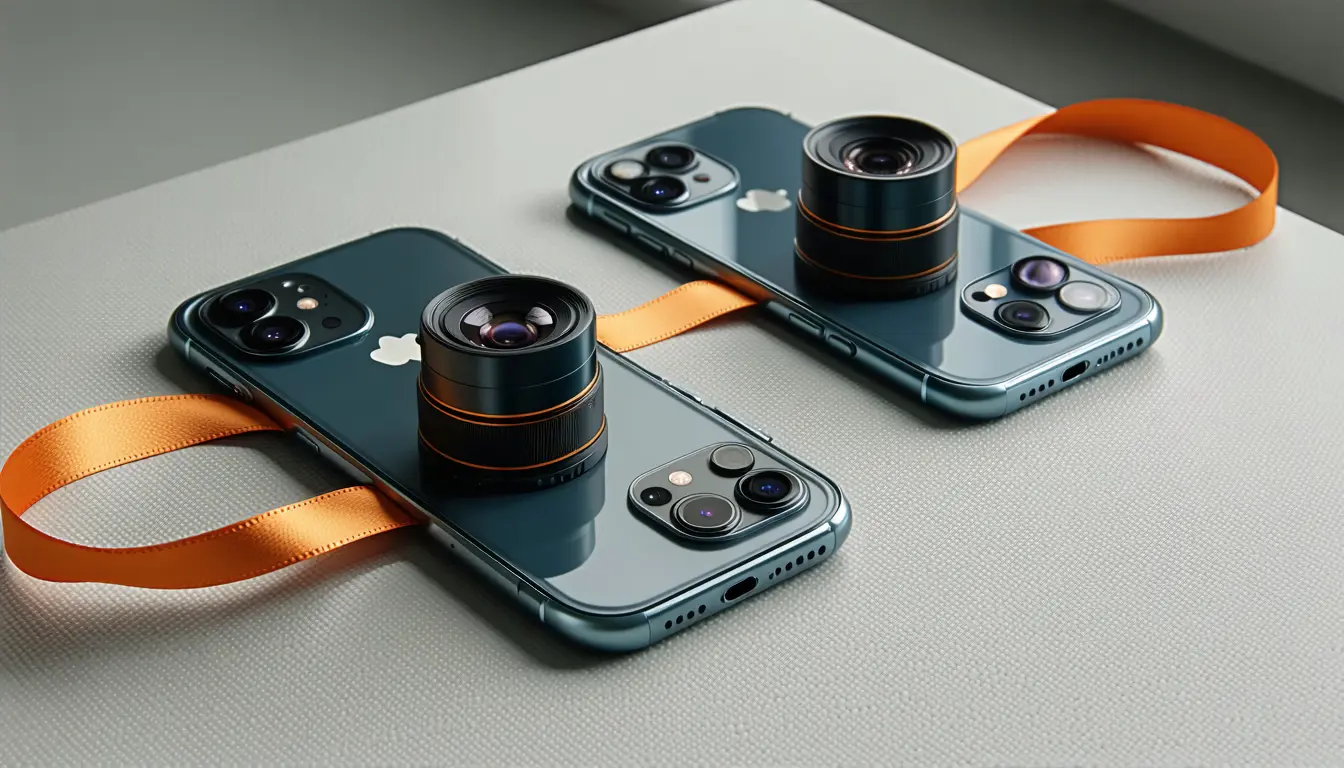
Apple hands both iPhone 18 Pro models a variable aperture with manual control
Apple's stock camera app picks up controls that used to mean buying a third-party app. On the f-numbers 9to5Mac prints, the wider aperture buys about half a stop of light, and the sensor behind it is unchanged.
The Product Desk · Product desk
What happened
- Apple put the variable aperture in both the iPhone 18 Pro and the Pro Max, settling pre-launch uncertainty over whether the smaller Pro would be left out of the feature.
- The widest aperture moves from f/1.78 on the iPhone 17 Pro to f/1.48, which 9to5Mac expects to help low-light and night captures more than depth of field.
- Apple confirmed the phone will vary the aperture automatically in some situations while also letting the user take full manual control of it.
- Cinematic mode effects can be applied to standard video after shooting rather than chosen at capture, and Cinematic video now records at up to 60 frames per second.
Compiled by The Product DeskSomething wrong?How this is made
Why it matters
- constraint Anyone buying the aperture ring hoping to close the gap to a mirrorless body is buying against the sensor, and the sensor is the part Apple left alone this year.
- exposure Paid camera apps whose case rested on shutter and white balance control now sit beside a free default on every 18 Pro, so their subscription has to justify something else.
- decision A team shooting on iPhones now chooses between teaching people to set exposure by hand and trusting the automatic aperture, which turns a purchasing question into a settings-and-training one.
- capability Deciding on fake shallow depth of field after the shoot means a wrong call while rolling no longer costs the clip, which matters most to people who only get one take.
A clip that starts warm indoors and goes blue the moment the shooter pans toward a window is the most reliable way phone footage announces itself as phone footage. 9to5Mac calls that drift visibly amateurish, and the fix, locking white balance for the length of a take, is now in the camera app that ships on the phone [12]. Manual shutter speed lands alongside it, which is how you hold 1/48 of a second at 24 frames per second for natural motion blur, and until now that meant opening something like Blackmagic Cam [11].
The light story is checkable arithmetic rather than a claim. Aperture area scales with the square of the f-number, so going from f/1.78 to f/1.48 gives (1.78/1.48)^2, about 1.45 times the light, which works out to log2(1.45), a little over half a stop [15]. 9to5Mac describes the same change as close to one stop brighter [4]. Half a stop is worth having after dark, and it is roughly half of what that phrasing implies.
The harder ceiling is the one 9to5Mac names itself: depth of field is governed by sensor size more than by aperture, and iPhone sensors stay tiny next to a mirrorless body this year [5]. On the same sensor with a slightly wider opening, the site's own read is that physics says not to expect much [6]. Its suspicion that Apple is pairing the wider aperture with computational work in Portrait mode rests on keynote sample photos, and it says that remains to be seen [7].
Most people leave manual camera controls shut, no matter how many launch reels imply that everybody picks their own aperture. The users who will set one by hand are the ones who already know why 24 fps wants 1/48 [11], and everyone else gets whatever the automatic aperture decides [3].
The changes split into two piles. One improves the output with nobody touching a setting: the automatic aperture [3], the extra half stop after dark [15], and Cinematic applied later to ordinary footage [13]. The other only pays off with a trained hand: manual aperture, manual shutter [8], and a locked white balance [12]. The first pile is a hardware upgrade you can put on a spec sheet. The second is a training cost, and it is also where the savings sit if your team pays for a third-party camera app today. Whether that subscription still earns its keep turns on the one figure 9to5Mac says is still unknown: the longest exposure the stock app allows, and whether 30 seconds is among them [9]. Stacking apps get there by combining a series of frames into a single image, which is the route 9to5Mac says it takes regularly with Spectre [10].
What to watch
- The maximum exposure time the stock app allows, and whether 30-second frames are possible without a stacking app.
- Whether hands-on testing supports 9to5Mac's suspicion that Portrait results come from the wider aperture plus computational work rather than optics.
- How third-party pro camera apps reprice or repitch now that shutter and white balance control ship in the default app.