Build3 publishers3 min readPublished
A20 Pro's memory bandwidth gets a 50% boost, Apple says, to help handle larger AI models
Apple gave the iPhone 18 Pro a 32-core neural engine and FP8 support, but the figure that decides whether your model runs at usable speed is bandwidth, and it arrives as a percentage with no gigabytes per second attached.
The Engineer · Build desk
What happened
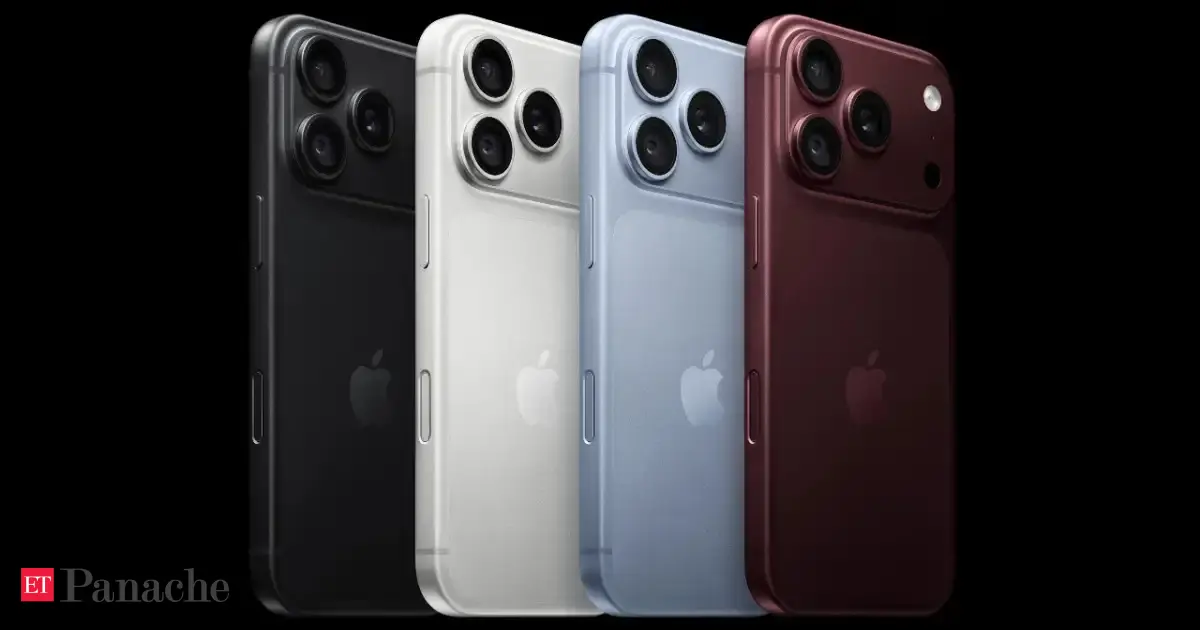
- Apple's A20 Pro carries 32 neural engine cores split across two engines, adds support for 8-bit floating-point operations, and raises memory bandwidth 50% over the previous generation.
- It is Apple's first 2nm chip in an iPhone, pairing a six-core CPU whose two performance cores are 20% faster with a seven-core GPU Apple claims is 40% faster and carries new neural accelerators.
- Apple says the phone runs its most advanced on-device models yet, with the onscreen-aware Siri arriving in English beta alongside iOS 27 this month and five more languages in October.
- The iPhone 18 Pro starts at $1,199 and the Pro Max at $1,299, each $100 above last year's model, with sales opening on September 18.
Compiled by The EngineerSomething wrong?How this is made
Why it matters
- constraint Nobody can size a model against this spec sheet: with percentages instead of gigabytes per second and no confirmed DRAM capacity, the fit question only gets answered on hardware.
- decision Which FP8 claim an app actually collects depends on whether its matmul is dispatched to the GPU's neural accelerators or to the neural engine, so the dispatch target becomes a shipping decision rather than an implementation detail.
- capability Minutes-long generation loops, not benchmark bursts, are the workload this packaging is tuned for, which makes sustained throughput the honest measure of what an app can attempt.
- cost Any feature that needs the full envelope runs only on the three devices carrying the A20 Pro, so the installed base for it is the priciest slice of the line and grows one release at a time.
Bandwidth decides whether an on-device model is usable, and Apple gave it as a ratio: 50% more than the previous generation, which Tom's Hardware reports Apple calls the widest memory interface in an iPhone [4]. No gigabytes-per-second number is attached to either end of that comparison in the launch reporting [30]. That matters because a decoder-only model generating one token at a time is memory bound. Every active weight is read out of DRAM per token, so throughput tracks bandwidth rather than multiply-accumulate capacity. A 50% bandwidth increase is close to a 50% lift in the tokens-per-second ceiling for that workload, and that is the load-bearing version of Apple's claim that the chip handles larger AI models [2].
Capacity is the other half, and it is absent [30]. A pre-announcement rumour quoted in a reader reply on the Tom's Hardware story put the configuration at a 96-bit 12GB LPDDR5X-9600 interface with 36MiB of SLC cache; Apple confirmed none of it [20]. Capacity determines whether an 8-bit quantised model loads at all. Bandwidth only determines how fast it runs once it has.
FP8 arrives twice, from two different blocks. The Economic Times reports the 32-core neural engine supports 8-bit floating point [1]. Tom's Hardware reports the seven-core GPU's new neural accelerators deliver twice the FP8 compute [7]. The doubling is attached to the GPU. Worth separating FP8 from int8 as well: FP8 buys dynamic range at the same byte count, which helps with activation outliers, but it does not make weights smaller than int8 already made them. The win is accuracy at eight bits, not a bigger model in the same DRAM. The 32 cores are also two engines rather than one [3], and whether a single graph can span both is not stated [31].
The packaging is where the actual engineering shows. Memory comes out of the SoC's thermal path so the die attaches directly to the vapour chamber [10], the chamber has three times the surface area of the iPhone 17 Pro's [11], and a nano-twin copper material pulls heat away from the display [12]. Apple claims up to 40% sustained performance over the 17 Pro and 2x over the 16 Pro [13]. Divide those: 2.0 / 1.4 puts the 17 Pro at about 1.43x the 16 Pro on the same measure [14], so roughly half the two-generation sustained gain predates this chip. The silicon story this year is partly a heatsink.
Sustained is also the figure that transfers to inference. A token loop runs for seconds or minutes, well past any burst window, which is why the 20% CPU improvement [6] describes work you would not put a matmul on.
The battery numbers are not inference numbers. The 36 and 45 hours are video playback [15]; Apple's own usage-model test gives 24 and 30 hours [16], a factor of 1.5 between the two on the Pro [17]. Video playback runs largely on fixed-function decode. Neither test tells you what a half-hour summarisation session costs.
The bandwidth figure reaches your app if the model is memory bound and fits in package DRAM. The sustained figure reaches it if the workload outlasts the burst window. The FP8 doubling reaches it only when the matmul lands on the GPU accelerators rather than the neural engine, and nothing in the launch material describes the API surface that decides where it lands.
What to watch
- Whether Apple's published iPhone 18 Pro tech specs give an absolute memory bandwidth figure or DRAM capacity, which would let developers size a model before shipping.
- A Core ML or Foundation Models release note stating which unit an 8-bit floating-point matmul dispatches to, and whether both neural engines are addressable as one device.
- Teardowns after the September 18 on-sale date, which would confirm or kill the 96-bit LPDDR5X-9600 configuration described in pre-announcement rumours.