Product1 publisher3 min readPublished
Wired's tester calls the rebuilt assistant a real step change and still drifted back to Instagram, Yelp and the chatbot already on the phone. The feature that improved most answers a need that only comes up now and then.
The Product Desk · Product desk

Compiled by The Product DeskSomething wrong?How this is made
Evidence-backed comparisons of source perspectives and observed adoption signals. Read the methodology
Which Builder, Operator, and Investor concerns the observed source mix emphasized—not a truth score.
Follow any of these and your For You feed starts watching them — no settings page required.
Evidence, demonstrated adoption, hype gap, incentives, and confidence are assessed independently, each on its own current evidence. How these are measured.
Named voices, single newsroom
Wired names everyone it quotes — Chatterjee at Forrester, Llamas at IDC, Greengart at Techsponential — and dates a month of hands-on use, which is why the specifics stand up. What it cannot offer is a second observer of the same beta or anything from Apple beyond the software itself, so the central finding has one witness.
Self-reports only
Two people describing their own habits, in opposite directions, is not adoption data. The assertion that many other beta testers are still using Siri arrives without a count, and no engagement figures for the iOS 27 beta appear anywhere in this reporting, so we leave the dimension unscored rather than dress up anecdote as measurement.
One month generalised
The verdict in the framing, Siri reduced to a search bar, rests on one month of one person's habits, and the counterexample sits a few paragraphs later in the same piece. Wired flags the outlier risk itself and never claims a trend, so the overreach is in how the experience is generalised rather than in what is asserted about the software.
Advisory firms supply the market read
Three of the four voices work for firms that sell research and advice into the phone market; Wired says as much of Forrester and identifies IDC and Techsponential by name, but nothing in the story states whether any of them advises Apple. Running the other way, the reviewer's unflattering conclusion about software they were given early is not the verdict access usually buys.
Specifics firm, trend loose
The particulars hold up under scrutiny: quoted analysts with names and titles, and a dated month of hands-on use. The general conclusion depends on one newsroom supplying both the finding and the caveat against it, so a second beta account or any figure from Apple would move this materially in either direction.
product
Messages becomes the capture surface: iOS 27 files conversation intent into Apple's own apps1 publisher
product
Samsung's Fold8 moves the foldable compromise, it does not remove it1 publisher
invest
Apple clears two bad bets off the books a week before Ternus takes over1 publisher
product
iOS 27 lands in September, and it absorbs features apps currently sell1 publisher
Digging out an ancient text message is a real job, and it arrives when it arrives. Wired's tester says the rebuilt Siri made that easier than ever, thanks to personal context drawn from indexing the contents of the phone [3]. The capability is bounded by how often the need shows up. Better retrieval does not create more things to retrieve, so the ceiling on usage sits in the user's archive rather than in the model.
A step change in quality does not guarantee a step change in usage. The tester agrees about the quality, calling the new version quite the step change [4], and still reports going back to typing and swiping manually, on Instagram and on Yelp [6], with Anthropic's Claude already installed and used fairly often on the same handset [7]. The competition here was existing habit plus a chatbot that had already been chosen, not another assistant's answer quality.
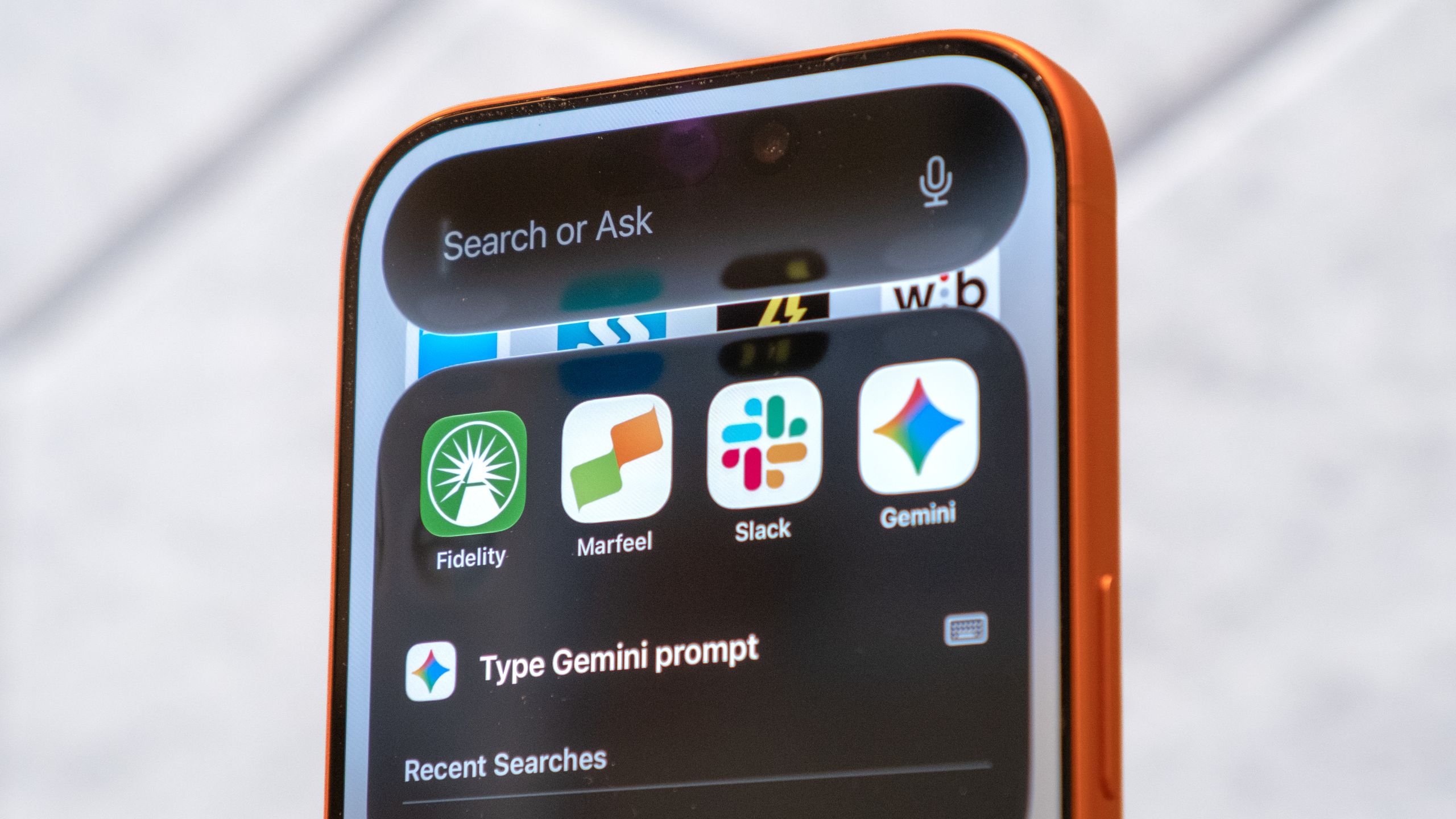
The word that matters most here is neutral. The tester says they were not souring on Siri AI but growing more neutral, and did not mind it becoming essentially the search bar for the smartphone [5]. Neutral registers on a dashboard as a live install with some retrieval traffic and nothing obvious to fix, which is exactly the state a team watching those numbers would call healthy.
Against that, Avi Greengart of Techsponential reports the opposite direction from the same beta: using Siri more, and for more things, with buried information found faster than by any other method he has, better world knowledge and better dictation [10]. Wired allows that its reviewer may be an outlier and that many other beta testers are still using the assistant [11]. So the named first-person accounts in this story split one to one [15], and the piece rests on those two accounts rather than on request counts or retention figures [14]. Either self-report is one phone.
Dipanjan Chatterjee of Forrester told Wired that Siri will take criticism for not matching its peers and that it will not make a difference to the vast installed base or send iPhone users elsewhere [8]. Ramon Llamas of IDC expects users deep in the Apple ecosystem who had qualms about other AI tools to be open to trying this one [9]. Trial is the cheap part; the tester tried it with enthusiasm and still ended up at the search bar. Apple can absorb that outcome because the assistant is preinstalled and paid for by the phone, a cushion an app that has to be opened on purpose does not have.
The grid worth drawing before your own launch has two axes: whether the job recurs on the user's daily schedule or on its own irregular one, and whether the surface where it happens is already owned by a habit. Occasional need on an owned surface is where this tester landed, and that cell describes a feature, measured by whether a second and third retrieval happen in month two, not by sessions. Daily need on an unowned surface is the only cell where an assistant earns its own icon. There is also a slice of the base that never enters the grid at all: Wired notes iPhone owners who will avoid the new Siri because of the AI in its name, and who will not be moved by feature improvements [12].
If your assistant's best job is an occasional one, put it inside something the user already opens and accept that you will have no growth curve to show for it. Promising an everything tool [1] instead buys a strong first week and a neutral user by month two, and neutral is the hardest result to argue with in a review.
Ranked by verification strength, evidence, and original report placement.
Wired's reviewer first tested the developer beta of Apple's Siri AI by using it as a tour guide around San Francisco, and was convinced the overhauled assistant would be an "everything tool" on the iPhone; the answers felt reliable enough and more helpful than previous Siri versions.
The reviewer kept experimenting with Siri AI in the iOS 27 beta over the following month and their usage of the assistant slowly started tapering off.
The reviewer describes the tool as quite powerful, especially with the personal context brought in by indexing the contents of the phone, saying finding an ancient text message or photo has never been easier.
The reviewer states the new Siri is better now and is "quite the step change" over previous versions, while saying it is not revolutionising how they interact with the phone as initially hoped.
The reviewer says they did not mind Siri AI now being essentially the search bar for the smartphone, and that as the summer faded they were not souring on it but growing more neutral.
The reviewer returned to doomscrolling on Instagram and aimless Yelp expeditions, typing and swiping manually rather than relying on the assistant.
Publishers with included, body-backed reporting in this cluster.
1 article · September 6, 2026