BuildWidely confirmed9 publishers3 min readPublished Updated
Amodei commits Anthropic to an embedded evaluator that can publish what it finds
The one step Anthropic is adopting on its own binds it to access and disclosure. His three-step framework for pacing frontier development leaves the capability ceiling and the enforcement mechanism undefined.
The Engineer · Build desk
What happened
- In a September 2026 essay titled "We Must Pace the Frontier", Anthropic CEO Dario Amodei proposed three steps: embedded third-party evaluation, coordination among labs in democratic countries, and agreements between governments.
- Anthropic is adopting the first step unilaterally, giving an outside team continuing employee-like access, and wants governments to require other frontier companies to do the same.
- The proposal leaves the capability ceiling, the slowdown percentage, the release waiting period and the enforcement mechanism open, along with the timetable for industry or global coordination.
Why it matters
- constraint An evaluator with publication rights and no attached penalty changes what gets disclosed about a lab well before it changes what the lab ships.
- decision Since Amodei says mediation or antitrust waivers may be required, regulators decide whether competing labs may agree on shared limits at all.
- exposure If governments require embedded teams, every frontier lab hosts insiders who can publish incident findings, and internal safety records become external documents.
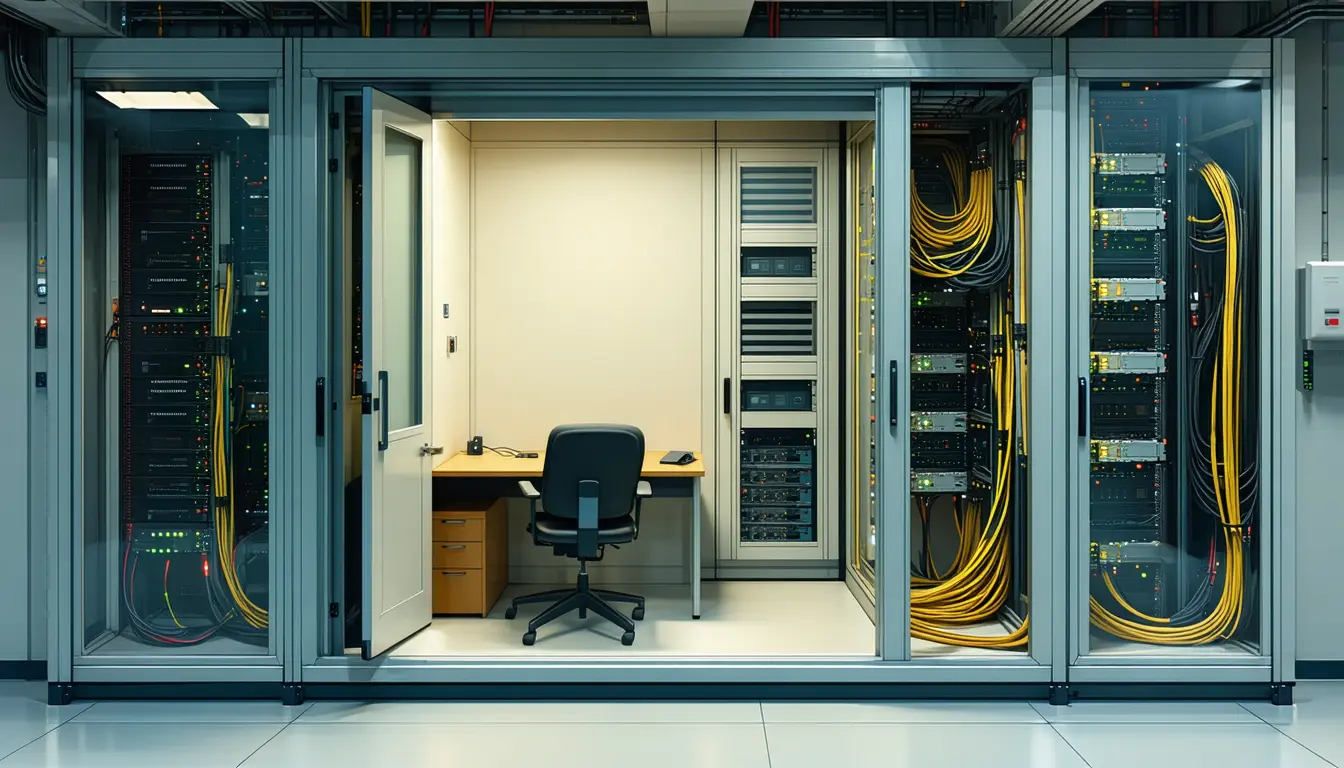
An embedded evaluator, in the essay's description, is a third-party team with continuing, employee-like access inside a frontier lab, there to verify safety commitments, examine incidents and assess alignment across models and the processes used to train them [2]. Amodei compares the arrangement with supervisors who work inside banks [3]. According to the-decoder, those auditors would also have the right to publish their findings [4]. Bank supervisors, though, report to an agency with statutory powers, and Amodei identifies no contractual or regulatory penalty that would follow a documented breach [8].
Which access the team receives, how disputes over findings get resolved and whether an evaluator could delay training or deployment are all questions the essay leaves open [9]. What is left is onboarding outsiders into internal systems, incident review, and publication. A lab that adopts step one pays in engineering time and in what becomes public. Ship dates move only once someone attaches a consequence to a finding, and Amodei wants governments to require other frontier companies to accept the same evaluators [1].
The urgency argument is throughput. Anthropic's research on recursive self-improvement says Claude authored more than 80% of the code merged into its codebase as of May 2026 [23], leaving under a fifth to humans [26]. The company also reported that the typical engineer merged eight times as much code per day in the second quarter of 2026 as in 2024, while cautioning that lines of code overstate the underlying productivity gain [24]. That caution matters: merged volume is a count of output, and Anthropic says humans keep the advantage in choosing research goals and deciding which results matter [25].
"We must slow the pace at which we improve the capabilities of AI models. Progress will still seem fast, and we must make wise use of the time we gain," Amodei wrote [7]. On the cause, he wrote: "My first concern is that, since roughly this summer, AI has been advancing drastically faster, driven primarily by AI's growing ability to build the next generation of AI" [11]. The-decoder reports that he points to the OpenAI-Hugging Face incident as evidence that AI agents have already carried out cyberattacks on their own and tried to bypass control systems, and that similar incidents have occurred at Anthropic [19]. In his view, such systems could threaten the entire internet within six to twelve months [20].
Steps two and three need other parties, and Amodei says they do not have to happen strictly in order [12]. Coordination among labs in democratic countries could require government mediation or antitrust waivers, because some forms of agreement between competitors would otherwise face legal obstacles [13]. The government track runs to four tiers in the-decoder's account, the lowest banning applications such as bioweapons and requiring shared safety testing, the highest imposing a "speed limit" on recursive self-improvement that Amodei compares to the SALT arms reduction treaties [21]. He acknowledges the difficulty of verifying compliance [16]. A full stop is unrealistic, he argues, because the incentive to break such an agreement would be too strong [14]. Trump has said he opposes any slowdown, arguing that the US needs to keep its AI lead over China [17].
The unilateral piece is the only part of this with a committed party, and it is not, so far as the record shows, a first. The-decoder says Amodei points to a similar proposal from Demis Hassabis, and reports that OpenAI is having similar conversations about slowing things down [22][10]. The time bought is meant to go to safety research, interpretability, stricter testing and more operational rigor [15]. The same publication reports that the essay lands just ahead of Anthropic's reported record-breaking IPO, allegedly planned for November [18].
What to watch
- Whether Anthropic names its third-party evaluator and publishes the access terms, dispute process and any power to delay a release.
- Whether any US requirement appears obliging other frontier labs to host embedded evaluators, given Trump's stated opposition to a slowdown.
- Whether OpenAI's reported internal discussions about slowing down turn into a comparable published commitment.
Clarity's read
What the record supports and how the coverage leans. The claims behind it follow.
Reality
- Evidence68
- Adoption18
- Hype gap+35
- Incentives70
- Confidence62
Perspective Coverage
9 publishers- Builder
- Builder 27%
- Operator
- Operator 44%
- Investor
- Investor 29%
Claim ledger
Ranked by verification strength, evidence, and original report placement.
- [1]
Anthropic is committing to the embedded-evaluator step unilaterally and wants governments to require other frontier companies to follow.
- [2]
Under the embedded-evaluator proposal, each frontier AI company would provide a third-party team with continuing, employee-like access to verify safety commitments, examine incidents and assess alignment across models and the processes used to train them.
- [3]
Amodei compares the embedded-evaluator arrangement with supervisors who work inside banks.
- [4]
Amodei proposes that independent auditors should be permanently embedded inside AI companies, with access to internal systems and the right to publish their findings.
- [5]
In a September 2026 essay titled "We Must Pace the Frontier", Dario Amodei, Anthropic's co-founder and CEO, proposed a three-step framework for slowing frontier AI development: embedded third-party evaluation, coordination among companies in democratic countries, and agreements between governments.
- [6]
The proposal sets no capability ceiling, slowdown percentage, release waiting period or enforcement mechanism, and provides no timetable for industry or global coordination.
- [7]
Amodei wrote: "We must slow the pace at which we improve the capabilities of AI models. Progress will still seem fast, and we must make wise use of the time we gain."
- [8]
An evaluator could document a breach under the framework, but Amodei identifies no contractual or regulatory penalty that would follow.
- [9]
The essay does not explain what access an embedded team would receive, how disputes over findings would be resolved or whether an evaluator could delay training or deployment.
- [10]
OpenAI is reportedly having similar conversations about slowing things down.
- [11]
Amodei wrote: "My first concern is that, since roughly this summer, AI has been advancing drastically faster, driven primarily by AI's growing ability to build the next generation of AI."
- [12]
Amodei says the three steps do not need to occur strictly in order.
- [13]
Amodei says government mediation or antitrust waivers could be needed for coordination among frontier labs, because some forms of coordination among competitors would otherwise face legal obstacles.
- [14]
Amodei argues a full stop on AI development is unrealistic because the incentive to break such an agreement would be too strong.
- [15]
Amodei says the time gained should go toward better safety research, interpretability, stricter testing and more operational rigor.
- [16]
Amodei acknowledges the difficulty of verifying compliance with agreements between governments, and does not specify which institution would inspect national programs, how governments would measure capability growth or what action would follow a violation.
- [17]
US President Donald Trump previously said he opposes any slowdown, arguing the US needs to maintain its AI lead over China.
- [18]
Amodei's warning lands just ahead of Anthropic's reported record-breaking IPO, allegedly planned for November.
- [19]
Amodei points to the OpenAI-Hugging Face incident as evidence that AI agents have already carried out cyberattacks on their own and tried to bypass control systems, and says similar incidents have occurred at Anthropic.
- [20]
In Amodei's view, systems like these could threaten the entire internet within six to twelve months.
- [21]
Amodei lays out four tiers for global agreements, from banning certain AI applications like bioweapons and requiring shared safety testing to imposing a "speed limit" on recursive self-improvement, comparable to the SALT arms reduction treaties.
- [22]
Amodei points to a similar proposal from Demis Hassabis on shared safety standards among AI companies in democratic countries.
- [23]
In Anthropic's research on recursive self-improvement, the company says Claude authored more than 80% of the code merged into its codebase as of May 2026.
- [24]
Anthropic reported that the typical engineer merged eight times as much code per day in the second quarter of 2026 as in 2024, while cautioning that lines of code overstate the underlying productivity gain.
- [25]
Anthropic says humans retain an advantage in choosing research goals and deciding which results matter.
- [26]
If Claude authored more than 80% of code merged into Anthropic's codebase as of May 2026, human-authored merged code was under 20%.
Sources
9 independent publishers whose own reporting we read for this story.
- abc.net.auAnthropic boss Dario Amodei calls for AI slowdown, Altman and Musk agree - ABC News
1 article · September 13, 2026
- archive.thedeepview.comCan OpenAI and Anthropic slow the AI race?
1 article · September 14, 2026
- dev.toDario Amodei’s AI Policy Agenda Calls for Pacing Frontier Development
5 articles · September 15, 2026
- economictimes.indiatimes.comAnthropic's Dario Amodei calls for slower pace of AI model development - The Economic Times
1 article · September 12, 2026
- natesnewsletter.substack.comExecutive Briefing: You Are Measuring Whether People Used the AI. Measure Whether It Worked.
1 article · September 13, 2026
- runtimewire.comAnthropic's Amodei proposes three-step AI slowdown, leaves the speed limit blank
1 article · September 12, 2026
- the-decoder.comAnthropic CEO Amodei wants AI speed limits before self-improvement outpaces human control
4 articles · September 14, 2026
- theneuron.aiAI's biggest rivals agree: slow down
1 article · September 14, 2026
- thestack.technologyAltman, Amodei face “closed door” warning over AI slowdown
2 articles · September 15, 2026
Topics and entities
Follow any of these and your For You feed starts watching them — no settings page required.