Product1 publisher3 min readPublished
Vast Space's audit chief says agents removed the tick marks he used to review
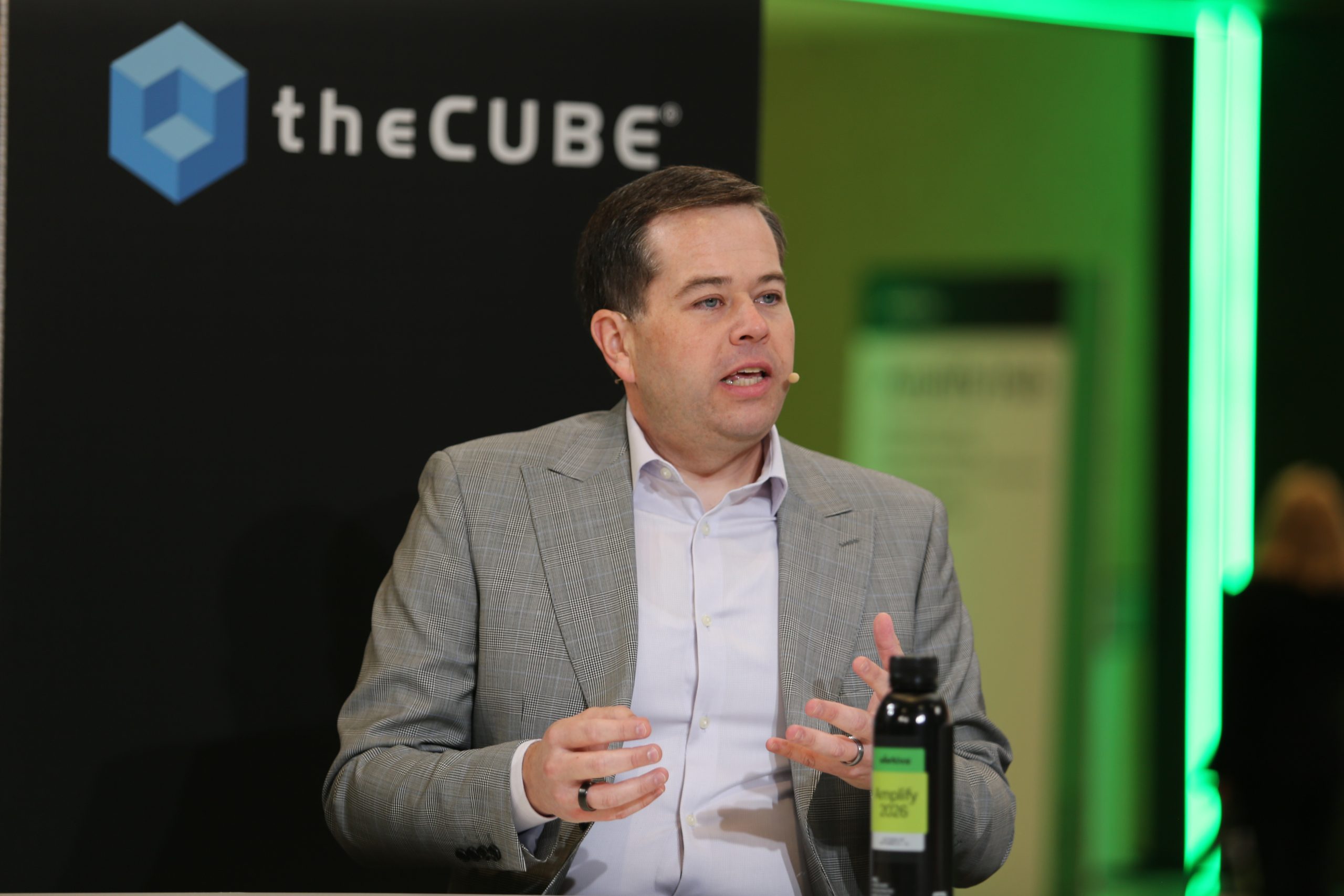
Josh Robinson, chief audit executive at Vast Space, told theCUBE that the notes and Slack messages showing a human exercising judgment are gone from agent work, and his remedy is the completeness and accuracy tests internal audit already runs.
The Product Desk · Product desk
What happened
- SiliconANGLE reported that financial and operational data still sits in NetSuite, HR platforms and data lakes, while the judgment calls once recorded in email threads, Slack messages and tick marks are made by software faster than any reviewer can follow.
- Robinson said ownership of the work stays with the person who signs it, whichever tool produced the answer.
- Workiva's specialized AI agents and its Knowledge intelligence layer are aimed at the data silo problem Robinson described, and he spoke about them at the company's own Amplify conference.
Compiled by The Product DeskSomething wrong?How this is made
Why it matters
- constraint The only evidence an auditor can test on an agent workflow is what the system was configured to retain, and that configuration is a build-time decision made before any control owner sees an output to review.
- exposure At Vast Space a control gap reaches astronaut safety as well as regulators, so the person signing agent-produced work there is exposed to more than a restatement.
- decision Anyone who signs in a regulated function now picks between treating the agent's own record as sufficient evidence of judgment and withholding the signature until each step can be reconstructed.
- contradiction SiliconANGLE presents the gap at a conference whose host sells agents and a connective data layer, yet the practitioner it quotes points back at existing audit tests. The remedy he names is not something Workiva sells.
A tick mark works as evidence because a person put it there at a known moment and could be asked why. An agent step leaves behind whatever the workflow was built to keep, and that is decided by whoever configured it, before the control owner sees an output [2].
Robinson's answer is the pair of tests internal audit has pressed for years. "If you can demonstrate completeness and accuracy as an auditor, generally that allows you to reach conclusions about the assurance of datasets or audit tests you're doing," he said [7]. Applied step by step across a multistep workflow, those tests ask whether the data going into and coming out of each step is whole and correct [6]. They do not reproduce the reason a step took one path instead of another. Robinson described that reason as gone: "There was either handwritten notes or there were tick marks or there was email chain or Slack messages. That has all been removed from the equation. So, for me, the risk is in the unknown." [5]
Accountability is where he draws the line hardest. "As an audit leader, if it comes to my desk and I'm going to put my signature on it, it pretty darn well better be the right answer," Robinson said [8].
The interview ran at Workiva's Amplify conference and was broadcast on theCUBE, with SiliconANGLE disclosing that theCUBE is a paid media partner for the event and that sponsors have no editorial control over its content [14][15]. Robinson said he has been a Workiva customer since 2017 [11], about nine years before the September 17 interview [17]. What he described wanting is a connective layer across systems: "we use the likes of a NetSuite and an HRIS and this and this, and this is our data lake," and "we're using Claude, but now look at Workiva who can connect to those 5 different things" [12]. The report includes no survey data and no count of affected audit teams, and it never says what an agent's own record should contain [19].
For anyone putting an agent into a regulated process next month, two questions sort the workflows. First, whether a run can be reconstructed from records the system keeps by default, with no one-off export request to a vendor. Second, whether a named person signs an assertion downstream of it. When a run reconstructs and someone signs it, that is ordinary control work. Reconstructable with nobody signing is drafting, and it can wait. Signed and not reconstructable is the case Robinson described [5], and there are two ways out of it: change what the workflow retains before deployment, or move the signature to a step someone can still see.
What to watch
- Whether Workiva's Knowledge intelligence layer ships an agent step record that an external auditor will accept as evidence.
- Whether any regulator or standard setter specifies what an agent action log must contain to support a signed assertion.
- Whether Vast Space moves from sampling agent outputs to testing each step of an agent workflow, and says so on the record.