Product1 publisher2 min readPublished
Analysts closing theCUBE's contact center summit make resolution quality the ROI number
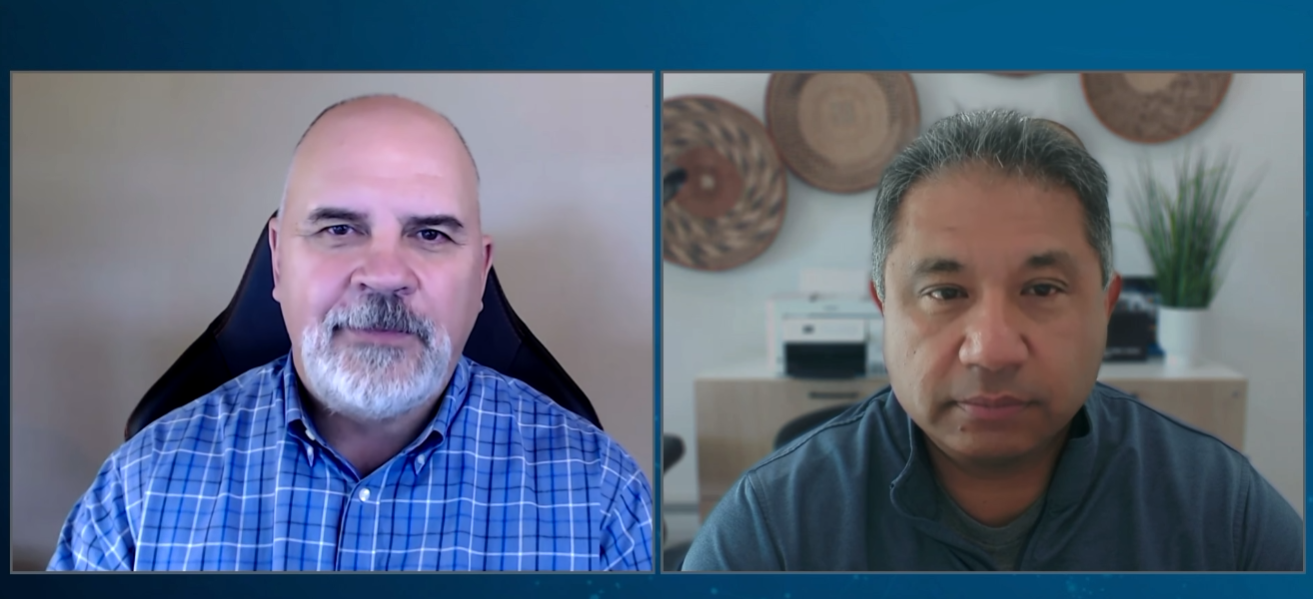
At theCUBE's contact center summit, analysts Bob Laliberte and Zeus Kerravala argued that agentic support should be scored on whether the customer's problem got completed. Their scorecard asks for five kinds of numbers, including cost and growth.
The Product Desk · Product desk
What happened
- Bob Laliberte of theCUBE Research and Zeus Kerravala of ZK Research closed theCUBE's contact center summit arguing the next phase of contact center AI is measured by whether customers' problems get resolved.
- Their closing session drew on sessions with Cisco Systems, Talkdesk, Zoom Communications and Five9, which the analysts said pointed toward end-to-end resolution backed by connected data and governance.
- Human staff are expected to take on exceptions, emotionally sensitive situations and interactions requiring judgment, while AI absorbs the more standardized processes.
Compiled by The Product DeskSomething wrong?How this is made
Why it matters
- cost Re-basing the case on satisfaction, effort, productivity, cost and growth means paying for measurement across five systems before any resolution gain can be shown, and the contact center platform reports on none of the last three.
- constraint Governance as a continuous practice turns AI approval into a recurring staffing line, so a team that budgeted one pre-launch review is short for every quarter after go-live.
- exposure Supervisors are the people asked to notice when AI is failing and reroute the work, which puts the cost of a bad automated resolution on the shift manager first.
- decision Without measured results from the platforms discussed, a buyer comparing them has to generate its own baseline before it can price the swap of scorecards.
A chat that ends without a human touching it counts as contained. When the same customer calls the next morning about the same charge, that call is a new contact, and both numbers can be filed as improvements. Containment and deflection are the two measures Laliberte and Kerravala said should stop carrying the return on a contact center AI investment [4].
In their place the analysts named five things a scorecard has to account for: customer satisfaction, customer effort, employee productivity, cost and growth [4]. Two counters, five categories [1]. Containment and deflection are counts of interactions, produced by the platform doing the handling. The five are not counts of interactions, so whoever rebuilds the business case has to name the system that produces each number and the person who signs it off.
"Resolution and resolution quality is the new unit of value," Kerravala said [3]. He was blunter about what happens when the workflow underneath is wrong. "If you've got a broken process, you're going to get to that bad destination faster," he said [5]. The analysts said fragmented systems and stale knowledge can undermine AI accuracy and create repetitive interactions [6].
Governance, in their account, runs after go-live: continuous evaluation, observability, policy enforcement and testing [7]. Someone has to staff that every quarter. "If you have the proper governance in place, you can actually move faster with your AI initiative," Kerravala said [8].
The panel closed an event theCUBE was paid to cover, and SiliconANGLE disclosed the paid media partnership along with a statement that sponsors do not have editorial control over the coverage [13]. The write-up of that closing session does not report measured results from any of Cisco, Talkdesk, Zoom or Five9 [15]. So the support for the measurement change is the judgment of the two analysts. "AI ROI in CX won't be determined by the number of bots deployed," Laliberte said [11].
Their recommended path is deliberately narrow: one customer journey, documented workflow and data requirements, baseline metrics, then testing of routine interactions and edge cases before expanding [14]. Inside that boundary there is a cheap test of whether the old business case still holds. Keep the containment number for that one workflow and put beside it the share of those customers who come back on the same issue within a week. If containment climbs and repeat contacts fall, the existing case survives with a better number attached. If both climb together, the deflection savings were being paid for by the second contact, and satisfaction, effort and cost are the categories where that bill appears [4].
What to watch
- Whether Cisco, Talkdesk, Zoom or Five9 publish a resolution-quality definition a buyer can audit, with figures attached.
- Whether any contact center contract starts pricing on resolved journeys instead of contained interactions.
- Whether theCUBE Research or ZK Research follows the panel with measured baselines from a named deployment.