Science1 publisher3 min readPublished
Age shapes broiler chickens' resistance genes more than antibiotics, probiotics or essential oils
Penn State found age reshaped the resistance genes of 320 broiler chickens far more than antibiotic, probiotic or essential-oil feed did. With the antibiotic diet also flat, the three-week trial cannot show the alternatives reduce resistance.
The Scientist · Science desk
What happened
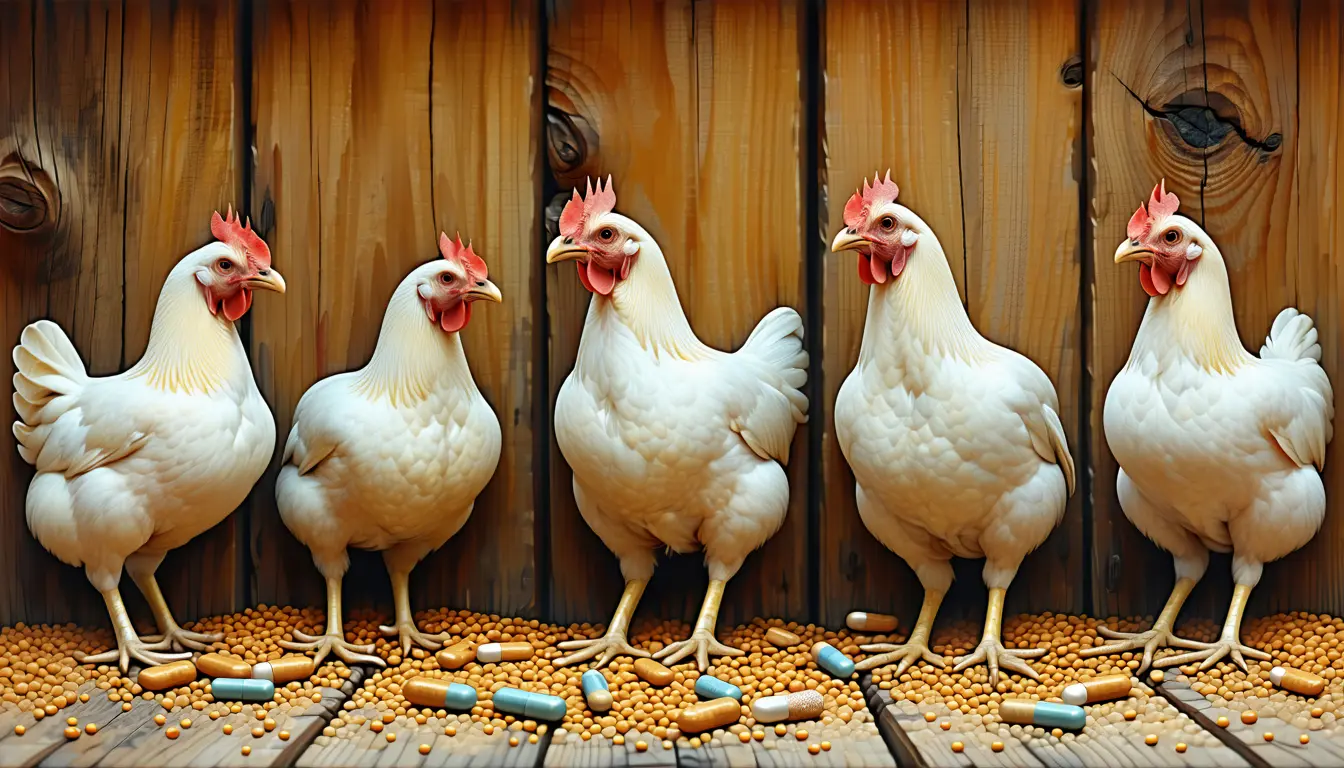
- Penn State researchers fed 320 broiler chickens one of four diets: no additive, an antibiotic, essential oils, or a probiotic.
- The team collected fecal samples when the birds were 1, 10 and 21 days old and sequenced the DNA to find resistance genes.
- Sequencing turned up 823 unique antimicrobial resistance genes across the study.
- None of the additives significantly changed the overall diversity of resistance genes, while the birds' age had a much stronger effect on the resistome.
Compiled by The ScientistSomething wrong?How this is made
Why it matters
- decision Producers moving from antibiotics to probiotics or essential oils can point to this trial for no measurable rise in overall resistance-gene diversity over 21 days, though it gives no evidence of a reduction.
- constraint Because the method counts gene sequences only, the result cannot speak to whether bacteria in these flocks would survive a drug treatment.
- decision Any comparison of feed additives on resistance has to sample birds at matched ages, since profiles at days 1, 10 and 21 differed more than the diets did.
In a trial like this, the antibiotic diet is the comparison the alternatives are judged against. According to the Penn State team, it did not produce a sustained change in the birds' overall resistome either [7]. First author Ana Fonseca, now a poultry management educator with Penn State Extension, said the researchers were somewhat surprised by that [7].
The flat antibiotic arm limits what the probiotic and essential-oil results can mean. Matching the drug on a measure the drug itself did not move shows the alternatives did no measurable harm there. It cannot show they lower resistance, because the experiment produced no antibiotic-driven rise for them to prevent. Erika Ganda, the senior author, put the finding in modest terms. "In this experiment, probiotics and essential oils did not produce substantial or sustained changes in the overall resistome, which supports further investigation of these products as antibiotic alternatives," she said [8].
Age moved the gene profile far more [1]. "The resistome of a 1-day-old chick looked quite different from that of a 10-day-old chick, and the resistome changed again by day 21," Fonseca said [9]. Her explanation is microbial succession, the natural turnover of gut bacteria as a bird grows. "Because different bacteria carry different resistance genes, natural changes in the microbial community also reshape the resistome," she said [10]. Succession is the team's account of the pattern. The design assigned diets and then tracked the birds at three ages [3] [4], so age was observed alongside the genes and not tested as a cause on its own.
The flock was modest in size: 320 birds across four diets [3], or about 80 per diet if the split was even [12]. The sequencing method, shotgun metagenomics, detects resistance-gene sequences and their relative abundance [5]. It does not determine whether the bacteria carrying those genes are actually resistant, or whether the genes are being expressed [5]. The headline result is also a summary figure, overall diversity across the 823 genes found [1] [6]. A summary of that kind can stay level while a few specific genes rise or fall. The public account of the Poultry Science paper [2] does not name the antibiotic, the probiotic or the oil blend, does not report effect sizes, and follows the birds only to day 21 [4].
In my view the claim the data earn is narrow. Over three weeks, none of the additives, the antibiotic included, measurably changed overall resistance-gene diversity in these birds [1] [4]. That is enough to keep testing probiotics and oils without worrying that they raise the resistance-gene load on this measure. Fonseca drew the limit herself: she said the findings do not suggest feed additives never affect antibiotic resistance in poultry, only that under this experiment's conditions the birds' changing gut communities had the bigger effect [11].
What to watch
- Whether the full Poultry Science paper shows diet effects on specific resistance-gene classes that the overall diversity measure would hide.
- A follow-up that measures gene expression or cultures resistant bacteria, which would test whether the gene-level result holds for actual resistance.
- Trials that run past day 21, to see whether diet effects appear later in a broiler's life.