Build1 publisher3 min readPublished
Aclif's deny-before-load gate trusts whatever the provider author declared
The MIT-licensed framework gives agents one command grammar for Salesforce, ServiceNow, DocuSign and Agentforce. The safety metadata a host checks before running a command comes from provider authors the project leaves unnamed.
The Engineer · Build desk
What happened
- Aclif ships as an MIT-licensed package presenting one command grammar and one JSON response contract in place of a separate tool collection, login flow and error format for each service.
- Native providers cover Salesforce, ServiceNow, DocuSign and Agentforce, and Google Workspace is maintained as a contributed provider.
- Aclif's public pages name no founders or leadership, and neither party's site explains the repository's 2026 copyright attribution to Prompt One Inc.
Compiled by The EngineerSomething wrong?How this is made
Why it matters
- capability A recurring workflow can call Salesforce with no tool definition in context and no model deciding the operation, so inference cost is confined to the steps a human decided need judgment.
- exposure The host's refusal check reads a declaration, so a command whose author understated its mutability or blast radius passes the gate and writes anyway.
- decision A team that wants vault-resolved secrets, forwarded user identity and audit events either builds the gateway itself or runs Prompt One's, which is the only documented technical tie between the two.
- constraint The alias catalog has to be captured per deployment and kept current, which moves naming drift out of prompt text and into a config file with an owner.
Binding a command at design time is the trade-off this design lives on. A person or an authoring tool discovers a provider, inspects a command, and embeds the resulting command string in the workflow [11]. At runtime that string executes without loading a tool definition and without asking a model to choose the operation again, and inference stays available for the steps that need judgment [12]. In my view that is the right trade for a workflow that runs the same way a thousand times a day, and the wrong one where a provider's schema moves between releases.
An agent runs `aclif discover --json`, then `aclif learn salesforce --json` for a provider briefing, and pulls the schema or examples for one operation only when it needs them [6]. Introspection costs the provider nothing: according to the project's documentation, none of those commands require credentials, execute an API request or consume the provider's quota [7]. The usual arrangement is a connector that publishes separate tool definitions for querying an account, updating a contact and inspecting metadata, with the model working through the collection [20].
An agent can refer to a `customer`, and an alias catalog maps that concept to `Account` in a particular Salesforce instance or `core_company` in ServiceNow [9]. The project says that keeps generated workflows stable when the same business concept carries different names across systems, and pushes provider quirks below the agent's working context [10]. The catalog can also absorb custom objects and fields captured from each deployment [9]. Somebody on your side keeps that file current.
The binary needs Node 22 or later, ships as the `@aclif/core` npm package, and includes a scaffold for building a narrower CLI with only the providers you want [8].
The agent can spawn the binary itself with credentials from flags, environment variables or a profile in `config.yaml`. Or a host application can import the runtime and supply credentials per invocation. The third of the three documented modes is a long-running gateway executing commands for many agents, resolving secrets from a vault, forwarding the acting user's identity, applying policy and recording audit events [13].
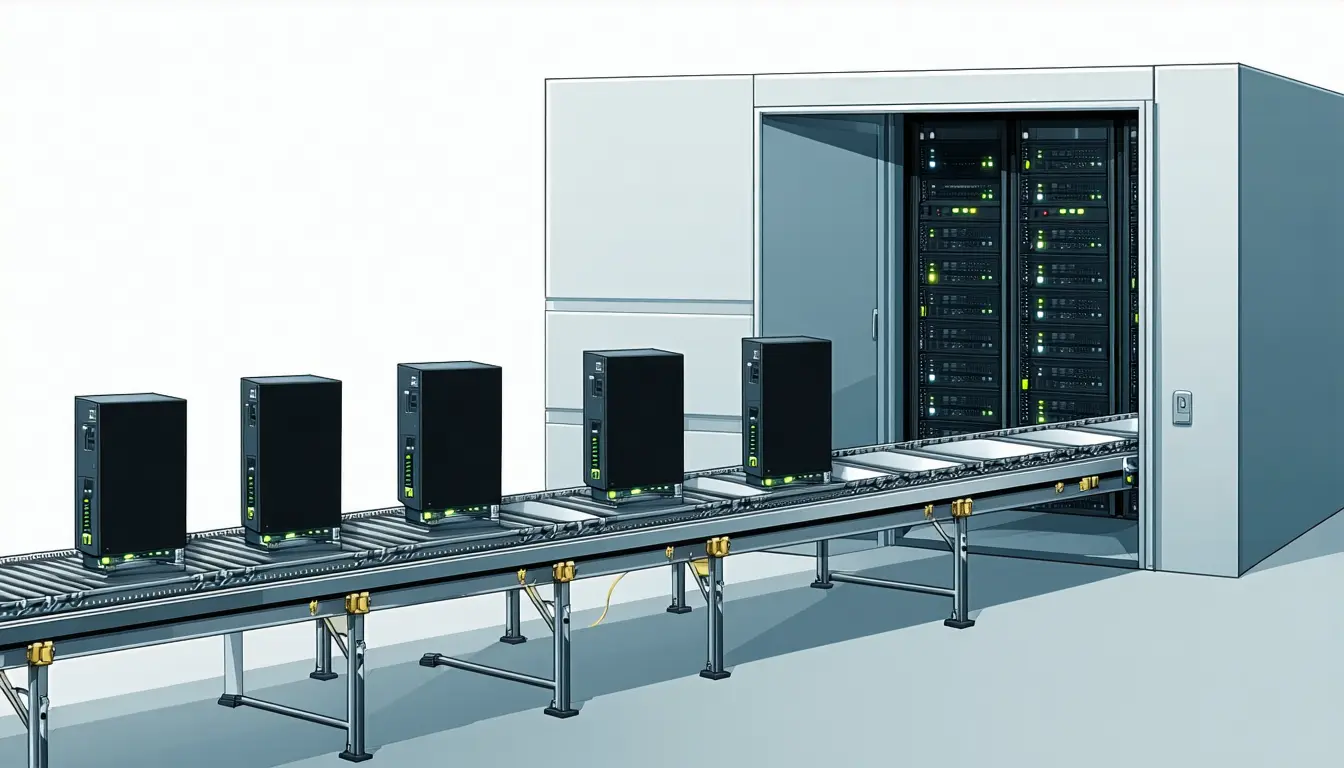
Every command declares mutability, reversibility, idempotency and blast radius, and a host can inspect those declarations and deny a command before loading its implementation [16]. Mutating commands accept `--dry-run`, operations marked as requiring approval demand `--confirm`, and results and errors follow a published JSON contract with distinct exit codes for API, usage and authentication failures [17]. The documentation says that metadata still depends on provider authors describing commands accurately [18]. Four native providers plus one contributed provider is five sets of declarations to take on trust [19], and aclif's public pages leave its founders and leadership unnamed [4].
The repository carries a 2026 copyright attribution to Prompt One Inc., and the corporate relationship is unexplained on aclif's site and on Prompt One's pages [5]. The documented technical link runs through the gateway: aclif's repository says Prompt One's service gateway runs the embedded runtime with vault-resolved credentials and a capability gate [14]. Prompt One describes its own product as a platform for compiled workflow agents generated from natural-language descriptions, with a Composer that codifies a description into a Motion compiling to deterministic code and inference reserved for steps needing judgment [15]. The commercial compile step and the open framework's design-time binding are the same idea at two layers. For a team taking the dependency, the question to settle first is who merges a provider's declaration of blast radius, because the host's check enforces the declaration and not the behaviour [16][18].
What to watch
- Whether aclif or Prompt One publishes a maintainer list and explains the 2026 copyright attribution.
- Whether a second contributed provider lands, and who reviews its declared mutability and blast radius.
- Whether any host application ships the deny-before-load check against declared command metadata.