Science1 publisher2 min readPublished
Four sailors survived after a sperm whale strike sank their 52-foot yacht north of Norfolk Island
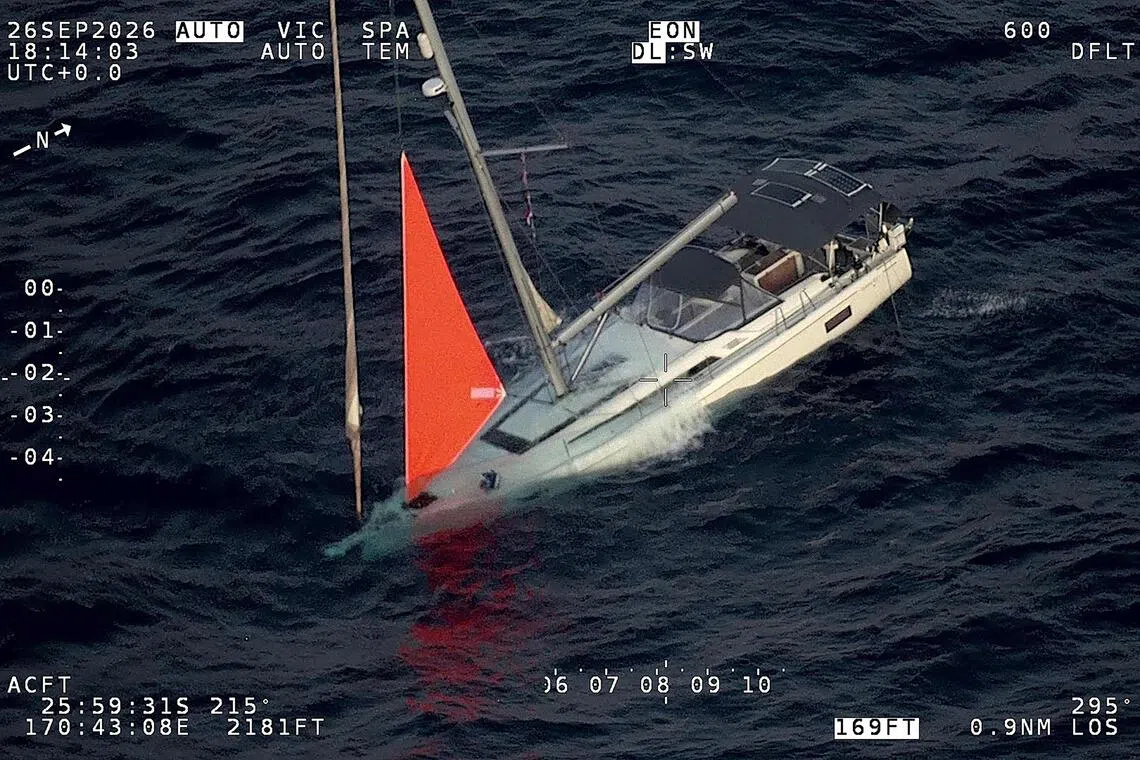
Tai Tam, a 52-foot yacht, sank about 250 nautical miles north of Norfolk Island on Sept. 26 after hitting a sperm whale. Rescuers say an early distress beacon saved all four people aboard. One wreck cannot show how often yachts and whales collide.
The Scientist · Science desk
What happened
- The impact damaged the yacht's starboard steering gear, and the crew spent hours bailing as water came in.
- About half an hour after the collision the crew set off their emergency beacon, and a Royal New Zealand Air Force P-8A Poseidon arrived to coordinate help.
- By late that night the sailors were in a life raft, and early on Sunday they cut it loose from the yacht, which sank soon afterward.
- The container ship MV Sofrana Surville picked up the crew on Sunday morning, roughly 18 hours after the encounter.
Compiled by The ScientistSomething wrong?How this is made
Why it matters
- contradiction Discover sets the wreck beside the Essex, which a sperm whale rammed. The rescue centre says the yacht struck a whale, and the record supports an accident at sea.
- exposure Whales carry their own share of the risk. The Marine Mammal Commission says hulls can crush and propellers can cut them, and even small recreational boats can kill whales, calves in particular.
- decision Skippers crossing whale habitat face a choice about speed and route. Slowing down in high-risk areas and steering around whale concentrations are the measures on offer, and both cost passage time.
The only evidence that a whale did this is what the crew saw. In Discover's account there was a thud, the boat shifted sideways, and then the sailors spotted a pod of sperm whales as seawater poured through the damaged hull [7]. Discover took the position, the date and the order of the rescue from CBS News [2].
The rescue authorities accepted that account. "The crew of the yacht did all the right things, and it was unfortunate to have struck a whale in open water. They were well prepared and the early activation of their EPIRB was key to helping them get to safety. It is an excellent reminder that being prepared when going to sea can save your life," said Mike Clulow, operations manager at the Rescue Coordination Centre, in a press release [8].
Setting off the beacon early mattered because even a rescue with no setbacks took most of a day that far out. About 17.5 hours passed between the beacon going off and the container ship arriving [1]. Compare the Essex, which Discover sets beside this wreck [14]. When a sperm whale wrecked that whaler in 1820, 20 crew escaped in three small boats, and only eight survived [13]. That is a survival rate of 40 percent [2].
The wider claim, that strikes are a real risk for crews and for whales, rests on a 2024 study in Science. It found that shipping traffic overlaps about 92 percent of the ranges of blue, fin, humpback and sperm whales [9]. That figure maps where vessels and whales share water. The study does not measure how often they collide.
A lookout helps less than you might expect. NOAA warns that whales can stay mostly hidden below the surface, leaving an operator little time to react. Even when someone sees a whale, neither vessel nor animal may have time to avoid an impact [10].
What to watch
- A formal incident report from the Rescue Coordination Centre or CBS News follow-up giving more detail on how the yacht met the pod.
- Any count of yacht and whale collisions in the waters north of Norfolk Island. A count like that would turn this single case into a rate.
- Whether the Tai Tam crew publish a first-hand account of the collision and of what they saw of the whales afterward.