Science2 publishers2 min readPublished
Uppsala's laser analysis finds an 18th-century blue in two patches of the 'L daVinci' Domitian
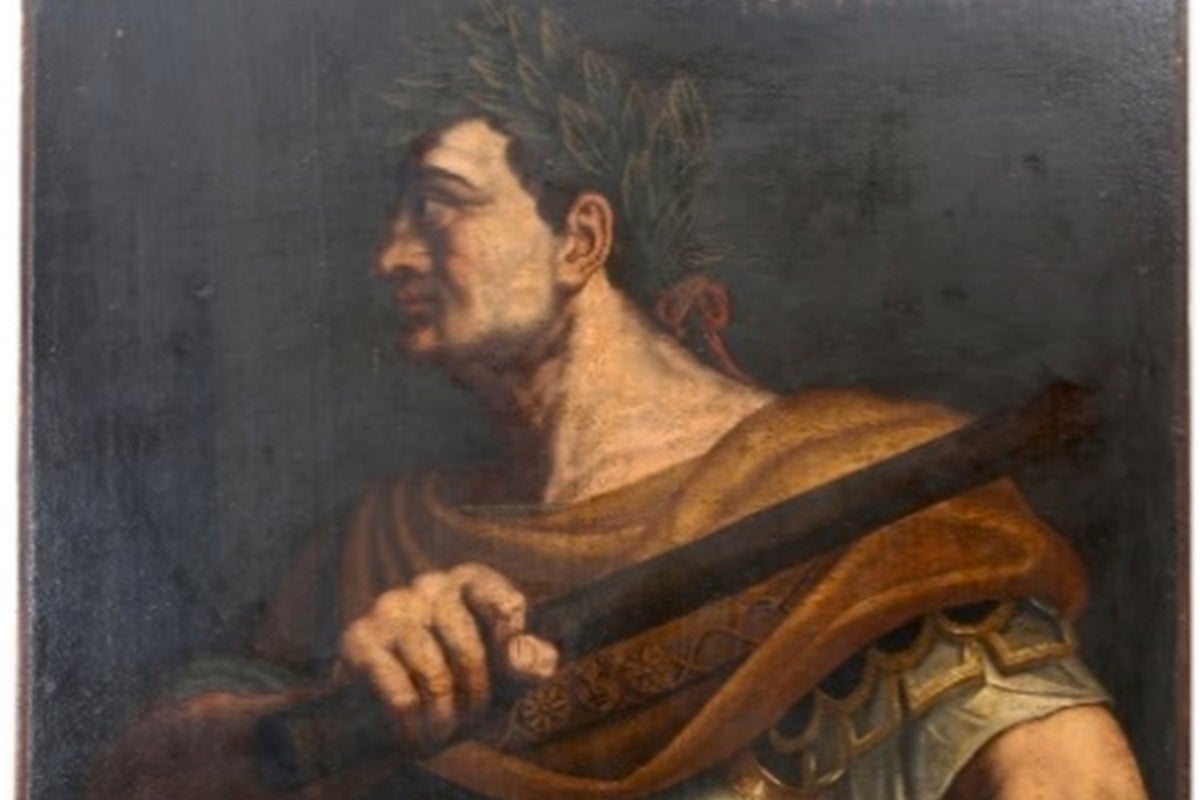
Twelve of the thirteen pigments in the Domitian portrait were available to Leonardo and Titian. The thirteenth is Prussian blue, first produced in the early 1700s, and it sits in the laurel wreath and in a jewel on the sword hilt.
The Scientist · Science desk
What happened
- Uppsala University researchers ran Raman spectroscopy on microscopically small samples from a portrait of the emperor Domitian signed "L daVinci" and identified 13 pigments in it.
- Twelve of those pigments are traditional Middle Ages or Renaissance materials available to both Leonardo and Titian, including the cinnabar in Domitian's red hairband.
- The thirteenth, Prussian blue, was not produced until the early 18th century, and it turned up in the laurel wreath on Domitian's head and in the blue jewel on his sword pommel.
- The current owners found the "L daVinci" signature after inheriting the painting in 1994, followed by a word read as the Latin pinxit, meaning painted.
Compiled by The ScientistSomething wrong?How this is made
Why it matters
- capability Pinning a post-1700 pigment to two named passages gives a conservator something to act on: those layers can be treated as later repair and set aside when the rest of the surface is compared with any painter's practice.
- constraint The signature itself is written in carbon black, in use since antiquity, so no pigment measurement can place the inscription in a century, and the one mark that would decide authorship stays outside the reach of this method.
- decision An attribution case for this canvas now has to be assembled from provenance and art historical study, which the Uppsala team lists beside its own analysis instead of behind it.
- contradiction The two published accounts of the sale record disagree: Discover reports the painting appeared at Christie's in London in the 1920s and went unsold, while phys.org dates the London auctions to 1928 and 1929 and says it was attributed to Titian then.
Raman spectroscopy identifies the compound in front of the laser, so a pigment dates a paint layer from one side only [2]. Prussian blue was first produced in the early 18th century, which makes it a floor: a layer containing it was applied after that date, and the layers beneath it are not dated by the finding at all [8]. Leonardo died in 1519, so the two passages carrying the blue went on at least 180 years after his death [17][23]. Twelve of the thirteen pigments were available in Leonardo's and Titian's time, which leaves one pigment carrying the whole dating result [5][24].
The laurel wreath is where the evidence is strongest, because two methods point at the same few square centimetres. X-ray imaging of the wreath shows several leaves that are visible on the painted surface and absent from the X-ray image [10], in one of the two areas where the blue appears [9]. That combination is what paint added over an existing composition looks like. "It is very common for paintings to be retouched. So, finding new pigments in limited areas does not necessarily mean that a painting is a forgery," Thyr said [11].
None of this touches the chronology that made the painting contested. Titian is believed to have painted 11 of the 12 Roman emperor portraits between 1536 and 1539, with the Domitian assigned to another hand [15]. The study's authors note that Leonardo died 17 to 20 years before that window, and they raise the possibility that the Domitian was finished first and inspired the rest of the series [17]. The series was reportedly sold from England to the Spanish Royal House and destroyed in a fire in 1734 [16].
The owners approached the Department of Materials Science and Engineering at Uppsala through Lars Hälldahl, who had worked with Thyr on similar analyses of artworks [21]. Both published accounts describe the material only as microscopically small samples taken from different parts of the painting [22]. The signature that started the argument is faint. "The contrast against the background is low, and it really only becomes visible when the painting is illuminated from the right angle," Thyr said [12].
Thyr expects more of this work. "Materials science analyses can provide concrete answers to questions about art and archaeological artifacts. I believe this type of analysis will become increasingly common in the future," he said [14].
What to watch
- Whether the Uppsala team publishes sample locations and counts, plus binder and ground analysis, which would show how much of the surface is original paint.
- Whether further X-ray or infrared imaging turns up underdrawing that art historians can compare against documented Renaissance practice.
- Whether provenance research fills the gap between the 1734 fire that reportedly destroyed the emperor series and the 1939 sale in Sweden.