Leadership1 distinct publisher3 min readPublished
Flock sells a camera for $3,000 a year against a typical $1 million department budget, which means money no longer decides adoption. The claim that it displaces pretextual stops rests on one officer's account.
The Board Room · Leadership desk

Compiled by The Board RoomSomething wrong?How this is made
The substitution claim carries the argument, and it is separable from the price claim. The officer's account of imprecision is concrete: he pulled over a car because it matched the suspect's color, then spent time checking names and licenses while the person he wanted was somewhere else [12]. Against that he sets a hit and run he worked from a model, a color and an approximate time [13]. If those two are genuinely alternatives for the same case, the camera is the narrower intrusion; if they are additive, a department has bought a new capability and kept the old habit.
Precision describes the query, not the collection. A read is checked against the FBI's national file of stolen cars and wanted persons, and a hit pushes an alert to officers already in the area [3]. In the 2004 Project Laser trial, cameras read more than five million British plates and produced 3,071 arrests [8], which is roughly one arrest per 1,600 plates read [15]. Everyone else in that five million was scanned in order to find those people, so the trade on offer swaps a small number of in-person encounters for a very large number of logged reads the motorist never notices.
Price is the strongest part of the case, because it is checkable. A camera runs $3,000 a year against a typical department budget of $1 million [4], so one camera is 0.3 percent of that budget and the whole budget would cover about 333 camera-years [14]. That arithmetic matters most for the agencies that could never fund fixed or vehicle-mounted installations: almost half of US police departments employ fewer than ten full-time officers, spread across four million miles of public road [6]. With almost 30 percent of American agencies already subscribing [5], the binding constraint moved from procurement to policy some time ago.
A skeptic would say the pretextual stop does not go away because the camera arrives, and that the two accumulate. The honest answer is that this account does not settle it, because it reports one officer's practice and no measurement of stop rates before and after deployment [16]. The control it does describe is a case number and a stated reason for every search, compiled monthly and validated by department administrators [11]. That is a real record, and it is an internal one; nobody outside the department appears in the validation loop.
The sequencing deserves attention apart from the merits. A lookup can be filtered by vehicle description and by timeframe, run from the scene [10], which means much of the value of a subscription signed this quarter sits in the passes it records before anyone has a case to open. A council approving a $3,000 line item is therefore approving a retrospective search capability that its own future investigators, and anyone who can compel the data, will run against residents who were never suspected of anything.
Ranked by verification strength, evidence, and original report placement.
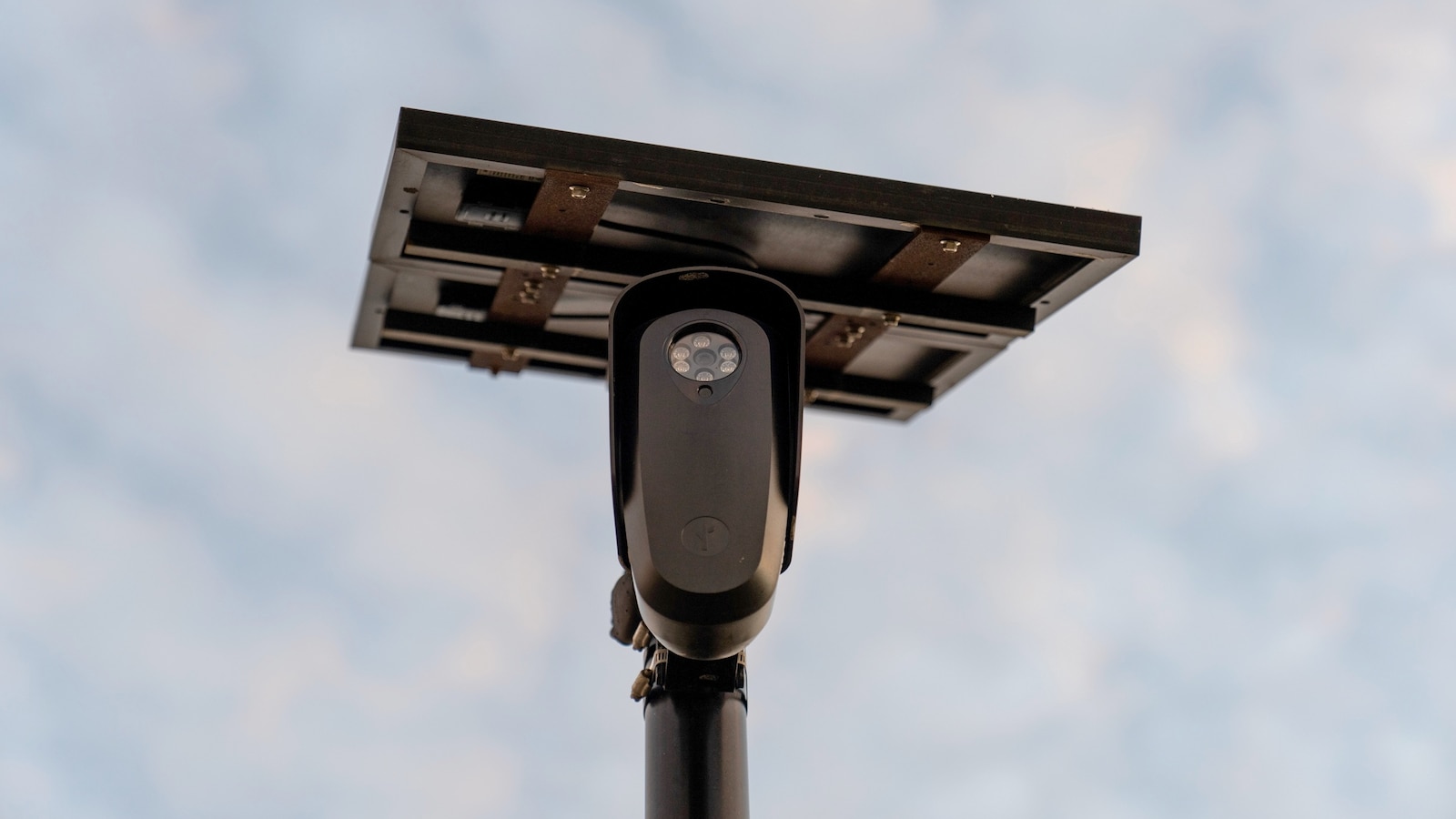
Flock Safety, a startup based in Atlanta, Georgia, founded in 2017, sells a small solar-powered automatic license plate recognition camera attached to a roadside pole that photographs each passing vehicle, notes identifying features such as color and make, and reads the license plate.
A plate read by the camera is instantly checked against the FBI's national database of stolen cars or wanted persons, and a match sends an alert to police officers in the area.
Flock sells the camera for an annual subscription of $3,000, against a typical US police department annual budget of $1 million.
In the 2004 trial 'Project Laser', ALPR cameras read more than five million British plates, resulting in 3,071 arrests.
A serving police officer in the southeastern United States argues in Works in Progress that the way to reduce police intrusion is more precision rather than less.
America has four million miles of public roads, and almost 50 percent of the country's police departments employ fewer than ten full-time officers.
Distinct publishers with included, body-backed reporting in this cluster.
1 article · August 28, 2026
Follow any of these and your For You feed starts watching them — no settings page required.
product
The UK plant that went dark for four days was too small to have to tell anyone1 distinct publisher
leadership
Daycare Does Not Break Children's Brains, And It Does Not Fix Economies Either1 distinct publisher
security
CISA finally counts the water intrusions: 100-plus exposed systems behind cellular modems2 distinct publishers
security
A North Korean IT worker got hired by a federal agency. Vetting is a security control now.1 distinct publisher
Evidence-backed comparisons of source perspectives and observed adoption signals. Read the methodology
Which Builder, Operator, and Investor concerns the observed source mix emphasized—not a truth score.
Evidence, demonstrated adoption, hype gap, incentives, and confidence are assessed independently, each on its own current evidence. How these are measured.
One insider, no second reader
The checkable material here is mechanical: what the camera photographs, what it matches against, what it refuses to do. Everything that carries the argument is unfootnoted — the $1 million 'typical' department budget, the 30 percent of agencies, the working paper on stolen-car clearance that is cited but never named. Works in Progress is also the only publisher in our coverage, so no figure in the piece has been read by anyone who did not already accept it.
Broadly deployed, counted by an advocate
Nothing in this reporting sits oddly with a wide rollout: the cameras have been on poles since 2017, the pricing removes the usual procurement friction, and the Atlantic City network expansion is described with the granularity of something that actually happened, down to 72 alert-caused stops. But the count of who subscribes comes from an enthusiast rather than a contract list or a company disclosure, and it has no date attached. Broad, then — how broad we cannot say.
The cost claim lands; the displacement claim does not
Overstated, but narrowly. The arithmetic and the mechanics hold up — the subscription really is small change against a department budget, and the FBI-database match path is described by someone who works it. What outruns the evidence is the title argument. That plate readers intrude less than the stops they replace rests on one officer remembering the cars he used to pull over for being the right color, and the numbers offered instead measure crimes cleared, not drivers stopped.
The user making the case for his own tool
The author's working life got easier because of the product he is recommending, and he is arguing for continued access to it; Works in Progress publishes him in a house style that likes things that work. No payment from Flock is disclosed and none is implied. The sharper issue is that the accountability on offer — a monthly audit of his searches, sent to his own department's administrators — reaches us only through the officer being audited.
Clear provenance, thin corroboration
We know exactly who is speaking and from where, which beats most single-source stories, and the field procedure he describes is specific enough to be believed. What is missing is anyone else in the room. Our read stays firm on how the camera is queried and logged, and provisional on the market share, the budget baseline and the effect on stops — the three things a reader is most likely to repeat.