Product1 publisher3 min readPublished
Foundation says it demoed a humanoid to DHS. DHS says there is no contract.
The vendor describes border patrol robots and an imminent pilot. The buyer describes no agreements, no pilots, no prime contracts. That gap is the whole story.
The Product Desk · Product desk
Drafted by a language model from the sources cited here and checked against its claim ledger before publication. How we use AISend a correction
What happened
- Foundation CEO Sankaet Pathak said the company has demonstrated its technology to Department of Homeland Security officials and is in discussions with several US national security agencies.
- DHS said it currently has no agreements, pilots or active prime contracts with Foundation, as reported by Fox News.
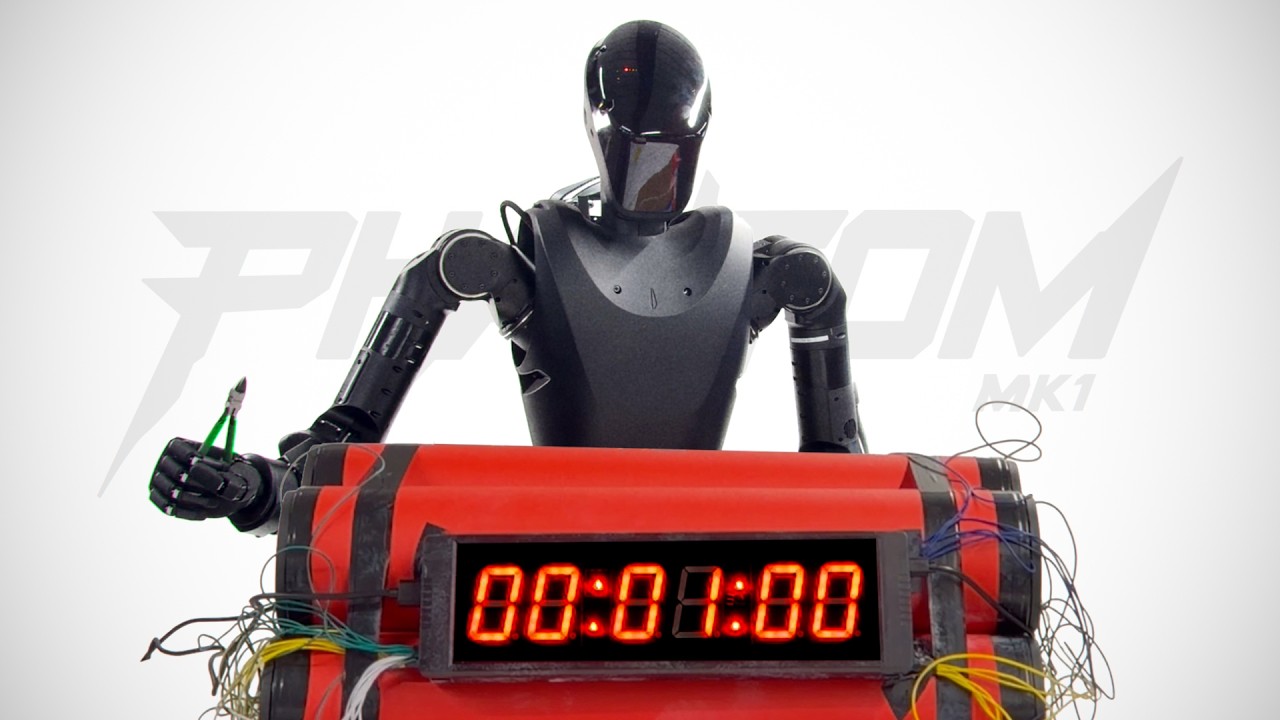
- Foundation is pitching its Phantom humanoid robot as a potential tool for surveillance and reconnaissance along the southern border, with Pathak saying it could operate in rugged terrain that is difficult for people, vehicles, drones and fixed cameras to reach.
- The company says Phantom can autonomously navigate uneven terrain, distinguish people from other obstacles and map its surroundings, conducting reconnaissance and flagging potential border crossings so human officers can decide how to respond.
- Foundation says the robots could also potentially operate in tunnels and provide continuous surveillance, allowing personnel to remain in safer locations.
Compiled by The Product DeskSomething wrong?How this is made
Why it matters
Foundation is pitching its Phantom humanoid as a surveillance and reconnaissance tool for the US southern border, with CEO Sankaet Pathak saying the company has demonstrated the technology to Department of Homeland Security officials and is in discussions with several national security agencies [1][3]. DHS, according to Fox News reporting relayed by Interesting Engineering, says it currently has no agreements, no pilots and no active prime contracts with the company [2].
That is the entire lesson in reading robotics announcements. A demonstration is a meeting; a pilot is a budget line with an owner; a prime contract is a legal obligation with delivery dates. The first requires only that someone in government agree to watch. The second and third require someone to be accountable for the outcome, and DHS is on record saying neither exists [2].
What the vendor claims about the machine is worth separating from what the buyer has committed to. Foundation says Phantom can autonomously navigate uneven ground, distinguish people from other obstacles, map its surroundings and flag potential border crossings for human officers to act on [4]. Pathak frames the value as reaching terrain that is hard for people, vehicles, drones and fixed cameras [3], with tunnels and continuous watch as possible extensions that keep personnel in safer locations [5]. All of that is capability description, not deployment evidence.
The published specification is more checkable. Phantom stands 5 feet 11 inches, weighs 176 pounds, has 29 degrees of freedom, a top speed of 1.7 m/s and a payload of 88.2 pounds [9]. That top speed is roughly 3.8 mph, a brisk human walk [14], and the payload is about half the robot's own mass [15]. Its cycloidal actuators are rated at up to 160 Nm peak torque, back-driving torque below 1 Nm and response under 10 milliseconds [10]. The control stack, Cortex, uses Deep Variational Bayes Filters, and Foundation says the approach needs less data than reinforcement or imitation learning while generalising better [11]. That last claim is the company's own, and it is the kind of assertion that only field hours settle.
Then there is the disclosure that undercuts the border framing: weather resistance is a limitation of the current Phantom, with a waterproof and dustproof second generation expected in the coming months [6]. A machine that is not yet rated for rain and dust is not a machine for rugged outdoor patrol. Pathak nonetheless says a pilot could begin soon, followed by a larger deployment [7]. He also said Foundation would consider arming the robots if the government asked, while stressing that enforcement decisions would stay with human officers [8].
For operators, the reading protocol is simple. Ask whether the announcement names a contract vehicle, a pilot owner or a delivery date. Ask whether the hardware being pitched is the hardware that exists, given that Phantom is Foundation's first production humanoid [13] and the ruggedised version is still forthcoming [6]. A tendon-driven hand catching a baseball is a real engineering result [12], and it says nothing about procurement.
What to watch: whether the second-generation Phantom ships with the stated environmental rating [6], and whether DHS's position changes from no agreements [2] to a named pilot with a named sponsor. Until one of those moves, the story remains a demonstration.