Leadership1 publisher3 min readPublished
New York's one-year moratorium, Pennsylvania's local-approval requirement and Arizona's tax-break pause all came from officials who once competed for these projects. Siting is now a political question.
The Board Room · Leadership desk

Follow any of these and your For You feed starts watching them — no settings page required.
Compiled by The Board RoomSomething wrong?How this is made
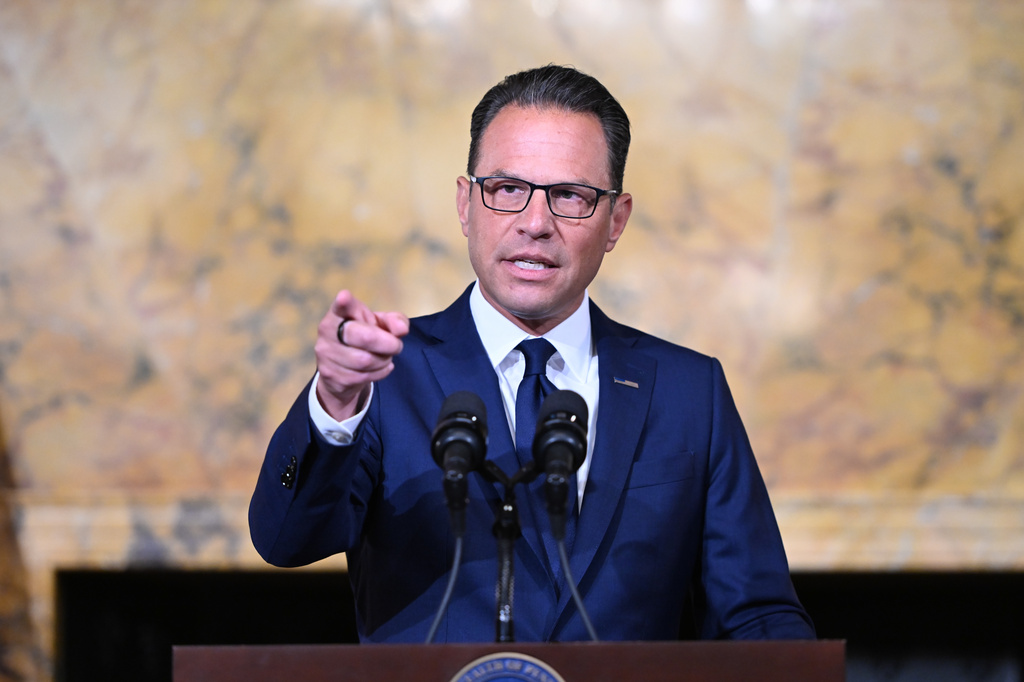
The Pennsylvania order works by sequence. Governor Josh Shapiro's guardrails are not a moratorium, but they make local approval a precondition of a state permit [6][7], and data centers came out of fast-track review at the same time [8]. Spotlight PA reported that rolling permit review is available to developers who agree to follow Shapiro's power generation and transparency guidelines [8]. Community opposition now counts as a gating item on the construction schedule, not just a public relations cost.
The portable piece of New York's action is its threshold. Because Governor Kathy Hochul's one-year ban applies to data centers needing 50 megawatts or more [2], anything specified below that line sits outside it [19], and another governor can lift the same number into an executive order without reopening the argument about local control. Hochul's separate condition, that data centers either build their own generation or pay a premium into the grid [3], is the one that lands in a pro forma rather than a permit file.
The three governors who acted are all Democrats, and on the Republican side the record here is thin. Business Insider's tally names Greg Abbott of Texas, a state already home to hyperscale projects [16], and Florida's GOP gubernatorial nominee Byron Donalds, who may inherit a pipeline of proposals [17], but the measures actually on paper belong to Hochul, Shapiro and Katie Hobbs. Several officials in that count told the publication they had not changed their minds at all [15], which limits how much the record can show. Still, each of the three moved from an earlier position: Shapiro had called Amazon's $20 billion plan the largest private sector investment in Pennsylvania history [9], Hobbs voted as a state lawmaker for the Arizona exemption she later moved to end [13], and as recently as May, Hochul was describing siting as a local land use matter outside her purview [4].
Duration is where the two kinds of risk separate. Arizona's pause on new data center sales tax breaks runs three years, three times the length of New York's moratorium [12][18]. A year of delay is a schedule cost that a large balance sheet absorbs; three years without the sales tax exemption is a returns question for any project whose model carried that line. Hochul's stated reason for taking the decision up a level, that municipalities lacked the clout to negotiate their own terms [5], is the part that travels to other states, and it aims the risk at the state permit rather than the town hall. A siting team picking a shortlist this quarter is picking a political counterparty for several quarters after, which was not the job when statewide officials were competing to announce these projects [14].
Ranked by verification strength, evidence, and original report placement.
In July, New York Governor Kathy Hochul, a Democrat, made New York the first state to impose a one-year moratorium on what she called "hyperscale AI data centers".
Hochul's executive order states that the temporary ban applies to data centers that need 50 megawatts or more to operate.
Hochul separately ordered that data centers either pay for their own power generation or pay more for the energy they need.
In May, Hochul questioned the need for a more stringent moratorium being considered by the state legislature, telling reporters it was "a local decision for municipalities, it's land use, which is the purview of local governments".
Hochul told NBC News that local communities had asked for her assistance and that they lacked "the negotiating ability, the clout, the wherewithal" to secure the best benefits or ensure companies bring their own power or pay a premium into the grid.
In August, Pennsylvania Governor Josh Shapiro, a Democrat, unveiled what he called "the strictest guardrails in the nation" for future data center development; the order is not a moratorium.
Evidence-backed comparisons of source perspectives and observed adoption signals. Read the methodology
Which Builder, Operator, and Investor concerns the observed source mix emphasized—not a truth score.
Evidence, demonstrated adoption, hype gap, incentives, and confidence are assessed independently, each on its own current evidence. How these are measured.
Named quotes, one newsroom
Each measure is pinned to a month, an instrument and a quoted official, and Business Insider hands several quotes off to E&E News, NBC News, CBS News and Spotlight PA rather than claiming them. The executive orders themselves are summarised, not shown, so the operative details, including the 50-megawatt trigger and what the Pennsylvania guidelines actually require, depend on one newsroom's reading of documents a reader cannot inspect from here.
Signed in three states, effects unmeasured
These are enacted instruments rather than proposals: an executive order in New York, an order in Pennsylvania, a budget agreement in Arizona, with eight further officials sketched in the same piece. The half that is absent is downstream. Nothing in the reporting counts a project stopped, moved or slowed, and no developer is quoted on what changed for them.
Officials' self-labels passed along
The core assertion survives inspection: three governors did constrain projects they once chased, and the dates are checkable. The stretch is in the labels the politicians picked for their own work, 'first state' and 'the strictest guardrails in the nation', which travel through the piece untested, and in a changed-their-tune frame that some of the profiled officials tell Business Insider they do not accept.
Election-year lines quoted at face value
Business Insider says up front that some of these figures face voters in November, which makes 'I listened' both a plausible explanation and a convenient one. Hobbs calls the exemption she once voted for a corporate handout; Shapiro says he will not be bullied by developers. The companies carrying the cost of all three decisions never speak in the piece, so one side of the incentive is fully audible and the other is silent.
Solid on the acts, silent on the consequence
Thresholds, dates and quotes are specific enough that an error would be easy to catch, and the three centrepiece actions are matters of public record. What holds the number down is the absence of any second newsroom in our coverage and the absence of any measurement of what these orders do to the build pipeline.
product
Governors who fast-tracked AI data centers are now suspending their own incentives1 publisher
invest
Water permits and county races now set the pace of a $700bn data center build1 publisher
leadership
Pennsylvania makes the township vote the gating item for data center permits3 publishers
product
Abbott says developers dug their own grave. Now price the audit, not the incentive1 publisher
Publishers with included, body-backed reporting in this cluster.
1 article · September 8, 2026