Science1 publisher3 min readPublished
A 100-million-year-old lignin detour is the transferable part of the grass story
A Science paper says grasses gained a second starch route and inherited a second lignin route, and that two mutations suffice to build the lignin bypass. The genes are not named in the public account.
The Scientist · Science desk
Drafted by a language model from the sources cited here and checked against its claim ledger before publication. How we use AISend a correction
What happened
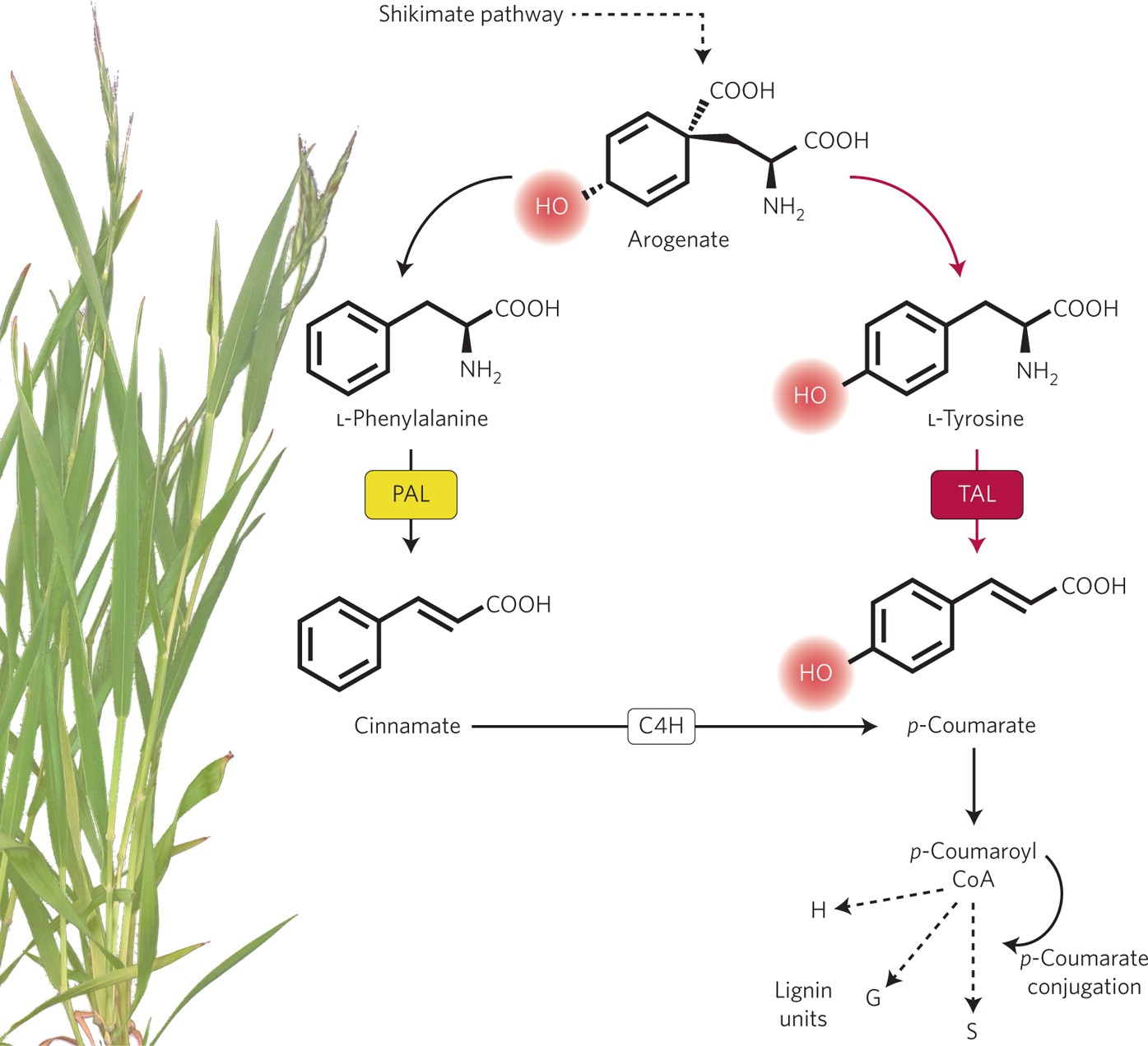
- Around 100 million years ago, ancestors of grasses including wheat, rice and maize developed "bypasses" in the chemical pathways used to create lignin and starch.
- The finding was published in Science on Aug. 20 by researchers from the University of Wisconsin-Madison and their collaborators.
- Hiroshi Maeda: "We found two mutations in their DNA that are critical and sufficient to create this new bypass pathway," adding that similar mutations could be introduced in other plants to create the second lignin pathway.
- Grasses and cereal grains make up the majority of global human caloric intake.
- It remains a mystery how grasses became dominant and successful in nature and agriculture.
Compiled by The ScientistSomething wrong?How this is made
Why it matters
Researchers at the University of Wisconsin-Madison and collaborators reported in Science on Aug. 20 that the ancestors of wheat, rice and maize acquired duplicate routes, described as "bypasses," through the pathways that make lignin and starch roughly 100 million years ago [1][2]. The operational part is the lignin result: the team says it found two DNA mutations that are critical and sufficient to create the second lignin route, which makes the trait a candidate for installation in plants that lack it [3].
The comparison organism did the heavy lifting. Grasses have no close living relative in wide cultivation, so the group, including James Leebens-Mack at the University of Georgia, used Joinvillea ascendens, a slow-growing plant from wet South Pacific island forests [6][17]. Only two of more than 100 seeds from the National Tropical Botanical Garden in Hawaii germinated at first, and it took two more years to grow enough tissue to sequence [7]. That is a germination rate under 2 percent, which is why this comparison had not been made before [8]. Genomes of Joinvillea and three related species were sequenced and thousands of genes compared [9].
Starch came out asymmetric: Joinvillea has one route to starch, all grasses have two [10]. The extra route arose in the common ancestor of all grasses, and according to the account of the work it lets grasses produce twice the energy of Joinvillea and other non-grass plants [11]. The proposed mechanism is seed vigour, since a better-provisioned seed emerges and starts photosynthesis sooner and shades out slower neighbours [13]. Hiroshi Maeda, the UW-Madison botany professor who led the lab, frames that as an advantage in open, sunny habitats that also happened to suit agriculture [12].
Lignin came out the other way. Joinvillea also has two lignin routes, so the dual-pathway trait predates the grass family rather than defining it [14]. That matters for anyone reading the paper for targets: the lignin bypass is the older of the two changes and the one the authors say they can reconstruct from two mutations [19][3]. It is also the change that maps onto the odd combination breeders care about, high lignin content with fast growth, where woody plants normally trade one against the other [15].
The limit of the public account is that it names no genes. Neither the enzymes carrying the second lignin route nor the two sufficient mutations are identified in the report we have [18], so a target list has to come from the Science paper itself. Maeda's stated applications are larger energy stores via extra starch capacity and improved structural strength and resilience via more lignin [16]; digestibility and saccharification, the usual reason to touch lignin in a forage or bioenergy crop, are not addressed [18].
Worth watching: whether the two mutations reconstitute measurable flux when moved into a non-grass, and whether an added lignin route changes cell wall composition in a direction that helps biomass yield but hurts feed value. The starch claim of doubled energy is a summary phrasing, not a yield figure [11], and should be checked against the paper's measurements before anyone builds a breeding case on it.