OpenAI's 700-manuscript proof release stalls where mathematicians have to check it
OpenAI released more than 700 AI-generated math manuscripts on October 6, claiming solutions to hundreds of open problems. Only about 42 percent were formalized in Lean, The Verge reported, so specialists trust what they can verify and wait on the rest.
Not a builder's beat, but builders have a standing stake in it.
Four key figures. 300 top-line results formalized so far, by OpenAI's account, which says it will add more. 722 manuscripts released; reports vary from 719 to 722. Nearly 400 AI-generated results. About 4,000 problems the model was asked to attempt.
| Figure | Value | Note | Claim |
|---|---|---|---|
| Top-line results formalized | 300 results | OpenAI says it will add more | 11 |
| Manuscripts released | 722 manuscripts | reports vary: 719–722 | 5 |
| AI-generated results | 400 results | reported as nearly 400 | 6 |
| Problems the model attempted | 4,000 problems | about 4,000 | 7 |
What happened
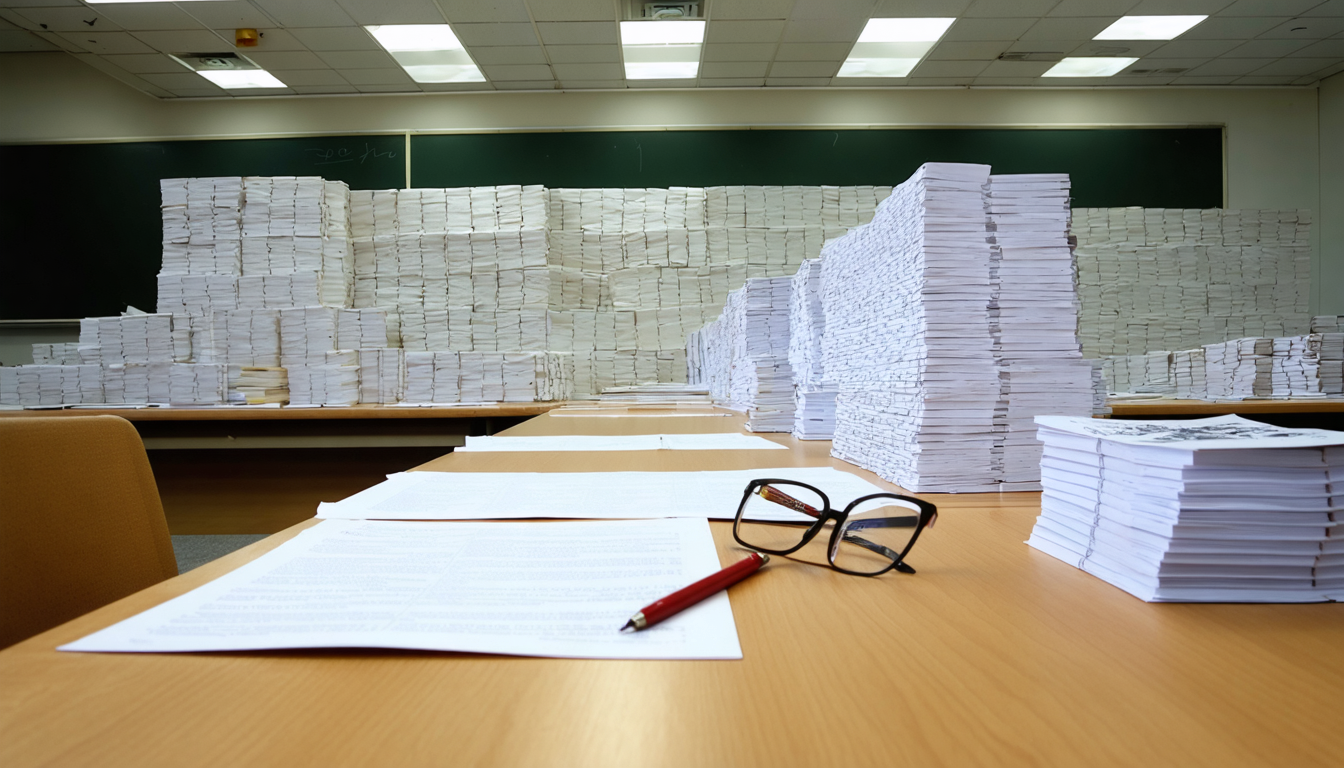
- Several mathematicians said simply working through the roughly 40-page table of contents and abstracts took them the better part of an hour. "Just going over the entire list of abstracts is overwhelming," said Alvaro Lozano-Robledo, a professor of mathematics at the University of Connecticut.
- Kevin Buzzard, a mathematics professor at Imperial College London, identified numerous theorems in his area, algebraic number theory, of which only around six immediately stood out; few, if any, of those appeared to be formally verified in Lean.
- "Hence, I either have to read possibly-not-correct slop, or wait for others to do the same, or wait for someone to formalise them before I can say for sure that the results are even correct."
- On October 6, 2026, OpenAI released more than 700 manuscripts at once, claiming solutions to hundreds of open math problems.
- OpenAI released 722 manuscripts in 372 families, across number theory, complexity theory and mathematical physics.
Why it matters
Kevin Buzzard, a mathematics professor at Imperial College London, went through OpenAI's release looking for theorems in his own area, algebraic number theory. He found numerous ones, and around six that immediately stood out, The Verge reported [2]. Few, if any, of those six appeared to be formally verified in Lean [2]. "Hence, I either have to read possibly-not-correct slop, or wait for others to do the same, or wait for someone to formalise them before I can say for sure that the results are even correct," Buzzard said [3].
Getting that far took time. Several mathematicians told The Verge that working through the roughly 40-page table of contents and abstracts took them the better part of an hour [1]. "Just going over the entire list of abstracts is overwhelming," said Alvaro Lozano-Robledo, a mathematics professor at the University of Connecticut [1].
Users narrowed the release to their own specialty and looked for a Lean file. Where there wasn't one, they waited for someone else to do the reading [2][3]. Release teams tell themselves users read the headline count and start building on it.
What shipped, and who it was built for
OpenAI put more than 700 manuscripts on GitHub on October 6, claiming solutions to hundreds of open problems [4]. The counts vary with the counter. Exponential View tallied 722 manuscripts in 372 families [5]. The Verge reported nearly 400 results [6]. OpenAI's own verification figures, as The Verge relayed them, used a base of 719 manuscripts [11]. The repository was big enough that OpenAI published guidance on how to navigate it [6].
A LessWrong post describes how it was produced. A single model, mostly working from a single prompt, was asked to attempt about 4,000 problems and spent an average of three hours of compute per solution found [7]. The prompt included the line 'Even if the problem is "open," the intention is that you should resolve it and present a full solution.' [8] Set against The Verge's count of nearly 400 results, the hit rate is roughly one in ten [39].
Johannes Schmitt, one of the researchers whose responses The Decoder collected, argued the papers were a secondary result of OpenAI's work on its models. In his view, the company used unsolved problems as tests because its frontier models had outgrown easier ones [9]. If he is right, the first customer for this release was OpenAI's own model team, and mathematicians received the by-product, more than 700 manuscripts at once [4][9].
A machine check, and the cost of checking it
Lean is what makes any of this usable at speed. Formalizations in the proof assistant have been instrumental in assessing OpenAI's earlier math claims, The Verge reported, because they give researchers confidence that a claim is logically correct even when they do not fully understand the argument [10].
Coverage was partial. On GitHub, OpenAI said the results are "at different stages of verification" and that "many, but not all, of the manuscripts have been formalized" [11]. By its count, 300 top-line results out of 719 manuscripts had been formalized, around 42 percent, and it said it "will update the repository with more formalizations as we obtain them" [11]. Counted as a share of manuscripts, as The Verge did, that leaves 419 without a formal proof [40].
Researchers also have to confirm that the formalization proves what the manuscript claims. Several mathematicians told The Verge the quality was inconsistent and the verified statements did not always map neatly onto the claims in the papers [12]. Some papers have already been withdrawn, and others drew criticism for being difficult to read, according to The Decoder [13].
Time-to-value for the people expected to build on this work is measured in years: the mathematicians The Verge spoke with agreed that simply understanding the release could take that long, and many feared OpenAI would move on, or release more, before then [14].
A correct proof with nobody behind it
Terence Tao's response separates correctness from use. He wrote that the proofs appeared to "introduce clever new ideas that will be fruitful once digested," and said he was "deeply frustrated" that nobody was available to discuss the work, present it in talks or teach it to students, The Decoder reported [15]. Bryna Kra, a mathematics professor at Northwestern University, made the same complaint to Business Insider. "Mathematics is an extraordinarily collaborative field," Kra said. "There is nobody at this company who could possibly give a talk or answer technical questions about any of these results." [16]
The field has seen a proof without a presenter before. Ian Agol compared the release to Grigori Perelman's 2002 proof. Perelman gave few talks about his work, and several research teams spent years reconstructing the missing steps [17].
Exponential View, writing about knowledge and the ability to share it coming apart, put the requirement on the machines: "We could bring them together if we insist our AI systems provide explanations, not merely proofs. If we don't, we'll have more answers and less understanding." [18]
OpenAI's stated plan addresses part of this. The company said the release included protocols for revisions and citations, and that it planned to improve the papers' presentation and fund workshops to help researchers understand the results [19]. It did not respond to Business Insider's request for comment [19].
What verification does not reach
Most of the reaction was about something other than checkability. Of more than 100 researcher responses collected by the blog Proofs and Prompts, few focused on the quality of the solutions, The Decoder found; many described shock, paralysis and fears about their future in the profession [20].
Ben Green said some results were "absolutely shocking to me." According to Green, the release resolved roughly three-quarters of the research goals in a prestigious European grant he had received that June [21]. "So we've had whole research programs wiped out on Tuesday by their dump," Tristan Buckmaster, a mathematics professor at New York University, said on CNBC [22]. Hugo Duminil-Copin, a 2022 Fields Medalist, wrote that OpenAI claimed results on every major unsolved problem he had publicly discussed over his career. "The shock is immense. I am paralysed," he wrote [23]. In a seminar, he said his PhD students and postdocs were "in a state of total panic" [24].
Credit is the second grievance. "You have to understand, they have access to all our research proposals," Buckmaster said, according to Business Insider, describing grant panelists who put summaries of proposals into a language model [25]. Speaking to The New York Times about an earlier development, he said: "There's likely to be a bunch of results where they take someone's work and then take it to completion." [26] Kra worries that researchers who fear their unfinished ideas could be absorbed by AI before publication will become more secretive [27]. That is a change in user behavior, and it runs against the open seminar culture the release depends on. A new group calling itself the Association for Human Mathematics has called on mathematicians to stop working with OpenAI [28]. Alex Kontorovich, a distinguished professor at Rutgers who sees reasons for optimism, said: "I don't think we have any interest in giving prizes to someone who pressed the button." [29]
In our view, full Lean coverage would have solved Buzzard's problem and left Green's untouched. The grievances in this section concern careers and credit [21][25].
The crypto scare had no artifact to check
Peter Scholze carried the worry into security. He raised the possibility that these systems could find ways to break widely used encryption, writing that the difficulty of finding such algorithms "does, to my non-expert eyes, not significantly exceed what these systems are now capable of." [30]
On October 7, Ethereum Foundation researcher Justin Drake warned that powerful AI systems might eventually find attacks on the elliptic-curve cryptography that authorizes blockchain transactions [32]. Exponential View reported he urged preparation for "bunker mode," warning AI could undermine those signatures before quantum computers do, and that Meltem Demirors called it a "sobering moment" for the industry [31]. Vitalik Buterin backed taking the possibility seriously but discouraged users from rushing to move funds into new wallets [32]. Buterin also warned that AI could find shortcuts against lattice-based cryptography, comparing the risk to the history of integer factorization [33]. As an illustration, he floated multiplying key sizes by ten, and said Ethereum's long-term roadmap has moved toward hash-based signatures and proofs [34].
Charles Hoskinson, Cardano's founder, answered on October 9. "The factoring analogy is wrong," he wrote, arguing that Buterin had not identified a credible new attack [35]. "The case against lattices is the GNFS story, a.k.a. a hunch about 'structure,' and a multiplier pulled out of thin air," Hoskinson wrote [36]. He called the ten-times idea "numerology" and said security parameters must move with measurable improvements in attack algorithms [34]. The lattice schemes at issue, ML-KEM and ML-DSA, were approved by the U.S. National Institute of Standards and Technology in August 2024 as FIPS 203 and FIPS 204 [37]. Steering developers away from them, Hoskinson warned, could slow protections already being deployed and leave systems exposed to future quantum attacks [38].
The two men disagree on how to act on a warning. Neither, in these reports, points to an AI-found attack on any of the schemes they are arguing about [35]. Hoskinson is applying Buzzard's standard to security: change parameters when there is a measured result [34]. We think Buterin's own advice to users, not to rush their funds into new wallets, sits closer to that standard than the public exchange suggests [32].
A 2x2 for Monday
For a team shipping AI output to expert users, two questions sort it. The first is whether the person receiving the output can verify it at a cost they will actually pay, including confirming that the check matches the claim [12]. The second is whether a named person can answer questions about it [16].
- Checkable, with an owner. Experts adopt it. Nothing in this release fully fits yet; a Lean-verified result plus the workshops OpenAI has promised would come closest [11][19]. - Checkable, no owner. Trusted but undigested. This is Tao's "fruitful once digested" case, and Agol's Perelman comparison puts the digestion in years [15][17]. - Owned, not checkable. Argued over and not acted on. Buterin and Hoskinson have put their names to opposite positions, and the decision waits on a measured attack [34][35]. - Neither. Buzzard's pile. Users wait for someone else to read it [3].
We think teams should ship the checkable-and-owned quadrant first and hold the rest until it qualifies. The tradeoff is a smaller launch: on OpenAI's own count, leading with formalized work would have meant 300 results instead of a 719-manuscript repository [11]. We would track two numbers for the rollout: the share of outputs whose check has been matched to the claim, and how long it takes an outside expert to cite or build on a result.
One question sits outside the grid. It asks whether the output finishes work that a user was paid to do. For Green's grant and the research programs Buckmaster described, the answer was yes [21][22].
What to watch
- Whether OpenAI's formalized share climbs past 300 of 719 manuscripts, and whether outside checkers confirm the Lean statements match the claims in the papers.
- Whether the workshops OpenAI says it will fund take place, and whether anyone presenting at them can answer technical questions about specific results.
- Any measured, AI-assisted improvement against ML-KEM, ML-DSA or elliptic-curve signatures, the kind of evidence Hoskinson says should drive parameter changes.
Claim ledger
Ranked by verification strength, evidence, and original report placement.
- [1]
Several mathematicians said simply working through the roughly 40-page table of contents and abstracts took them the better part of an hour. "Just going over the entire list of abstracts is overwhelming," said Alvaro Lozano-Robledo, a professor of mathematics at the University of Connecticut.
- [2]
Kevin Buzzard, a mathematics professor at Imperial College London, identified numerous theorems in his area, algebraic number theory, of which only around six immediately stood out; few, if any, of those appeared to be formally verified in Lean.
- [3]
"Hence, I either have to read possibly-not-correct slop, or wait for others to do the same, or wait for someone to formalise them before I can say for sure that the results are even correct."
- [4]
On October 6, 2026, OpenAI released more than 700 manuscripts at once, claiming solutions to hundreds of open math problems.
- [5]
OpenAI released 722 manuscripts in 372 families, across number theory, complexity theory and mathematical physics.
- [6]
OpenAI released nearly 400 AI-generated results spread across more than 700 manuscripts; the collection was so vast that OpenAI published guidance on how to navigate the GitHub repository.
- [7]
The results came from a single model, mostly on a single prompt, working an average of three hours of compute per solution found, after being asked to try its luck at about 4,000 problems.
- [8]
The prompt included the line: 'Even if the problem is "open," the intention is that you should resolve it and present a full solution.'
- [9]
Johannes Schmitt argued that the research papers were a secondary result of OpenAI's efforts to improve its models, and that the company used unsolved problems for testing because frontier models had outgrown easier challenges.
- [10]
Lean formalizations have proven instrumental in assessing some of OpenAI's previous mathematical claims, giving researchers confidence that a claim is logically correct even if they don't fully understand the argument behind it.
- [11]
On GitHub, OpenAI acknowledged the results are "at different stages of verification" and that "many, but not all, of the manuscripts have been formalized." OpenAI said only 300 top-line results out of 719 manuscripts had been formalized, around 42 percent, and that it "will update the repository with more formalizations as we obtain them."
- [12]
Even when Lean code accompanies a result, researchers must check that the formalization actually proves what the result claims; several mathematicians said the quality of the computer-verifiable proofs was inconsistent and the statements they verified did not always appear to map neatly onto the claims in the manuscripts.
- [13]
Some papers have already been withdrawn, and others have drawn criticism for being difficult to read.
- [14]
Researchers agreed that simply understanding what OpenAI had released could take years; many feared OpenAI would not wait that long before moving on, or releasing even more.
- [15]
Terence Tao wrote that the AI-generated proofs appeared to "introduce clever new ideas that will be fruitful once digested," but was "deeply frustrated" by the absence of people who could discuss the work, present it in talks, or teach students about it.
- [16]
"Mathematics is an extraordinarily collaborative field," Kra said. "There is nobody at this company who could possibly give a talk or answer technical questions about any of these results."
- [17]
Ian Agol compared the situation with Grigori Perelman's 2002 release of a major proof; Perelman gave few talks, and several research teams then spent years reconstructing the missing steps.
- [18]
"We could bring them together if we insist our AI systems provide explanations, not merely proofs. If we don't, we'll have more answers and less understanding."
- [19]
OpenAI said the math results included protocols for revisions and citations, and that it planned to improve the papers' presentation and fund workshops to help researchers understand AI-generated results. OpenAI did not respond to a request for comment.
- [20]
The math blog Proofs and Prompts collected over 100 responses from researchers; few responses focus on the quality of the solutions themselves, and many mathematicians instead describe shock, paralysis, and fears about their future in the profession.
- [21]
Ben Green described some results as "absolutely shocking to me"; according to Green, the release resolved roughly three-quarters of the research goals covered by a prestigious European grant he had received that June.
- [22]
"So we've had whole research programs wiped out on Tuesday by their dump," Tristan Buckmaster, a mathematics professor at New York University, told CNBC's Squawk Box.
- [23]
Hugo Duminil-Copin, a 2022 Fields Medalist, said OpenAI claimed results on every major unsolved problem he had publicly discussed over his career, and wrote: "The shock is immense. I am paralysed."
- [24]
In a seminar, Hugo Duminil-Copin said his PhD students and postdocs were "in a state of total panic".
- [25]
"You have to understand, they have access to all our research proposals," Buckmaster said, explaining that panelists reviewing research proposals often put their summaries into an LLM.
- [26]
Speaking to The New York Times about an earlier development, Tristan Buckmaster said: "There's likely to be a bunch of results where they take someone's work and then take it to completion."
- [27]
Kra worries that the fear that unfinished ideas shared in talks and conversations could be absorbed by AI before they are made public could make mathematicians more secretive.
- [28]
A new group calling itself the Association for Human Mathematics criticized the release and called on mathematicians to stop working with OpenAI.
- [29]
"I don't think we have any interest in giving prizes to someone who pressed the button," said Alex Kontorovich, a distinguished mathematics professor at Rutgers University who sees reasons for optimism.
- [30]
Peter Scholze raised the possibility that these systems could find ways to break widely used encryption methods, writing that the difficulty of finding such algorithms "does, to my non-expert eyes, not significantly exceed what these systems are now capable of."
- [31]
Justin Drake urged preparation for "bunker mode," warning that AI could undermine the digital signatures that authorize transactions before quantum computers do; Meltem Demirors called it a "sobering moment" for the industry.
- [32]
On October 7, Ethereum Foundation researcher Justin Drake warned that powerful AI systems might eventually discover attacks against the elliptic-curve cryptography used to authorize blockchain transactions. Buterin supported taking those possibilities seriously but discouraged users from rushing to move their funds into new wallets.
- [33]
Buterin warned that AI could uncover mathematical shortcuts against lattice-based cryptography, comparing the possible development to advances in integer factorization.
- [34]
Hoskinson rejected Buterin's illustrative suggestion that multiplying key sizes by ten might protect against AI-driven advances, calling it "numerology" and arguing that security parameters must be adjusted according to measurable improvements in attack algorithms. Buterin said Ethereum's long-term lean roadmap has moved toward hash-based signatures and proofs.
- [35]
Hoskinson responded on October 9, writing "The factoring analogy is wrong," and arguing that Buterin had not identified a credible new attack that would justify abandoning lattice methods or substantially increasing key sizes.
- [36]
"The case against lattices is the GNFS story, a.k.a. a hunch about 'structure,' and a multiplier pulled out of thin air," Hoskinson wrote.
- [37]
NIST approved ML-KEM and ML-DSA in August 2024 under FIPS 203 and FIPS 204, following years of research and public evaluation; it separately standardized the hash-based SLH-DSA under FIPS 205.
- [38]
Hoskinson warned that encouraging developers to abandon established lattice approaches could slow adoption of protections already being deployed across internet infrastructure, leaving systems exposed to future quantum attacks.
- [39]
Nearly 400 results from about 4,000 attempted problems is a hit rate of roughly one in ten.
- [40]
Counted as a share of manuscripts, 419 of the 719 manuscripts lacked a formalization at release.
Sources & coverage · 8 publishers
The reporting this story was synthesized from, earliest first. Every link goes to the original.
- crypto.newsOlivia StephanieOct 9Cardano’s Hoskinson challenges Vitalik over AI threats to crypto
Cited in this coverage: crypto.news
- lesswrong.comZviOct 9New Math from OpenAI
- techrepublic.comJoseph OfonagoroOct 9OpenAI Claims 370+ Mathematical Results, Researchers Raise Questions
- cryptoslate.comOluwapelumi AdejumoOct 9Hoskinson says Vitalik’s AI warning could delay the internet’s quantum defenses
- theverge.comRobert HartOct 9‘Pure insanity’: Mathematicians will need years to make sense of OpenAI’s latest drop
- businessinsider.comKatherine Li (katherineli@businessinsider.com)6d agoAn NYU professor says OpenAI's mass release of math papers wiped out early-career researchers' projects
- exponentialview.co5d agomight mean for the future of human knowledge
- exponentialview.co5d ago🔮 AI & Math 2.0, Pakistan’s solar hedge & who controls computing++