Product1 publisher3 min readPublished
Starlink Mini works fine at home. The plan attached to it is the expensive one.
Starlink says the compact dish supports fixed use, but in the US it is sold around Roam pricing, where unlimited data runs $175 a month against $130 for Residential Max.
The Product Desk · Product desk
Drafted by a language model from the sources cited here and checked against its claim ledger before publication. How we use AISend a correction
What happened
- Starlink says its compact Mini dish supports fixed and portable use, meaning it can serve as a main home internet connection.
- In the US, Starlink Mini is generally tied to the company's Roam plans rather than its Residential service.
- Roam starts at $55 per month for 100GB of high-speed data, rises to $80 for 300GB, and costs $175 for unlimited service.
- Residential plans offer unlimited data and start at $55 for 100 Mbps, with a 200 Mbps tier at $85 and Residential Max at $130 per month.
- A Roam 100GB customer pays the same $55 starting price as Residential 100 Mbps while getting a limited high-speed data pool.
Compiled by The Product DeskSomething wrong?How this is made
Why it matters
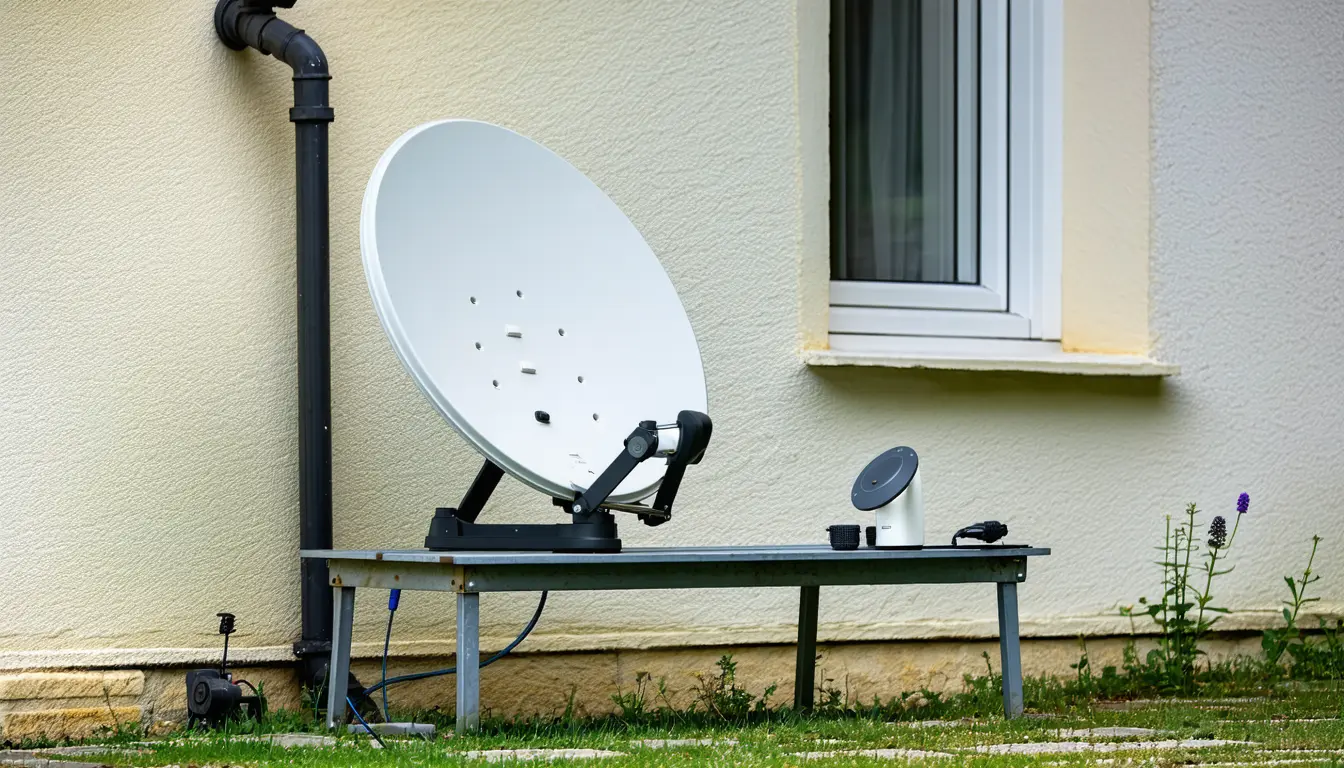
Starlink says its compact Mini dish supports both fixed and portable use, so nothing stops you from parking one in the backyard and running the house off it [1]. The catch, at least in the US, is that the Mini is generally tied to the company's Roam plans rather than Residential service [2], which turns a hardware purchase into a tariff commitment.
The numbers, as reported by Engadget: Roam starts at $55 a month for 100GB of high-speed data, rises to $80 for 300GB, and costs $175 for unlimited [3]. Residential plans all include unlimited data and also start at $55, for 100 Mbps, with 200 Mbps at $85 and Residential Max at $130 [4]. Read the entry tiers side by side and the Roam customer is paying the same $55 as the Residential 100 Mbps customer while receiving a capped high-speed pool instead of unlimited data [5]. Once that pool is spent, Starlink drops the connection to unlimited low-speed data for the remainder of the billing period [6].
Buying out of the cap is where the structure bites. Roam Unlimited at $175 is $45 a month more than Residential Max at $130 [7], which is $540 over a year for the same nominal promise of unlimited data [8]. And the more expensive plan is not the better-served one: Starlink gives Residential Max customers its highest Residential network priority, while warning that Roam speeds can slow during congestion [9]. Someone using a Mini permanently at a fixed address can therefore pay a premium for a product engineered around mobility [1][9].
The Roam plans do earn their name. They support travel and can be paused [10], which is a real feature for a dish that lives in an RV and dead weight for one bolted beside a porch. Starlink opened the Mini to standalone Roam customers in the US in 2024, dropping the earlier requirement that buyers already hold a Residential subscription [11]. That change made the Mini easier to buy and, in the same move, made Roam the default billing path for it.
Hardware positioning tracks the same split. Starlink aims Standard at higher-demand everyday use such as streaming, gaming and video calls, and the Mini at more basic use and portability [12]. The Mini's integrated Wi-Fi covers up to 1,200 square feet against 3,200 for Standard [13], a difference that matters more in a house than in a van.
A narrow set of customers got the arrangement everyone else wants. Anyone who claimed Starlink's optional Mini kit or bought Residential Max before June 6 can keep the Mini as a no-cost hardware rental and take 50% off Roam service while maintaining the qualifying Max subscription [14]; Starlink says the offer is closed to new customers [15]. At list price, that half-off discount would put Roam Unlimited near $87.50 [16].
Two things to watch. Starlink says Mini hardware can use Residential service in limited regions but does not identify which markets [17], so the US restriction is a policy choice rather than a technical one and could move. Second, the company has begun rolling out a smaller V5 residential dish in select US regions [18]; if that hardware becomes widely available, the fixed-use buyer no longer has any reason to reach for a Mini, and the Roam-versus-Residential arithmetic stops being a trap for anyone shopping carefully.