Product1 publisher3 min readPublished
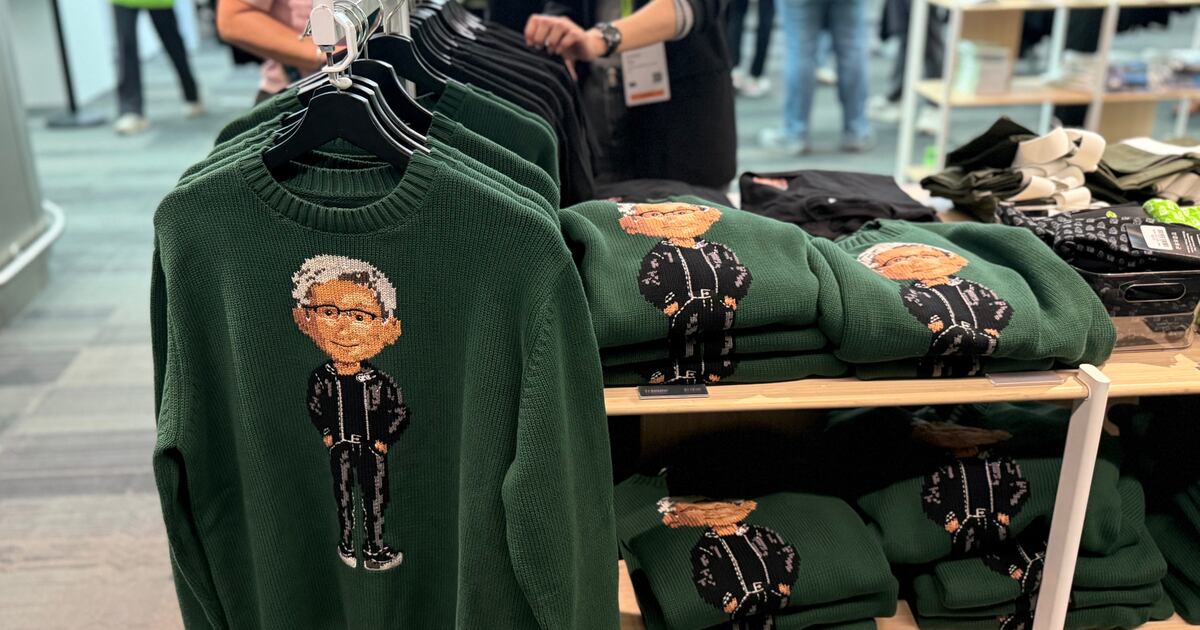
Fans pay $178 for a cartoon of Jensen Huang on an Nvidia sweater
Nvidia sells its clothing only at conference pop-ups and in short online drops, and declined to explain why. The buyers the BBC found describe the purchase as a way to show whose side they are on.
The Product Desk · Product desk
What happened
- Natalie Fratto, a New York start-up founder who does not work for Nvidia, paid $178 for the company's dark green wool jumper printed with a cartoon of chief executive Jensen Huang.
- Nvidia's t-shirts, hoodies and hats are typically sold only from pop-up stalls at its own conferences and in very limited online drops, which the BBC reports sell out very quickly.
- OpenAI usually restricts its branded fashion to employees, putting it on general sale via its website only occasionally, and then for a few days.
- Anthropic ran a temporary coffee shop in Manhattan's West Village last year and for one week handed out free baseball hats embroidered with the word "thinking".
- Palantir, criticised for its military and police work, launched clothing last year and says buyers in more than 60 countries include investors, customers, employees and everyday people.
Compiled by The Product DeskSomething wrong?How this is made
Why it matters
- constraint A team told to copy Nvidia is copying a result it cannot size, and cannot forecast either the print run or the sell-through it needs.
- decision The three programs need three different owners and budgets, so approving a drop means deciding first whether you are funding retail, an employee item, or a week of foot traffic.
- exposure When a buyer says the controversy is the draw, a clothing line puts a company's most contested work into its consumer marketing, and the argument follows the garment into public.
- contradiction Palantir says its clothing is not political. Its own anonymous buyer says the fight about the company is the appeal. Those are two incompatible pitches, and the brand team has to defend both.
Fratto wears the jumper in videos she posts on social media. The people watching are not buying GPUs. Nvidia sells tens of millions of chips a year.
The two named buyers in the BBC's account explain it as affiliation. "I have a New Zealand All Blacks rugby jersey, and I think of my Jensen sweater in kind of the same way," Fratto told the BBC. Jonathan Sargent, a legal assistant in Albuquerque who has bought clothing from both Palantir and Anduril, said: "A lot of apparel today, whether it's Nike or other large brands, can feel disconnected from anything tangible." He added: "But Palantir and Anduril are companies that people associate with building things that have a visible impact, whether that's defence, AI, infrastructure, or decision-making systems."
Each of the three companies runs a different program, with a different owner inside the building. Nvidia's is retail with a supply cap. OpenAI's is an HR item that leaks to the public for a few days at a time. Anthropic's was field marketing with a giveaway budget.
Nvidia, OpenAI and Anthropic all declined to comment, and the BBC's account does not include drop sizes, unit volumes or apparel revenue. So the case that limited supply is what creates the desire rests on a general point from Hazel Clark, who teaches fashion at Parsons School of Design in New York: "It's a very common strategy for brands to use. It elevates the desirability," she said. The BBC's own reading is that the programs are about brand promotion and reputation management.
Palantir's head of strategic engagement, Eliano Younes, said: "Our clothing, like our software, is not political. It's designed for all people who support Palantir and what it stands for." One unnamed US buyer told the BBC he was drawn by the controversy and the "amount of people talking about it", and called the range "the purest form of anti-fashion...and that is what makes it so interesting and unique". Anduril sells a hoodie reading "Rebuild the Arsenal", which the BBC reports reflects the firm's aim of more US defence spending and manufacturing. Clark said critics suggest companies like Palantir use stylish merch "to get their name into a more positive conversations".
For anyone who gets handed a drop to run, two questions settle the design. Who wears it, and who set the supply limit. If the wearer is an employee and the limit is one conference print run, this is an identity program, and the worst outcome is boxes in a storeroom. If the wearer is a stranger in a video and the limit is a timer you chose, this is a marketing channel, and you inherit whatever the comments are arguing about that week. Nvidia's version has a founder on the front who draws crowds competing for autographs and selfies, and whom Mark Zuckerberg has called "Taylor Swift, but for tech". Most companies asked to copy the drop do not have that, and the $178 price depends on it.
What to watch
- Whether Nvidia moves apparel beyond conference stalls and timed drops into a standing store, or publishes any apparel figures.
- Whether OpenAI opens its employee-first clothing to continuous public sale rather than occasional multi-day windows.
- Whether Palantir's lifestyle-brand framing holds up the next time its police and military contracts draw criticism.