Product1 publisher3 min readPublished
Google's Stegra deal turns up to 91,000 tons of green steel into a certificate procurement can buy
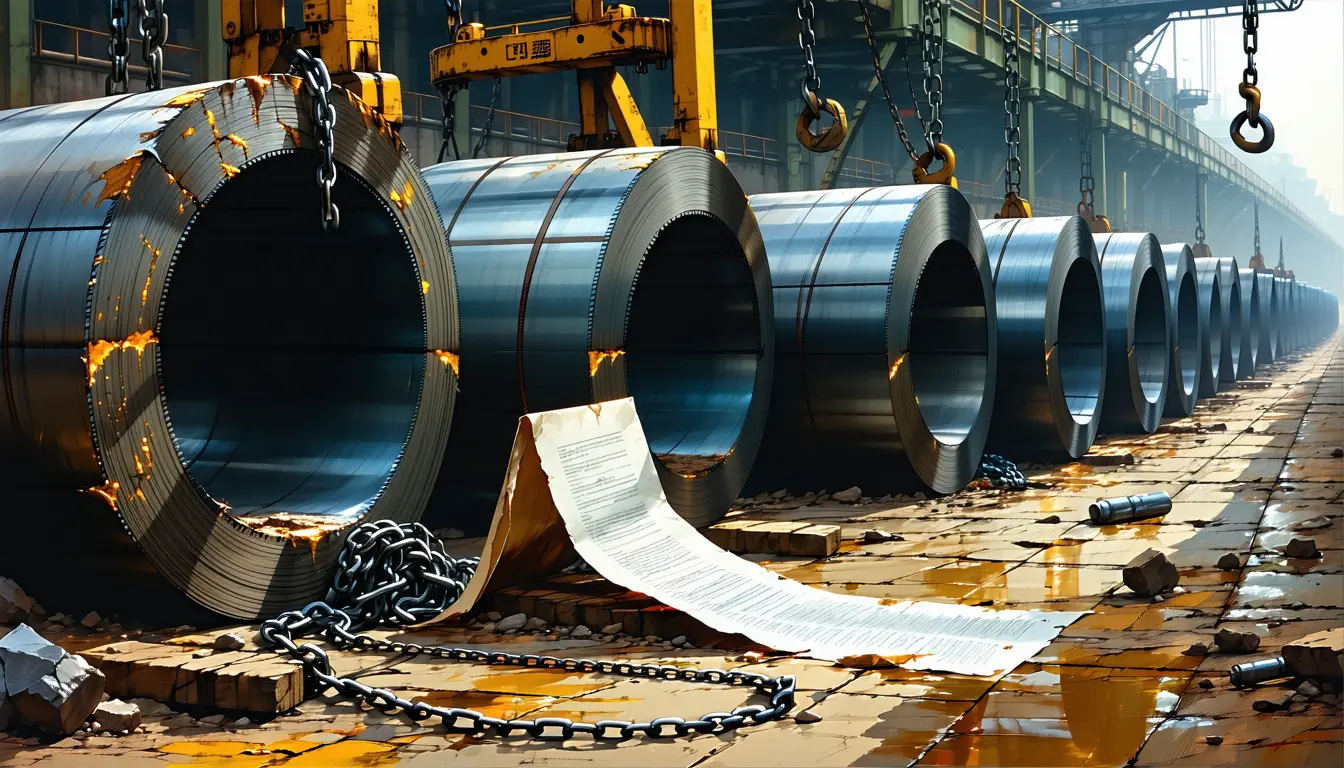
Stegra's plant at Boden will reduce iron with green hydrogen instead of coal. Google's share of the first year of output arrives as environmental attribute certificates a buyer can count against construction emissions.
The Product Desk · Product desk
What happened
- Stegra's plant at Boden in Sweden will use renewable electricity to make green hydrogen and react it with iron ore to produce iron, in place of the coal that traditional steelmaking uses.
- Under the agreement, Google will receive environmental attribute certificates from a portion of Stegra's first-year output, up to 91,000 metric tons of steel.
- Stegra estimates that taking coal out of the process cuts emissions by up to 95 percent against traditional blast furnace manufacturing.
- Stegra says the near-zero emission steel will initially be available only at limited volumes and in a small number of locations.
Compiled by The Product DeskSomething wrong?How this is made
Why it matters
- capability A team that cannot get low-carbon steel delivered to its site now has something it can put on a purchase order. The reported number moves while the fabricator carries on rolling what it always rolled.
- cost Neither company disclosed a price, so finance cannot compare the cost of an attribute against the premium on physical low-carbon steel, or against other abatement it could buy with the same money.
- constraint The volume is tied to one plant's first year of production, so a buyer building certificates into a multi-year embodied carbon plan is planning around supply that has to be renegotiated.
- exposure Google's up-to-40 percent estimate sits in a passage about its whole low-carbon materials programme. A team that repeats it as the yield of the Stegra certificates is claiming more than Google did.
A data centre shell goes out to bid. The drawings ask for low embodied carbon, the fabricator quotes what its mill can actually roll, and the sustainability lead files a number she had no way to move. Stegra gives geographical separation and value chain separation as reasons a committed buyer cannot always procure the physical product, and says buying environmental attributes lets that buyer address its steel-related emissions anyway [8].
Google's certificates are counted in metric tons of steel, not tonnes of CO2 [4][15]. Stegra's 95 percent estimate is a process comparison against a traditional blast furnace [3], leaving up to 5 percent of that baseline per ton [14]. The announcement does not give the baseline, the price, or any term beyond the first year of production [16]. A team that wants to convert certificates into a reported reduction has to bring its own emissions factor.
Stegra's chief executive was explicit about what the company is getting. "There are some players globally that can help move markets towards decarbonized products in an impactful way," said Henrik Henriksson, Stegra CEO [9]. He added that he was grateful the Google team "chose to work with Stegra and support our first years of operations in this way" [10].
Anyone else deciding this has to know whether the physical low-carbon material can reach the site on the build schedule, and whether the reported inventory includes embodied carbon from construction. If both hold, the metal is the better buy, because it changes what gets fabricated and what arrives on the truck. When delivery is impossible and the boundary still counts the tons, the certificate is the only instrument available, and the press release says attribute purchases also drive demand and help scale and finance early-stage technologies [6]. Where the reporting boundary excludes construction, buying a certificate leaves the reported emissions exactly where they were.
The 40 percent figure in Google's statement covers more than Boden. "We estimate this can reduce the embodied carbon emissions from data center infrastructure by up to 40%," the company said [11], in a passage about bringing more green building materials to market with coalitions including the Sustainable Steel Buyers Platform [13]. The same statement says Google integrated low-carbon concrete, steel, or a combination of both in over 20 construction projects in 2025 [12].
The certificate is a way to pay for supply that does not exist near you yet. It is not a substitute for a spec you could have enforced. Google says the steel is designed to meet the International Energy Agency's definition for near-zero emissions steel production [5]. That definition is the only quality gate the announcement names. Anyone writing a certificate purchase into a capital project should expect to be asked, in an audit, which standard the attribute was issued against and what happened to it afterwards.
What to watch
- Whether Stegra publishes the emissions factor and issuance method behind the Boden certificates for its first production year.
- Whether Google's next data centre bid packages ask fabricators for physical hydrogen-reduced steel or for attributes.
- Whether other Sustainable Steel Buyers Platform members announce comparable certificate volumes against Stegra's early output.