Invest3 publishers3 min readPublished
A $2B bet that voice replaces the text box, not just the keyboard
Wispr raised $280 million at a $2 billion valuation six months after its last round. Its lead investor says the competitive set is every text box in front of an AI model.
The Investor · Invest desk
Drafted by a language model from the sources cited here and checked against its claim ledger before publication. How we use AISend a correction
What happened
- Wispr raised a $280 million Series B valuing the company at $2 billion, disclosed exclusively to Fortune.
- Menlo Ventures led the round, with participation from existing investors including Notable Capital, NEA, Neo Ventures and 8VC, plus new firms Acrew, Forerunner, Goodwater, Plus Capital and Peak XV.
- Wispr had raised capital just six months before this round, and investors re-upped.
- Menlo Ventures partner Matt Kraning said via email: "It isn't a dictation market. Dictation is how you get in the door. What people pay for is not having to type, which puts you up against workflow tools, meeting tools, and eventually the text box in front of every AI model. The labs have mostly solved intelligence. Nobody has solved how a normal person tells it what they want."
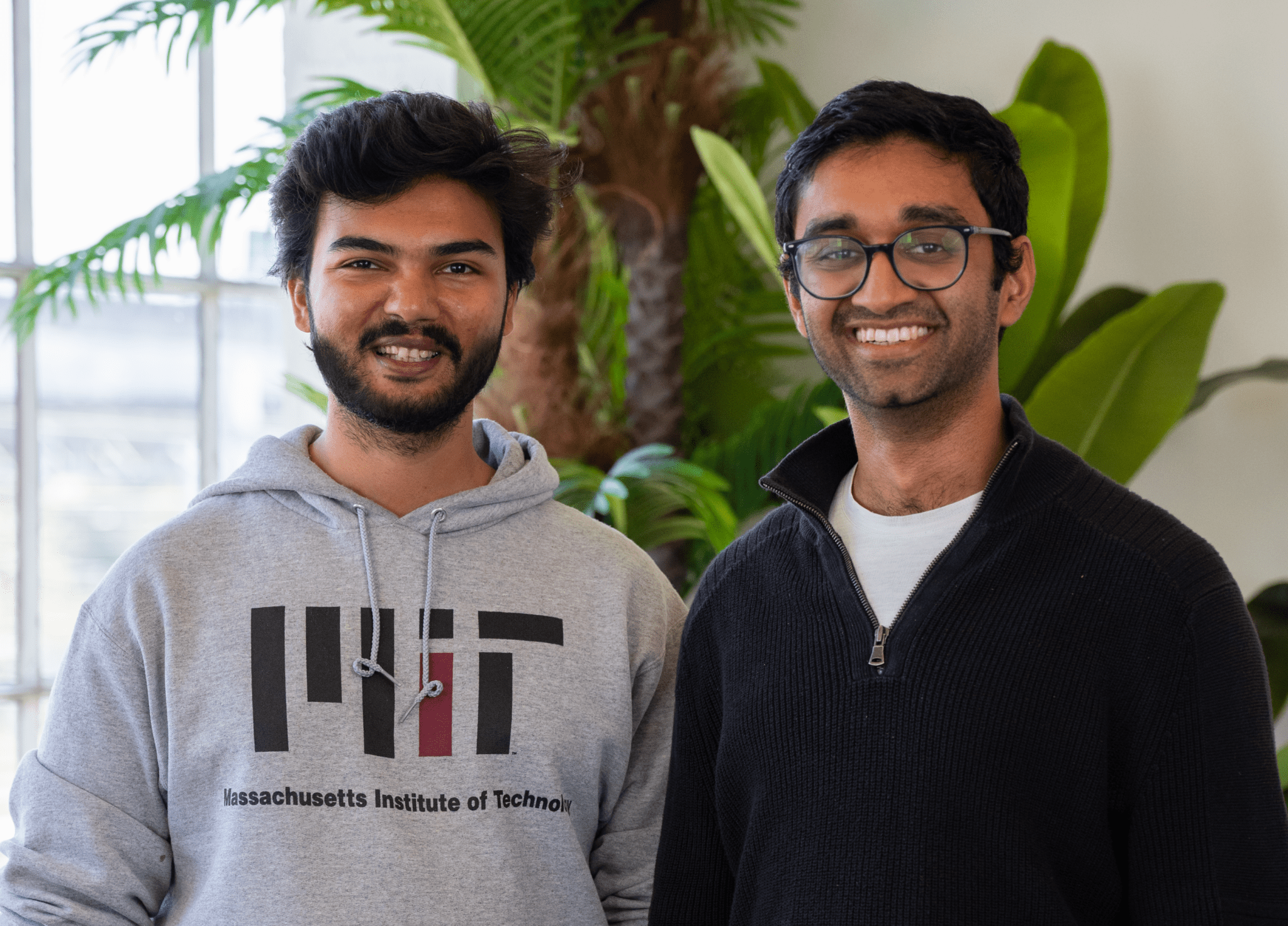
- Kothari and Garg cofounded Wispr in 2021 and initially focused on wearables that never quite clicked and on "silent speech," an interface allowing computer control without audible sound.
Compiled by The InvestorSomething wrong?How this is made
Why it matters
Wispr has raised a $280 million Series B at a $2 billion valuation, led by Menlo Ventures, with existing backers including Notable Capital, NEA, Neo Ventures and 8VC re-upping roughly six months after the previous round [1][2][3]. The valuation is less interesting than the thesis under it: Menlo partner Matt Kraning told Fortune that "it isn't a dictation market" and that what customers pay for is not having to type, which puts Wispr "up against workflow tools, meeting tools, and eventually the text box in front of every AI model" [4].
That is a claim about interface layers, not features. If it is right, a large share of software whose defence is a well-designed screen and a well-placed input field is holding a depreciating asset. If it is wrong, Wispr is a good dictation utility priced as an operating layer.
What exists today is Wispr Flow, a dictation app the founders landed on about two years ago after earlier attempts at wearables and "silent speech" failed to click [5][6]. The company says Flow is used by millions of consumers and 100,000 businesses, and that revenue has grown more than 150% for four consecutive quarters [7][8]. No absolute revenue figure appears in Fortune's account, and the period of that 150% is not specified: quarter over quarter it compounds to roughly 39 times in a year, year over year it is about 2.5 times [9]. Those are different companies.
The financing arithmetic is more legible. Wispr has raised $361 million in total, which puts pre-Series-B capital at about $81 million [10][11]. The new round is roughly 14% of post-money value, implying a pre-money mark near $1.72 billion [12].
The competitive problem is obvious and the founders do not dodge it: Apple, Google, Microsoft, Anthropic and OpenAI are all chasing voice in some form [13]. Free defaults usually win input layers. The counter-evidence in the story is accuracy, not features. Kothari says a friend's blind father uses Wispr for messaging because Siri made too many mistakes to trust [14], and the company sees usage among people with ADHD, dyslexia, quadriplegia and blindness [15]. Error rate is the switching cost here, and it is the one thing a bundled competitor cannot fix with pricing.
The round also includes Joe Burrow, Shaun White, Klay Thompson and Paul George [16]. Read that as consumer distribution spend, not product validation.
The harder dependency is permission. Cofounder Sahaj Garg told Fortune that privacy and security "aren't features for us: They're the foundation for earning ambient access to your life" [17], and that the systems "can consult for you, but you should still supply your intent" [18]. Ambient access is where dictation revenue turns into interface revenue, and it is also where a single mishandled recording resets the growth curve.
Watch three things. Whether the 100,000 businesses turn into seat expansion rather than individual expensing, since that is the difference between a utility and a platform. Whether the growth rate holds after the next OS-level voice release from the incumbents named above [13]. And whether Wispr discloses an absolute revenue number at the next raise, because a percentage repeated four times is a decision to keep the base private.