Product1 publisher3 min readPublished
Microsoft strips the Copilot+ PC label from Surfaces that still meet its NPU spec
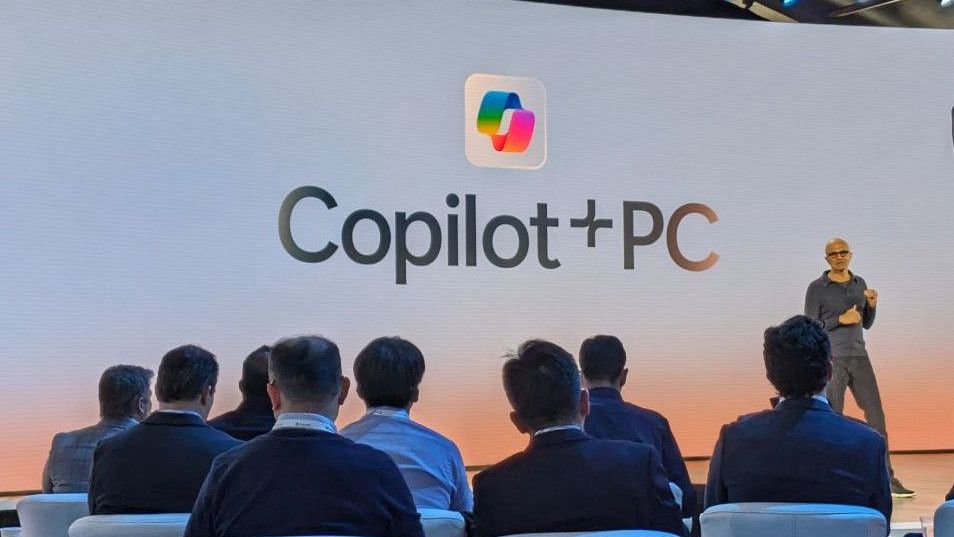
Microsoft is dropping the Copilot+ PC name from its new Surface Pro and Laptop while keeping the 40 TOPS NPU requirement, Pureinfotech reports. Buyers who wrote the badge into spec sheets now have to specify the NPU and check which AI features actually run on it.
The Product Desk · Product desk
What happened
- Microsoft is dropping the Copilot+ PC name from its latest Surface devices even though they still meet the requirements and support its AI features, Pureinfotech reports.
- The new Surface Pro 12-inch and Surface Laptop 13-inch run Qualcomm's Snapdragon X2 Plus, which Microsoft says gives up to 95 percent faster local AI inference.
- Microsoft describes Windows AI workloads running on the device, in the cloud, or both, citing lower latency, fewer cloud calls and tokens, and privacy for on-device data.
Compiled by The Product DeskSomething wrong?How this is made
Why it matters
- decision A laptop spec that names 'Copilot+ PC' can now screen out Microsoft's own compliant Surfaces, so procurement language has to move to hardware terms.
- cost Token savings accrue only on workloads that actually run on the device, so any cut to cloud spend depends on the feature list a fleet uses.
- constraint Both headline gains, 95 percent inference and 18 percent battery, are Microsoft's own measurements, so they are not yet a sound basis for sizing or battery planning.
A laptop refresh spec that says "Copilot+ PC required" now sits badly beside Microsoft's own newest Surfaces. Those machines still meet the Copilot+ requirements and support the associated AI features, but Microsoft is taking the name off them, Pureinfotech reports [1].
The requirement outlived the name. The Copilot+ specification began as a hardware baseline for Windows AI experiences, with an NPU capable of at least 40 TOPS, and that NPU requirement stays in place [2]. "The hardware requirement and the marketing name are effectively becoming separate things," Pureinfotech wrote [4].
The speed claims need the same separation. Microsoft says the Qualcomm Snapdragon X2 Plus in the Surface Pro 12-inch and Surface Laptop 13-inch runs local AI inference up to 95 percent faster than the previous-generation configuration [3]. Put as a ratio, the benchmark score is up to 1.95 times the old one [5]. It was measured on the Procyon AI benchmark and does not mean Windows 11 is 95 percent faster across the board [7]. The battery claim, up to 18 percent more efficient than the previous generation, also comes from Microsoft's testing and is not a guarantee for every workload [8]. An NPU can handle certain AI workloads more efficiently than a CPU or GPU [12]. Both gains show up only when a fleet's work actually lands on the NPU.
A refresh deck can easily slide from "has an NPU" to "runs its AI locally." Microsoft's own description is narrower. It says Windows AI workloads use the device, the cloud, or both, and credits the local route with lower latency, fewer cloud calls and tokens, and more privacy when data stays on the machine [6]. Pureinfotech leans on the word supported: not every Windows 11 AI feature will run locally, and Microsoft is not suggesting the cloud goes away [9]. The report does not include a list of which features run on the NPU.
Ink Canvas is a sensible first feature for a pilot group to trace. The new pen-first tool on the Surface Pro 12-inch sketches, annotates, generates images and summarizes text, and Copilot can read context from the canvas [10].
A workable test for Monday is a two-by-two over the handful of AI features your users actually open. One axis asks whether the feature runs on the device when supported or only in the cloud. The other asks whether the data it touches should stay on the laptop. Local and sensitive is where the NPU justifies its cost, since Microsoft's privacy and token argument applies there [6]. Local but not sensitive buys latency and possibly battery life, so far measured only by Microsoft [8]. Cloud and sensitive is a data-policy question an NPU cannot answer. Cloud and not sensitive leaves the NPU out of the decision entirely.
In my view the spec line should name the hardware requirement itself, an NPU capable of at least 40 TOPS [2], with the Copilot+ label dropped. The tradeoff is labour. The badge used to stand in for a checked baseline of AI features, and without it someone on the team has to confirm, one feature at a time, which side of the device-cloud split each tool falls on [9].
What to watch
- Whether other Windows PC makers also drop the Copilot+ PC label on machines that still meet the 40 TOPS NPU requirement.
- A Microsoft list of which Windows 11 and Copilot features run on the NPU, which in the cloud, and which use both.
- Independent tests of the Snapdragon X2 Plus Surfaces against Microsoft's 95 percent inference and 18 percent battery figures.