Loading today’s stories
Science1 distinct publisher2 min readUpdated
A waterspout came ashore on Long Island, and the flood playbook does not cover it
The National Weather Service says the Nassau County tornado needed only an unstable, moist atmosphere and rotation in a storm. The same evening brought 4 to 5 inches of rain.
The Scientist · Science desk
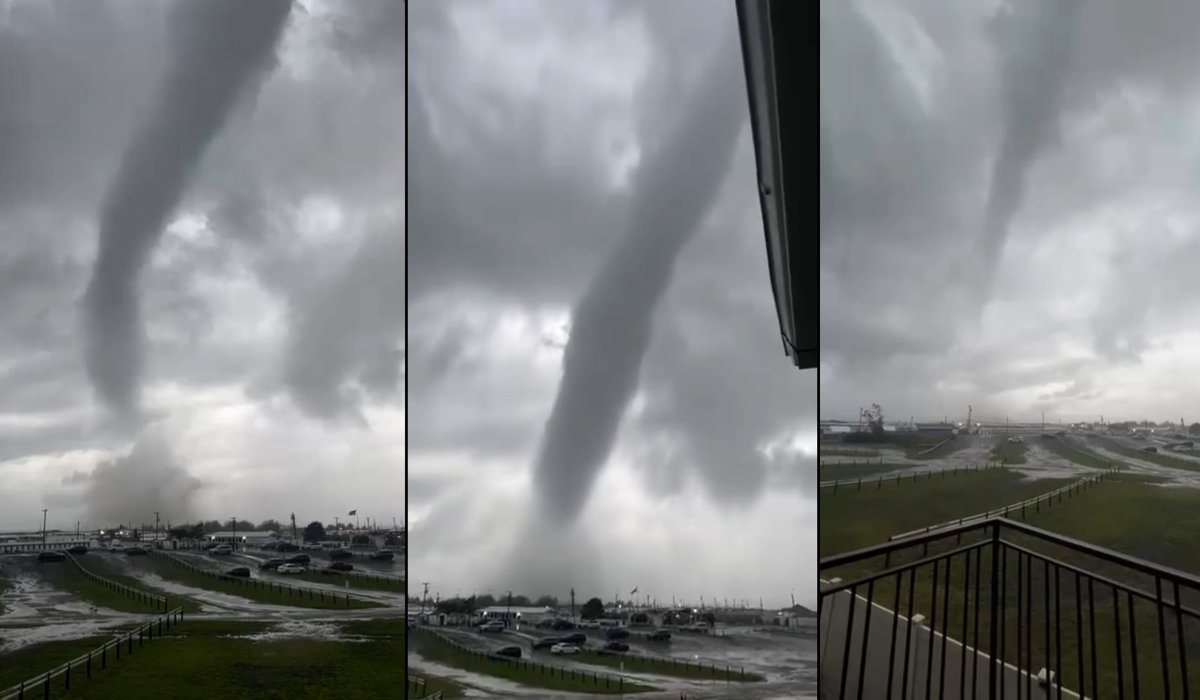
What happened
- A tornado touched down on Thursday in Nassau County on Long Island, and a possible second one hit the Rockaways in Queens.
- Tornadoes can happen anywhere conditions are ripe, namely an unstable, moist atmosphere and rotation in a storm.
- Those conditions drenched an area from northeast New Jersey to far out on Long Island on Thursday evening, according to Dave Radell, a meteorologist at the National Weather Service.
- Rainfall reached 4 to 5 inches in the worst-hit places, according to Radell.
- The Atlantic Beach twister began as a tornadic waterspout, a tornado forming over water, then came ashore and caused damage to nearby buildings and cabanas.
Compiled by The ScientistSomething wrong?How this is made
Why it matters
An unstable, moist atmosphere and rotation inside a storm are the entire entry requirement, according to Dave Radell of the National Weather Service, and both sat over the corridor from northeast New Jersey out to the far end of Long Island on Thursday evening [2][3]. What this region normally lacks is the Plains version of the setup, where cold dry air from the north runs into warm moist air from the south [9]. That collision is one way to build instability, not the only one. A warm ocean beside a metro area is another, and the Atlantic Beach circulation duly began over water as a tornadic waterspout before coming ashore into buildings and cabanas [5]. Radell says the 2012 event that reached Brooklyn arrived by the same route [12].
Rarity is worth quantifying rather than gesturing at. New York State logged 88 tornadoes between 1950 and 2022, most of them rating EF0 or EF1 [10], which works out to roughly 1.2 a year for the entire state [11]. A statewide average tells you nothing about a given county, but it does tell you what to size a response to: a brief, weak circulation over some of the densest built ground in the country, not a long-track wedge.
There is a second thing hiding inside that count. The Queens case exists only as a radar rotation signature near Far Rockaway, with no photographs and no reported damage [6], and the survey teams sent out afterwards are looking for evidence on the ground [8]. A tornado joins the record when somebody finds something broken. Over water, over marsh, over a beach in the dark, that requirement often fails, so 88 is a tally of confirmations rather than a census of circulations. Whatever the real frequency is, it is not below the logged one.
The same storms delivered 4 to 5 inches of rain in the worst-hit places and widely reported flash flooding [4][7], which is the hazard this metro already has vocabulary for; Scientific American notes that the city's storm reputation rests on summer downpours running down subway stairs and winter nor'easters [15]. Radell's summary of the tornado side is careful: "This isn't unprecedented, but it certainly isn't something that happens every year" [13]. That is the frequency band practice tends to skip, rare enough to feel like somebody else's problem and recurrent enough (Brooklyn in 2012, Long Island on 13 November 2021, now Nassau County) to keep arriving [12][14][1].
Topics and entities
Follow any of these and your For You feed starts watching them — no settings page required.
Topics
Loading related stories