Science1 publisher2 min readPublished
A 3.2-gram whisker array guides a palm-sized drone through the dark by touch alone
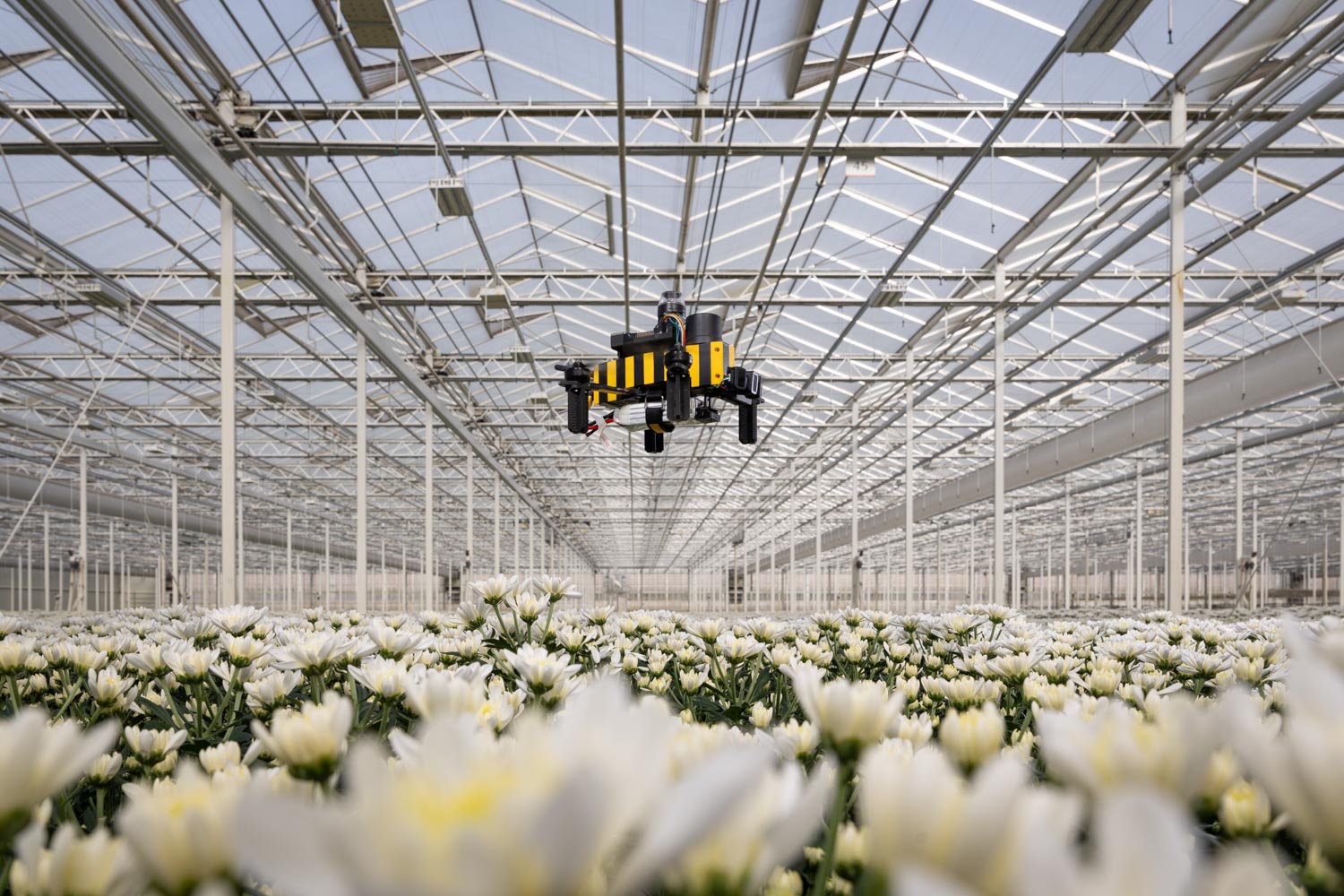
Researchers built a whisker array light enough for a palm-sized drone to carry and simple enough to run on its own microcontroller, giving the aircraft a way to navigate in places where cameras and rangefinders fail.
The Scientist · Science desk
What happened
- A 3.2-gram array of flexible whiskers, each mounted over a MEMS barometer, lets a palm-sized drone judge how deep an obstacle presses into a whisker while the aircraft is still flying.
- In the reported demonstrations the drone avoided obstacles, followed surface contours and explored confined spaces across both rigid and soft environments, in complete darkness.
- Earlier artificial-whisker work stayed on ground robots or used airflow sensing without contact, and contact-based drone control had used large platforms carrying robotic arms.
Compiled by The ScientistSomething wrong?How this is made
Why it matters
- capability Inspection and search work in smoke-filled rooms, unlit voids and around glass gets an onboard sensing option that needs no light reaching a lens.
- constraint Sensing starts at contact, so a tactile-only drone has to hit an obstacle before it can route around it; the low whisker force is what makes hitting things survivable for the drone and for the obstacle.
- decision Teams building sub-100-gram airframes face a live choice between keeping an optical sensor for range, adding whiskers for the dark, or fitting both under the same mass ceiling.
- precedent Whisker sensing moving off ground robots and onto a flying platform makes tactile-first autonomy a defensible design choice for confined-space robots.
Each flexible whisker sits over a MEMS pressure sensor at its base, an unusual thing to build a touch sensor out of, and contact bends the shaft into a differential pressure signal that the onboard code converts into tactile depth, meaning how far the obstacle has pushed into the whisker [14][6]. A depth reading puts the array in a different class from a bumper: earlier contact-based methods reported binary contact or relied on passive bumpers, while this system reports continuous feedback with explicit localization of where the contact happened [9].
A barometer's zero wanders, and that is the hard part here, because sustained contact is exactly when drift matters: a drone following the contour of a wall keeps a whisker loaded for seconds at a time. The pipeline the authors describe compensates for noise and drift and estimates depth to millimetre-scale accuracy [3]. Contact also disturbs the aircraft, and the paper frames the base-mounted barometers as a way to estimate depth in flight while minimizing contact-induced destabilization [2].
The paper, published by Nature [13], puts the ceiling for these platforms at 100 grams, where sensing, computation and power are all severely limited [7]. At 3.2 grams, the array takes 3.2 percent of that ceiling [1], and the whole system fits in a microcontroller with 192 KB of memory [4]. The abstract and introduction report the mass and the memory; power draw, trial counts and a comparison against a camera-based baseline on the same airframe are missing [17]. In place of that, the paper argues sufficiency: with touch as the primary modality, the drone avoided obstacles and contoured surfaces, and explored confined spaces, in both rigid and soft environments [5][15].
Touch has one hard limit: the array reports an obstacle only once a whisker reaches it. Two design choices make that workable: the low interaction force keeps contact safe with delicate or lightweight obstacles, and sliding contact along the shaft enriches the data as the whisker slips across a surface [10].
The alternatives in the dark are poor. Cameras, LiDAR and other rangefinders fail in smoke-filled buildings, unlit caves and around transparent or reflective obstacles [8], and aerodynamic proximity sensing from wall and ground effects is imprecise and sensitive to flight dynamics [12]. On that evidence I would expect whiskers to be added to drones that still carry an optical sensor for the cases where light works, because an array this light and this small in memory is affordable next to one [1][4].
What to watch
- Whether the array holds up in the smoke and dust the paper names as vision-failure cases; the reported demonstrations covered rigid and soft surfaces in darkness.
- A published power budget and flight-time penalty for carrying the whiskers, which would allow a real comparison against an optical sensor on the same airframe.
- Whether whisker depth data gets fused with a rangefinder, giving a drone one sensor at range and one at contact.