Science1 publisher2 min readPublished
Rosa Boone finds 16 soil odors that track how intensively grasslands are farmed
Rosa Boone pumped air from 18 grassland soils and found 16 of 75 captured odors tracked how intensively each field was farmed. It supports her case for an 'electronic nose' to monitor soil microbes, though that device is still some steps from development.
The Scientist · Science desk
Drafted by a language model from the sources cited here and checked against its claim ledger before publication. How we use AISend a correction
What happened
- The 18 grasslands, in the Ooijpolder near Nijmegen, ranged from intensive, fertilizer-heavy management to entirely natural farming, with others in between.
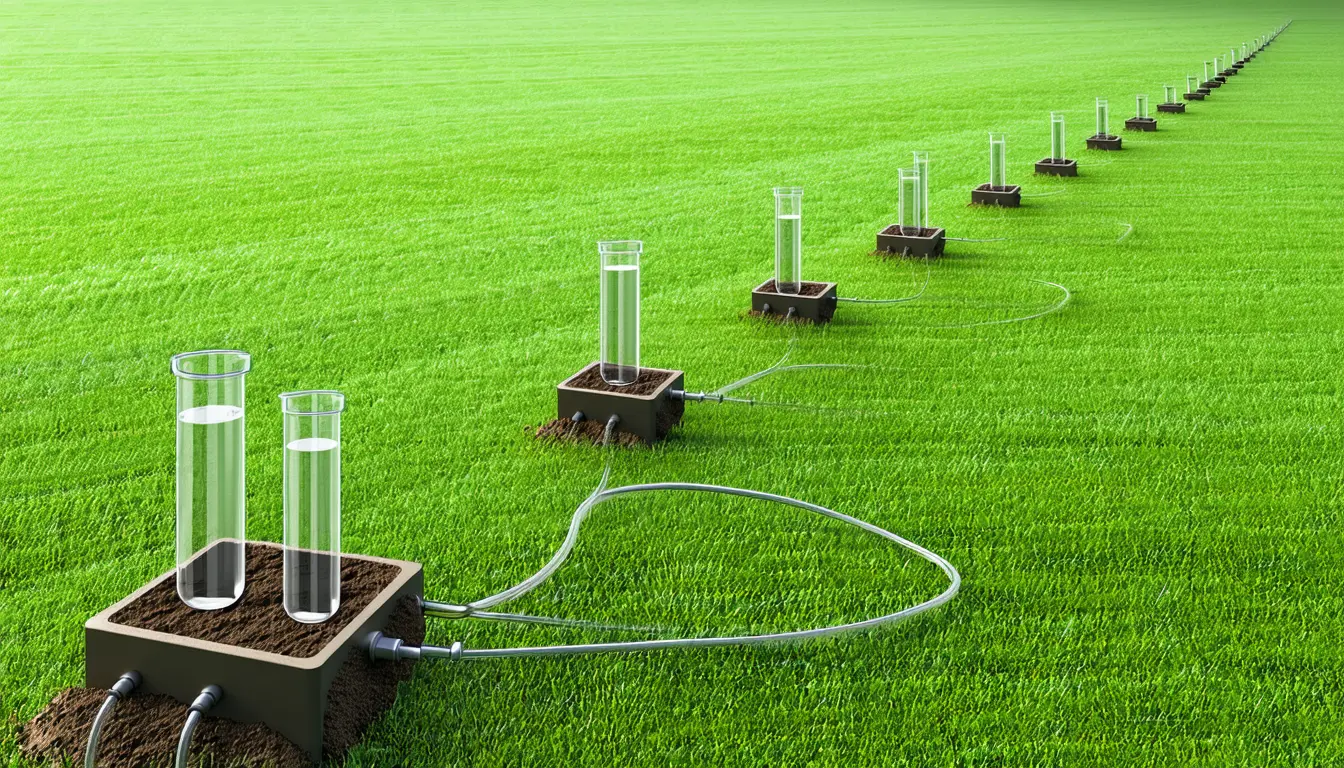
- A pump drew soil air into a small tube hung inside each perforated pipe, where the odors stuck, and the captured odors were then analyzed in a lab.
- Of the 16 indicator odors, nine rose as management became more extensive and seven fell.
- Aldehydes, compounds largely produced by fungi, were particularly sensitive to changes in soil management.
Compiled by The ScientistSomething wrong?How this is made
Why it matters
- capability At least in the lab, the state of a soil's microbial community can be read from air pumped out of the ground, giving soil-life monitoring a second route alongside DNA analysis.
- cost Until a field sensor exists, farmers trying lower-fertilizer methods who want to see the effect on soil life are left with repeated DNA analysis, the monthly routine they told Boone they want to avoid.
- constraint A sensor built on these markers would rest on 18 fields in one polder and is still a few development steps away, so no monitoring programme can plan around it yet.
Boone's proposed chain runs from farm practice to microbes to smell. "If management practices change, this can affect the fungal and bacterial communities, which in turn alters the odor profiles," she said [6]. The study shows the two ends line up, but because the fields were sampled as farmers already ran them, it cannot show that microbes carry the change between them [1]. Extensive management also bundles several changes at once. The methods farmers told Boone they want to try include less artificial fertilizer, more organic manure and greater plant diversity [9], and any of these could alter what a soil gives off.
The 16 indicators, about 21% of the compounds identified, were picked out across 18 grasslands [3][13][1]. With 75 candidates and 18 sites, some compounds will line up with management by chance, so the test is whether the same 16 move the same way on fields outside the original set. The thing this doesn't tell you is how strong the "very good" indicators are: the phys.org account does not report the statistics, or how the odor data were checked against the microbes directly. It does state that the odors reveal which species are present, how many there are and what they do [7].
I think the best reason to believe the signal comes from fungi is a separate study by Boone. It found that grasslands under more extensive management had a specific fungal community, more carbon in the soil and more active soil life [11].
For a working sensor, the lab step has to move to the field. Whether a cheap device can pick those 16 compounds out of the rest of soil air is the open engineering question. Boone is optimistic. "We've made significant progress, and I can certainly envision the electronic nose becoming a reality in the future," she said [14].
She ties the need for one partly to regulation. "Monitoring soil life is becoming increasingly important, particularly in view of the forthcoming soil monitoring guidelines," she said [10]. The more concrete demand comes from the farmers she interviewed. "Farmers need an analysis of the communities living in their soil, but they don't want to have to carry out a complicated DNA analysis every month," she said [8].
What to watch
- Whether the same 16 odors, and the aldehydes in particular, track management on grasslands outside the Ooijpolder.
- A prototype electronic nose tested side by side with lab odor analysis on the same fields.
- What the forthcoming soil monitoring guidelines Boone cited ask for on soil life, and how often.