Product1 publisher3 min readPublished
Peter Gray's new book blames schooling for the teen decline that phone bans were built on
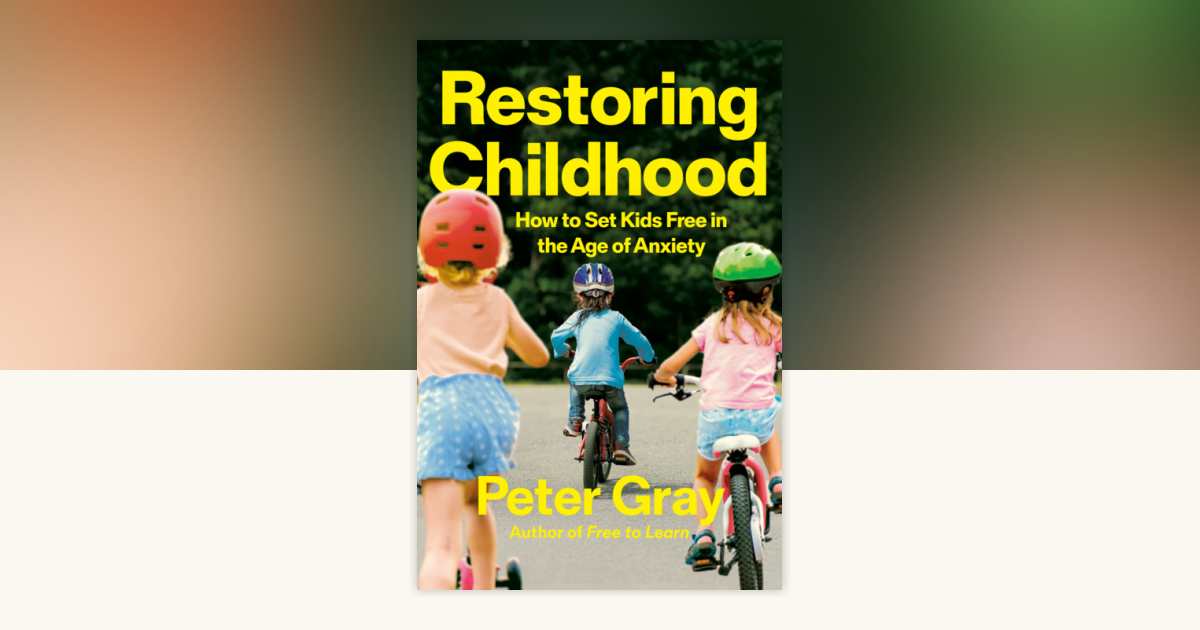
Peter Gray's Restoring Childhood traces the 2010s fall in teen mental health to Common Core-era schooling and lost autonomy. The causal story under teen age gates now has two named researchers arguing against it.
The Product Desk · Product desk
What happened
- Peter Gray's new book Restoring Childhood argues teen mental health fell in the 2010s because of rigid schooling tied to the Common Core curriculum and government performance pressure, not phones.
- Candice Odgers, a leading adolescent mental health researcher, had already reviewed Haidt's analysis scathingly in Nature and has argued that social media bans distract from real solutions.
- Gray and Haidt cofounded the free-play advocacy group Let Grow in 2017, and Gray resigned from its board after The Anxious Generation came out.
Compiled by The Product DeskSomething wrong?How this is made
Why it matters
- contradiction The two authors agree that shrinking childhood independence since the 1980s did damage, and disagree only about the internet's role. Age gates and teen bans are written to address exactly that piece of the story.
- cost If Gray is right that removing a phone costs a 12-year-old friendships, the user pays the price of a restriction feature, and compliance reporting misses it.
- decision Teams now have to choose whether to present teen restrictions as compliance with a statute or as care that improves wellbeing, because the second framing is a claim two named researchers dispute.
- constraint Gray's candidate cause is school pressure. A settings screen cannot reach it, so even if his account holds, a product roadmap is the wrong instrument.
Gray points to a Florida study in which 11-to-13-year-olds who owned smartphones were more likely to spend real-world time with friends [13]. On The Vergecast he drew the conclusion out loud. "You take a smartphone away from your kids and that study suggests you'll make them less happy and they'll have less friends," Gray said [14]. For a team shipping a curfew or a hard cut-off, that is a cost the user pays, and it needs a measured benefit facing it. That benefit has to be something other than minutes off the app.
The two authors agree on more than the book jackets suggest. Both hold that restrictions on children's independence and unstructured play since at least the 1980s have damaged their resilience [17]. In 2017 they helped cofound Let Grow, which pushes for policies such as making sure parents cannot be treated as neglectful for letting kids outside alone [18]. Their split is about the internet. Gray's account is that home internet in the 1990s and 2000s gave teens back freedom and connection and drove a rebound in their mental health [8]; Haidt's is that social media and smartphone use are largely to blame for the decline since 2010 [2]. Gray resigned from the Let Grow board after The Anxious Generation came out, and wrote his own book as a deliberate rebuttal [19].
Other academics got there first. Candice Odgers, an adolescent mental health researcher, reviewed Haidt's analysis in Nature [5]. She opened by conceding, "this book is going to sell a lot of copies, because Jonathan Haidt is telling a scary story about children's development that many parents are primed to believe" [6]. Odgers has argued that social media bans are a distraction from real solutions [9]. Gray goes further and treats the bans as a harm in themselves [10]. He told The Vergecast that Haidt's book "completely ignored" dozens of meta-analyses and other research that found "not even a meaningful correlation between the amount of time kids are on social media or on smartphones and their mental health" [11]. Haidt did not respond to The Verge's request for comment [20].
Gray's own candidate cause is school. In every study he has found where kids are asked what is making them anxious, school pressure comes out on top: "Nothing else comes close," he said [16]. His book pins the 2010s decline on rigid schooling linked to the Common Core curriculum and government pressure to improve children's performance [7]. That cause is out of a product team's hands. The phone version of the story is the one that reached statute, and Haidt is credited with helping inspire Australia's nationwide teen social media ban [3]. No legislature has reopened a law it already passed.
So the useful sort for each youth-safety feature on the roadmap is two questions wide. Does a jurisdiction require it, and is there an outcome you can measure that is not time in app? Required and measurable is the easy cell: ship it and publish the measure. Required but not measurable means shipping the minimum the statute asks for and describing it as compliance. Not required but measurable is a genuine product decision, and worth making. Not required and not measurable leaves you building on one bestseller [1] that two named researchers have now argued against [5][11]. The measure Gray's argument implies is a plain one, and most teen-safety dashboards leave it off: whether the teen you restricted sees friends in person less often afterward [13][14].
What to watch
- Whether any legislature that cited The Anxious Generation reopens its teen social media ban now that Gray's rebuttal is out.
- Whether Haidt answers Gray's charge that the book ignored the meta-analyses; he did not respond to The Verge.
- Whether any platform publishes a peer-contact or in-person-friendship measure alongside a teen restriction rollout.