Invest1 publisher3 min readPublished
Winning four of six toss-up Senate seats would hand Democrats the regulator confirmation queue
Cook rates 21 Republican-held House seats as toss-ups against five Democratic ones. In the Senate, Democrats need four net gains out of six toss-ups. Only that chamber decides whether financial regulators get confirmed.
The Investor · Invest desk
What happened
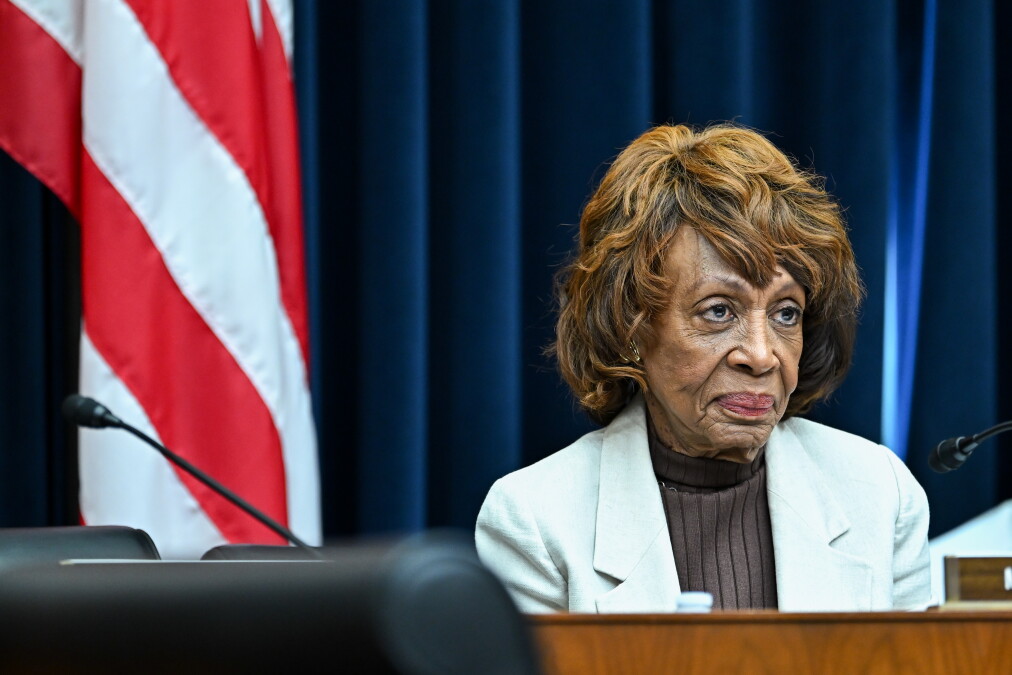
- Maxine Waters would most likely chair House Financial Services if Democrats win that chamber, and Elizabeth Warren would likely chair Senate Banking if they win the Senate.
- American Banker reports that crypto, national trust charters and Trump administration officials' conduct would be prime targets, with regulators and housing officials facing aggressive questioning.
- Major legislation would still require Republican support and Trump's approval, so Democratic committee power would run through hearings, subpoenas and compelled testimony.
Compiled by The InvestorSomething wrong?How this is made
Why it matters
- capability A Senate majority converts into control of the confirmation queue for financial regulators. Confirmation is the only lever here that changes who writes supervision; the rest change who answers for it.
- constraint Renewed scrutiny of capital rules, mergers and supervision would arrive as questions and document requests. A bank's capital plan stays where it is when a committee asks about it.
- exposure The president's own crypto firm becomes a standing hearing subject for whichever committee holds the gavel, putting its counterparties and bank relationships in the record.
- decision Democratic leadership has to decide how much of the primary-season populist platform it adopts, and that choice sets whether the next Congress bargains over bills or settles for oversight.
A House gavel and a Senate gavel carry different powers. If Democrats take the House, Maxine Waters would most likely run Financial Services; if they take the Senate, Elizabeth Warren would most likely run Banking [12]. Both jobs come with hearings, subpoenas and the power to compel testimony [9]. Only the Senate job comes with the confirmation of executive nominees, financial regulators included [10].
Justin Schardin, vice president for financial services at CFRA Washington Analysis, said oversight will be the name of the game with Democrats in charge, according to American Banker [16]. "For financial services, two things stand out," Schardin said. "One is World Liberty Financial" [15], the president's own crypto firm [20].
The seat math makes the House the likelier win, and the House is the weaker of the two jobs. Cook's latest ratings put 21 Republican-held House seats in Toss Up against five Democratic-held, a little over four to one [3][4]; add the seven seats rated Lean Republican and Republicans are defending 28 competitive-or-leaning districts to Democrats' five [4][1]. The Senate math is tighter. Democrats need four net gains [5] from a pool of six Republican-held toss-ups in Alaska, Iowa, Maine, Michigan, Ohio and Texas [6], which is two-thirds of the pool if they lose none of their own [2], while 16 Republican seats sit in Solid or Likely Republican [8][3]. Georgia, North Carolina and New Hampshire are rated Lean Democratic [7].
So the modal outcome on these ratings is subpoena power without confirmation power. Capital rules, merger review and supervision would come back under scrutiny [14], but a document request does not change a risk weight, and major legislation still needs Republican votes and Trump's approval [11]. A committee calendar spent on crypto, national trust charters and administration officials' conduct [13] is time taken from negotiating a bill either chamber could actually send to the president.
If Democrats do take the Senate, personnel becomes the binding constraint on bank policy. A stalled nominee changes who writes supervision; a hearing does not [10]. And the populist turn in the primaries cuts both ways: progressive Democrats, including some members of what American Banker calls the Democratic Socialist Party of America, performed well, which could push moderates toward more populist policy [18]. Peter Dugas, head of regulatory intelligence at Capco, said the leadership is trying to work out which of those positions it can absorb. "They are trying to thread the needle there," Dugas said [17].
The thesis fails if the toss-ups break together. Twenty-one Republican-held seats rated Toss Up is a distribution, and if most of them hold, no gavel moves and none of this reaches a bank [3]. It also softens if the questioning lands elsewhere: American Banker reports that banks are not expected to be the epicenter of the opposition party's ire [19].
What to watch
- Cook moving any of the six Republican-held Senate toss-ups in Alaska, Iowa, Maine, Michigan, Ohio or Texas out of that column.
- Whether House Financial Services Democrats put World Liberty Financial or national trust charters first on a hearing calendar.
- Any bipartisan financial bill Republicans and Trump would sign. Such a bill would undercut the case that a Democratic majority means oversight only.