Product1 publisher3 min readPublished
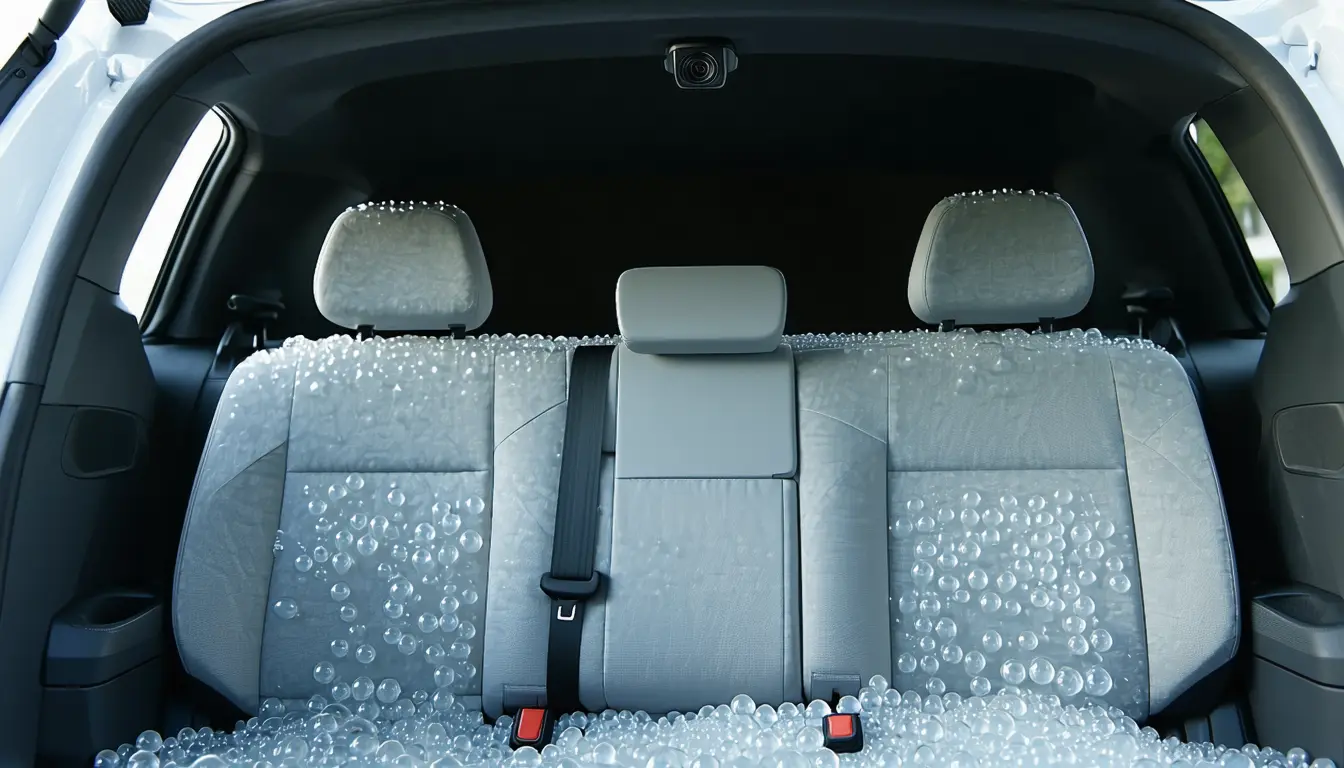
Waymo staff watching a cabin camera called police over a gun that fired Orbeez
Waymo staff watching two teens through a cabin camera called 911 over a gun that fired water-filled Orbeez. Robotaxi cameras now feed both human reviewers and automated violation checks, so telling riders who is watching has become a design choice AV teams have to make on purpose.
The Product Desk · Product desk
Drafted by a language model from the sources cited here and checked against its claim ledger before publication. How we use AISend a correction
What happened
- Zoox's website says its interior cameras record the entire ride, and that the footage can be used to develop and improve its product.
- Tesla's Robotaxi documents describe a green touchscreen indicator when the camera is on and an app toggle for opting in to video and audio sharing.
- Waymo, Zoox and Tesla all say staff view interior cameras only when needed, and that recordings may be sent to law enforcement or regulators.
Compiled by The Product DeskSomething wrong?How this is made
Why it matters
- exposure Riders can now end up facing police because of how a remote staffer reads cabin video, and the San Mateo case shows that reading can get a weapon wrong.
- contradiction The promise that people look only when needed covers less than it sounds: whole-ride recording at Zoox and automated violation checks at Waymo keep the cameras working when no person is looking.
- decision A driverless car needs some check on riders, so safety monitoring cannot be optional, and teams have to decide separately whether using the same footage for product work needs its own opt-in.
A 35-year-old Waymo rider told WIRED he thought his backpack was what sent up red flags [7]. He was among the California passengers, many in their twenties or older, who reported Waymo employees taking over the intercom mid-ride to check they were old enough to ride alone [6]. Waymo said it had used its cabin cameras both to keep riders safe and to enforce its rules [6]. The companies describe the people behind those cameras as occasional. Waymo, Zoox and Tesla all say staff view interior cameras only when needed [10]. According to WIRED, that does not mean the cameras are off [11]. Zoox's website says its interior cameras "record the entirety of your ride," and that the data can help develop and improve its product [14]. Waymo spokesperson Julia Ilina said the company uses "automated technology to support our teams in identifying potential violations" [12]. A 2025 Waymo patent describes interior cameras running automated "predetermined ride checklists" before, during and after rides. Ilina did not say whether that system is in use [13]. In San Mateo County, what Waymo staffers saw on the feed went to police [2]. The car pulled into a parking lot and stayed there until officers arrived [1]. A police report said it looked like two teens were shooting a black handgun out the window, playing with it and drinking between shots [3]. Waymo has said its cars carry automated tech that can flag a firearm [5]. WIRED's account does not say whether software or a person spotted the Orbeez gun first [4]. Once footage exists, the privacy terms are broad. They cover cleanliness checks and lost items, and also improving products or services [8]. All three companies say recordings may go to law enforcement or regulators [10]. WIRED reported that few clear US rules govern this surveillance, and that riders accept it through long terms of service in small print [19]. "We are being essentially abandoned by our lawmakers when it comes to consumer privacy and what companies can do with information after they've collected it," said Matthew Guariglia, a senior policy analyst at the Electronic Frontier Foundation [9]. Tesla's documents describe a signal the rider can see. A green indicator appears on the central touchscreen when the camera is on, and riders opt in to sharing cabin video and audio through a toggle in the app's "data and privacy" section [15]. Riders in its early access program were opted in automatically, and Tesla did not respond when asked whether that program has ended [16]. The Robotaxi app opened to the public in a handful of Texas and Florida cities in early September [17]. "You need some kind of check on what people do in a car with no driver," said Justin Brookman, who directs technology policy at Consumer Reports [18]. I agree, and it follows that safety monitoring cannot be a toggle. I'd split the camera's jobs. Safety monitoring stays on, and the screen says so whenever a person joins the feed. Using footage to improve the product stays off until the rider switches it on. The team gives up training footage from riders who decline, and it will hear from riders reacting in the moment to a notice that someone is watching. A workable sort for any proposed camera use has two axes. One is who looks: software flagging, or a person watching. The other is where the result goes: it stays in the ride, as an intercom message or an ended trip, or it leaves, as a police call or training data. The age checks were a person, with a result that stayed in the ride [6]. In San Mateo, a person watched and the result left the car [2]. Zoox's product-development use is a recording that leaves [14].
What to watch
- Whether Waymo says the automated "predetermined ride checklists" described in its 2025 patent are running in its cars.
- Whether Tesla confirms its early access program, with automatic opt-in to cabin video and audio sharing, has ended now that the app is public in Texas and Florida.
- Any US rule that limits how robotaxi operators use in-cabin footage or share it with police.