Product1 publisher3 min readPublished
Watch Duty adds flood alerts in 50 states after doubling staff, with no cap table
The wildfire alerting nonprofit is generalizing to a second hazard while its own headcount and revenue double. Its CEO calls that growth a little too wild for comfort.
The Product Desk · Product desk
Drafted by a language model from the sources cited here and checked against its claim ledger before publication. How we use AISend a correction
What happened
- Watch Duty is a Santa Rosa, California-based nonprofit.
- The L.A. wildfires made Watch Duty a household name.
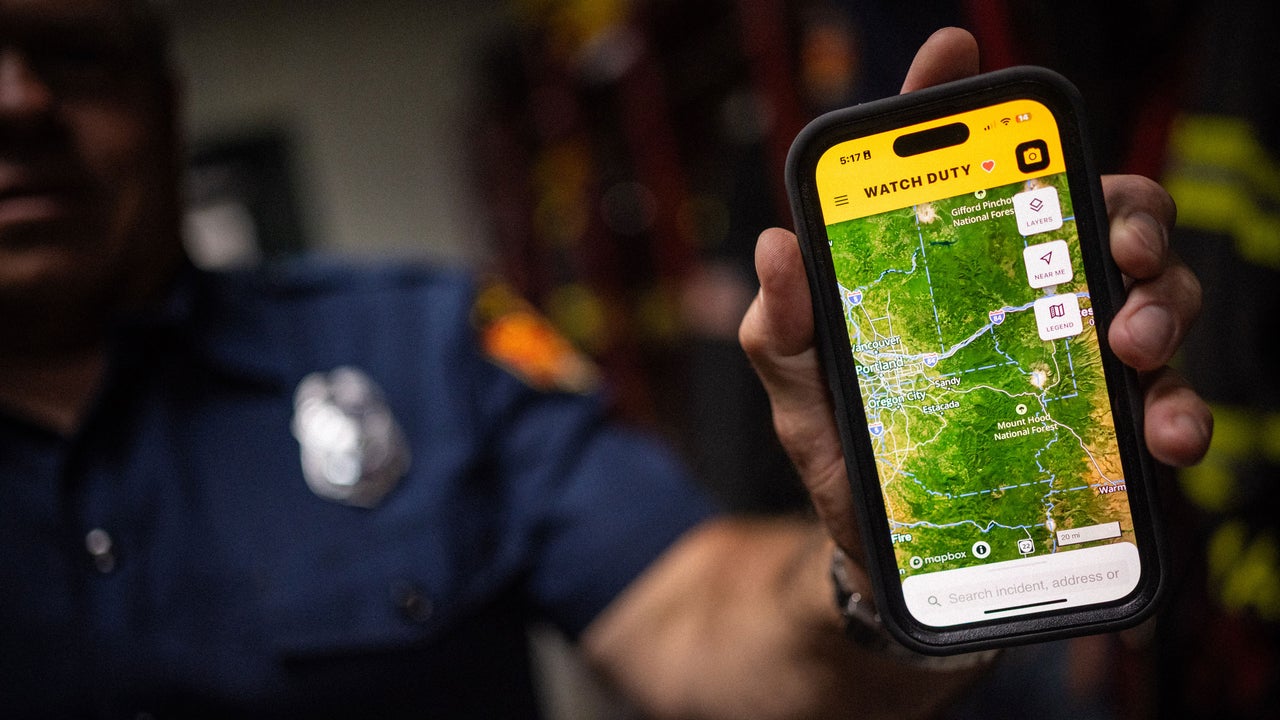
- CEO John Mills discussed the decision to expand Watch Duty into flood monitoring across all 50 states.
- Since the L.A. wildfires, Watch Duty has doubled its head count and revenue, growth Mills describes as a little too wild for comfort.
- Fast Company describes what it takes to scale a life-saving operation without investors, a cap table, or the luxury of getting it wrong.
Compiled by The Product DeskSomething wrong?How this is made
Why it matters
Watch Duty, the Santa Rosa, California nonprofit whose wildfire alerts became a household name during the Los Angeles fires, is expanding into flood monitoring across all 50 states, CEO John Mills said in an interview with Rapid Response, the Fast Company podcast hosted by former editor-in-chief Bob Safian [1][2][3][6]. It is doing that in the same stretch in which it doubled both headcount and revenue, growth Mills describes as "a little too wild for comfort," and it is doing it without investors or a cap table [4][5].
The fire product works because its inputs are specific. Mills says the system scrapes and mines signals every minute of every day, including firehouse tone-outs, where the siren goes off and the apparatus bay door opens automatically, and wildfire cameras carrying AI detection [12]. A hit arrives as a latitude and longitude with a fire type; staff resolve it to a place, find that region's Slack channel, and ping it, all inside a few minutes [13]. That is how the Spokane fires reached them, and within minutes they knew there was more than one fire, that there was wind on it, and that it was near structures, which turned it into an all-hands event [15]. Mills claims the pipeline puts Watch Duty level with or ahead of firefighters on first knowledge [11]. Fast Company describes the Spokane fire as the most destructive in Washington state history [9], and Safian, citing the numbers to Mills, said the fires there were apparently purposely set, burned more than 10,000 acres, destroyed hundreds of homes, and forced 65,000 people to evacuate [10].
The discipline around that speed is the part worth copying. Every fire is treated as life-and-death because nobody yet knows what it is [14]. After every event the team runs an after action report, and Mills says the standard operating procedures come out harder and more durable each time, with the underlying system unchanged [17]. His stated ranking is explicit: actionable and accurate outrank speed, and he will take being one minute later in exchange for more precision [18]. That ordering was a sales problem before it was a virtue, something the organization had to prove to government agencies early on: "just because we're speedy doesn't mean we're hasty" [19].
Which is exactly why floods are a harder lift than a feature announcement suggests. Every signal Mills describes is fire-specific, and the abridged transcript does not describe a flood equivalent [12][21]. The after-action flywheel that hardened the wildfire SOPs starts at zero for water, and it starts during a season Mills says will only get worse, with British Columbia already under a province-wide state of emergency and a team that sleeps in shifts once its communities are hit [7][8][16][17]. Doubling revenue alongside headcount also means revenue per employee is roughly flat, so the second hazard is being funded by more people rather than more output per person [20].
Watch for whether flood alerts ship with their own named signal sources and their own after action cadence, or ride the fire SOPs; whether agencies extend to flood the credibility Watch Duty spent years earning on fire [19]; and whether the accuracy-over-speed rule survives a hazard where the sirens do not go off [18]. The published excerpt gives no launch date, no revenue figure, and no headcount [21].