Product1 publisher3 min readPublished
Resilience Energy keeps the title to the free solar it installs on other people's roofs
The pre-seed startup pays for solar and batteries on homes it does not own, then sells the peak output to utilities and data centre buyers. CEO Ameet Konkar says the first power purchase agreement is in late-stage negotiation.
The Product Desk · Product desk
What happened
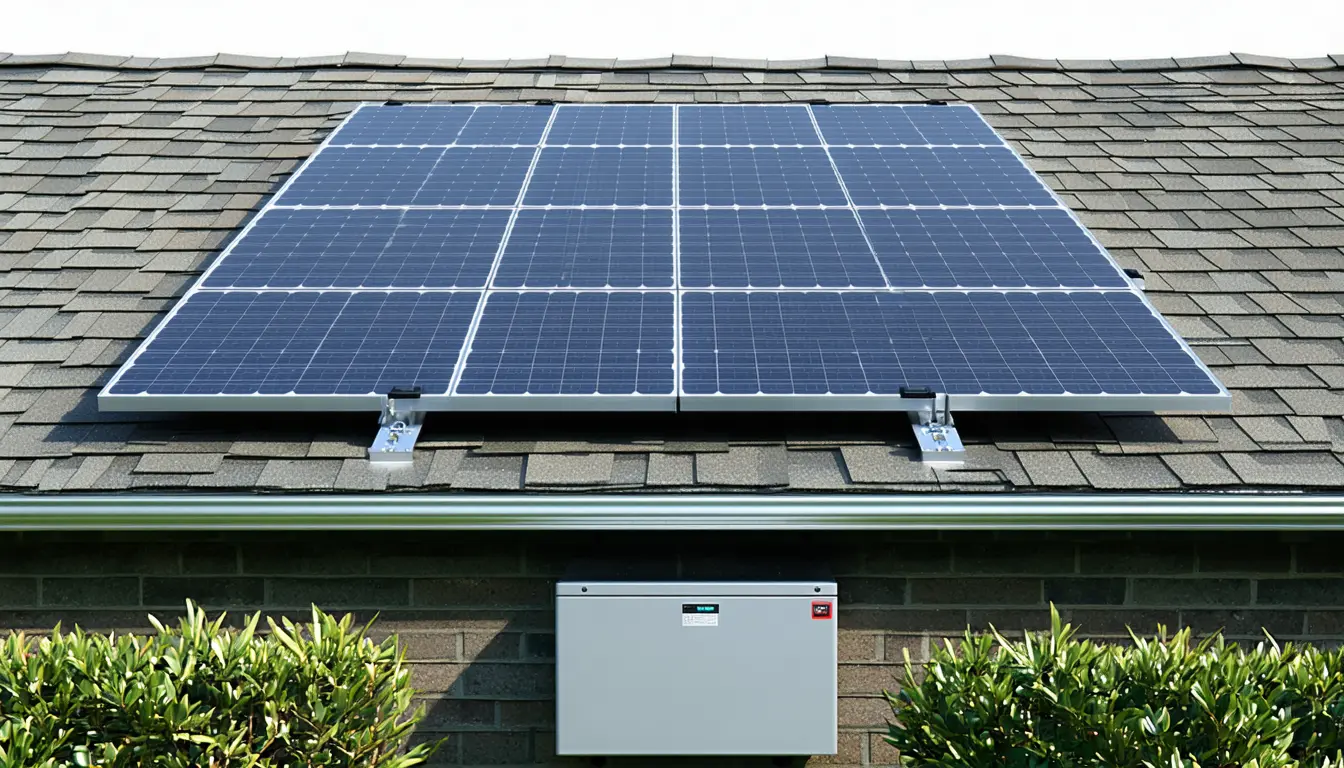
- Resilience Energy pays to install solar and batteries across a network of homes, then sells that power back to the grid at peak moments so utilities can avoid firing gas peaker plants.
- Instead of aggregating households that already bought solar and storage, the company owns the equipment itself, which it says lets it build the network faster and reach many more homes.
- Homeowners pay nothing for the equipment and their electricity bills can fall by 60% to 80% while they use it.
- For a gigawatt-sized data center the startup expects to supply 100 to 200 megawatts of capacity, which it says means enrolling 20,000 to 40,000 homes.
- The company launched last year and is still pre-seed; Konkar says the first contracts are in late-stage negotiation and at least one is likely to be in place later this year.
Compiled by The Product DeskSomething wrong?How this is made
Why it matters
- constraint Owning the hardware moves the delay from the interconnection queue to the financing table, because nothing gets installed until a buyer a lender will accept signs a multi-year contract Resilience can borrow against.
- cost At the capital-per-home rate Konkar cites, a 40,000-home block is roughly $1 billion of equipment funded up front by a lender and repaid through the contract price the energy buyer pays.
- capability Households that could never finance a rooftop system become eligible hosts, so the recruitable pool is far wider than the credit-approved owners a conventional aggregator can reach.
- decision An energy buyer at a gigawatt site is being offered cover for 10% to 20% of the load during peak hours, which puts this up against peaker contracts and demand response, not against baseload supply.
A homeowner on the sign-up page has to believe two things at once: that the hardware is free, and that peak hours are worth enough for a stranger to pay for it. Konkar said one challenge is simply convincing homeowners the program is not too good to be true. The company is recruiting through cities, counties and community groups, and in some places the utility will carry the message [17].
Ownership is what widens the list. An aggregator that pools batteries already installed can only sign households that already spent the money. "One of the benefits of this model is that everyone qualifies, including low and moderate incomes," Konkar said [4]. Resilience has also started signing rental property owners, who skipped solar in the past because the tenant, not the landlord, sees the lower bill [6].
Konkar put a figure on the local effect. "If we are doing 20,000 homes of solar and storage, that's unlocking about $500 million of capital for those homes in that community," he said [15]. Divide it and you get about $25,000 a home [19]. The capacity numbers give the other half of the ratio: 100 to 200 megawatts from 20,000 to 40,000 homes [16], which is 5 kilowatts a home at either end of the range [20]. So roughly $25,000 of capital sits behind about 5 kilowatts of peak contribution, near $5 a watt [21], and a lender funds that before any power is delivered.
The power purchase agreement is the collateral. Tech buyers have used those contracts for more than a decade to get utility-scale solar built [8]; here the same instrument backs equipment scattered across thousands of roofs, with partners handling installation [9]. Ownership changes what the project has to wait for. A large solar farm spends years in permitting and grid connection [13]. These homes are already connected, so interconnection is simple and the power price is competitive, per the company [14], and the project waits instead on a signed contract with a counterparty a lender will accept. Fast Company did not report the length of the homeowner agreements or the contract terms [24].
Two axes sort this for an energy buyer. One is what they need, peak-hour capacity or round-the-clock volume. The other is what is blocking them, the interconnection queue or the price per megawatt-hour. The company says the product is not designed to fully power a data centre and covers the critical hours when the grid is most strained [12], so it answers the corner where the need is peak capacity and the blocker is the queue.
For the property owner deciding whether to sign, the details are in the term sheet. The equipment stays Resilience's [1], the bill reduction of 60% to 80% runs while the homeowner uses it [2], and the things to pin down are what happens at the end of the term and who pays for repairs. Sign-ups are open across the contiguous United States, but a project only proceeds where enough homes enrol and a contract can be put in place [11]. Konkar said at least one is likely to be signed later this year [10].
What to watch
- Whether a first power purchase agreement is signed this year, and which buyer's credit is behind it.
- The size and terms of the next raise, since the equipment cost sits with Resilience until a lender takes it on.
- The first published homeowner agreement: term length, ownership at the end of the term, and what happens when the house is sold.