Invest1 publisher3 min readPublished
Massachusetts gives its towns the first veto on any data center above 25 megawatts
Healey's order makes a signed community benefits agreement the price of entry to state permitting for anything above 25 megawatts, while the cost of missing the 100% clean-power test stays unpriced until MassDEP writes that rule by December 31.
The Investor · Invest desk
What happened
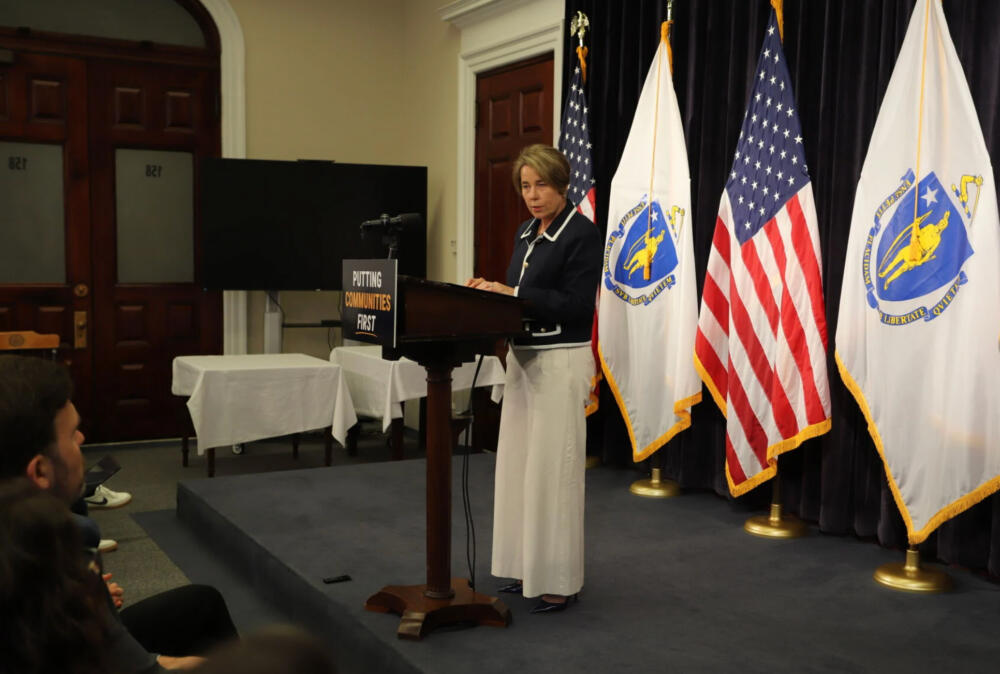
- Governor Maura Healey signed an executive order on September 8 barring proposed data centers from state permitting unless the city or town hosting them approves the project first.
- The order covers projects whose maximum electricity demand tops 25 megawatts, which must meet all of that demand with clean generation, fund new generation nearby, or pay into a new Ratepayer Protection Fund.
- It also prohibits non-disclosure agreements between state agencies and data center companies, which Healey's office said is meant to keep the review process open to residents.
- Shutesbury and Holyoke have already banned the facilities outright, Westfield has permitted a moratorium, and Easthampton, Northampton and Greenfield are weighing temporary bans.
- New York paused construction of data centers of 50 megawatts or larger in July and Texas ordered ERCOT and regulator audits in August, making Massachusetts the third state to act in three months.
Compiled by The InvestorSomething wrong?How this is made
Why it matters
- cost A project that cannot supply all its own demand from clean generation pays for generation nearby or writes a cheque to the ratepayer fund, which moves the cost of grid strain out of household bills and into project economics.
- exposure Existing sites are reachable as well as greenfield ones: Lowell residents sued MassDEP in April over generator permitting and a judge blocked four units, so adding capacity at a running facility now carries the same neighbour risk.
- precedent With 15 states weighing moratoriums, the underwriting question stops being whether a state will legislate and becomes which megawatt threshold it borrows when it does.
The sequencing does the enforcing. A community benefits agreement has to be signed, and has to satisfy state standards, before a project can open a file with state permitters [1][2], which means the first room a developer has to win is the one where the opposition is unpaid and lives nearby.
Twenty-five megawatts is the trigger [3], and an AI campus drawing a gigawatt or more [17] sits 40 times above it [1], so the rule is aimed at AI-scale campuses, not server closets. New York's July pause begins at 50 megawatts [11], making the Massachusetts gate half as wide [3] and catching twice as many projects. The sharper term is the power test: 100% of demand from clean generation [4] against a state standard that climbs to at least 40% by 2030 [6], which is 2.5 times the obligation everyone else on the system carries [2].
The escape hatch has no price on it yet. MassDEP has until December 31 to design the alternative compliance payment that feeds the Ratepayer Protection Fund [5], so a developer weighing onsite generation against a cheque is comparing a capex estimate to a blank space. The other side of the ledger got thinner in June, when Healey paused applications for the 20-year sales and use tax exemption and told reporters the exemption was the Legislature's idea rather than hers, in a 2024 package she signed [14]. A gigawatt of onsite clean generation [4][17] competes directly with racks for the same capital.
Set the compliance payment low, and the 100% standard turns into a toll: the veto becomes a price, and the benefits agreement becomes a line item that some town with a school roof to replace will happily sell. Set it high, or let the refusals keep coming, and the megawatts go to states that have not built a gate at all. The wider question is which threshold gets copied by the 15 states the National Conference of State Legislatures counts as considering moratoriums [13], because at 25 megawatts essentially every AI-scale project meets a municipal vote before it meets a utility.
Siting is now the first gate in Massachusetts, and Healey put it plainly: a project needs community approval before the state will permit it [8]. The record does not yet support calling this a binding constraint on AI timelines. Three states have moved in three months [10][11][12], no cancelled project or megawatt total is attached to the order, and the longest clock in the picture is still the grid, where interconnection runs seven years or more in parts of the country [17]. A town vote is a shorter clock than that. The falsifier is clean enough to watch for: a host community signing an agreement and a permit issuing inside two quarters would show the veto is purchasable rather than binding. Worth noting where the industry's political money sits in the meantime, which is battleground-state advertising through the Leading the Future super PAC, backed by Marc Andreessen, Ben Horowitz and Greg Brockman [18], and not in the town halls that now hold the switch.
What to watch
- The alternative compliance payment MassDEP must design by December 31, and whether it is set low enough to work as a toll rather than a bar.
- The first host community to sign a community benefits agreement under the order, and what it extracts for saying yes.
- Whether Senator Vanna Howard's S 3166 advances and puts the framework into statute rather than an executive order.