Product1 publisher3 min readPublished
Hyundai joins Commonwealth Fusion's $1 billion round to explore engineering ARC power stations
Hyundai Motor Group's money closed inside a $1 billion raise at Commonwealth Fusion Systems, and the engineering work on ARC power stations is still described as something the two companies will explore. The amount and the scope were not disclosed.
The Product Desk · Product desk
What happened
- CFS filed an interconnection application with PJM Interconnection, which the company says is the first time a fusion developer has filed formal paperwork to connect directly into a regional high-voltage grid.
- CFS said in June 2026 that a peer-reviewed research study had verified the core plasma physics assumptions governing the ARC design.
- Those validated models put ARC at roughly 1.1 gigawatts of fusion power producing 400 megawatts of net electricity for the grid.
Compiled by The Product DeskSomething wrong?How this is made
Why it matters
- constraint Under 200 MW of Fall Line's net output is uncommitted, so an industrial buyer arriving now is bidding on the smaller half of the first grid-scale ARC.
- cost Cost per delivered megawatt has to be worked out against 400 MW, since about 64 percent of the fusion power the plant makes never reaches the grid.
- precedent A fusion project now sits inside the same interconnection process as any gas or solar plant, which makes PJM's study queue part of the delivery date.
- decision Anyone weighing fusion in an early-2030s supply plan has to price what an exploratory engineering partnership is worth when the announcement binds neither party to a scope.
The operative verb in the announcement is "explore". Commonwealth Fusion Systems says the Hyundai money, closed as part of a recent $1 billion raise, will let the two companies look at engineering partnerships for its ARC commercial power stations [1]. The release does not disclose how much Hyundai put in or what any engineering work would cover. Hokeun Chung, Executive Vice President of Hyundai Motor Group, said: "CFS has demonstrated strong technical progress toward commercial fusion energy, and we look forward to exploring opportunities to contribute our industrial, engineering and infrastructure expertise as the industry advances" [9].
Bob Mumgaard, CFS chief executive and co-founder, said: "As we prepare to put fusion energy on the grid in the early 2030s, we see partnerships with leading industrial and energy companies like Hyundai as an important component to helping us scale our ARC power plant business" [10]. The first of those plants, the Fall Line Fusion Power Station in Chesterfield County, Virginia, is scheduled to start up in the early 2030s, with Dominion Energy collaborating on site development [5][4].
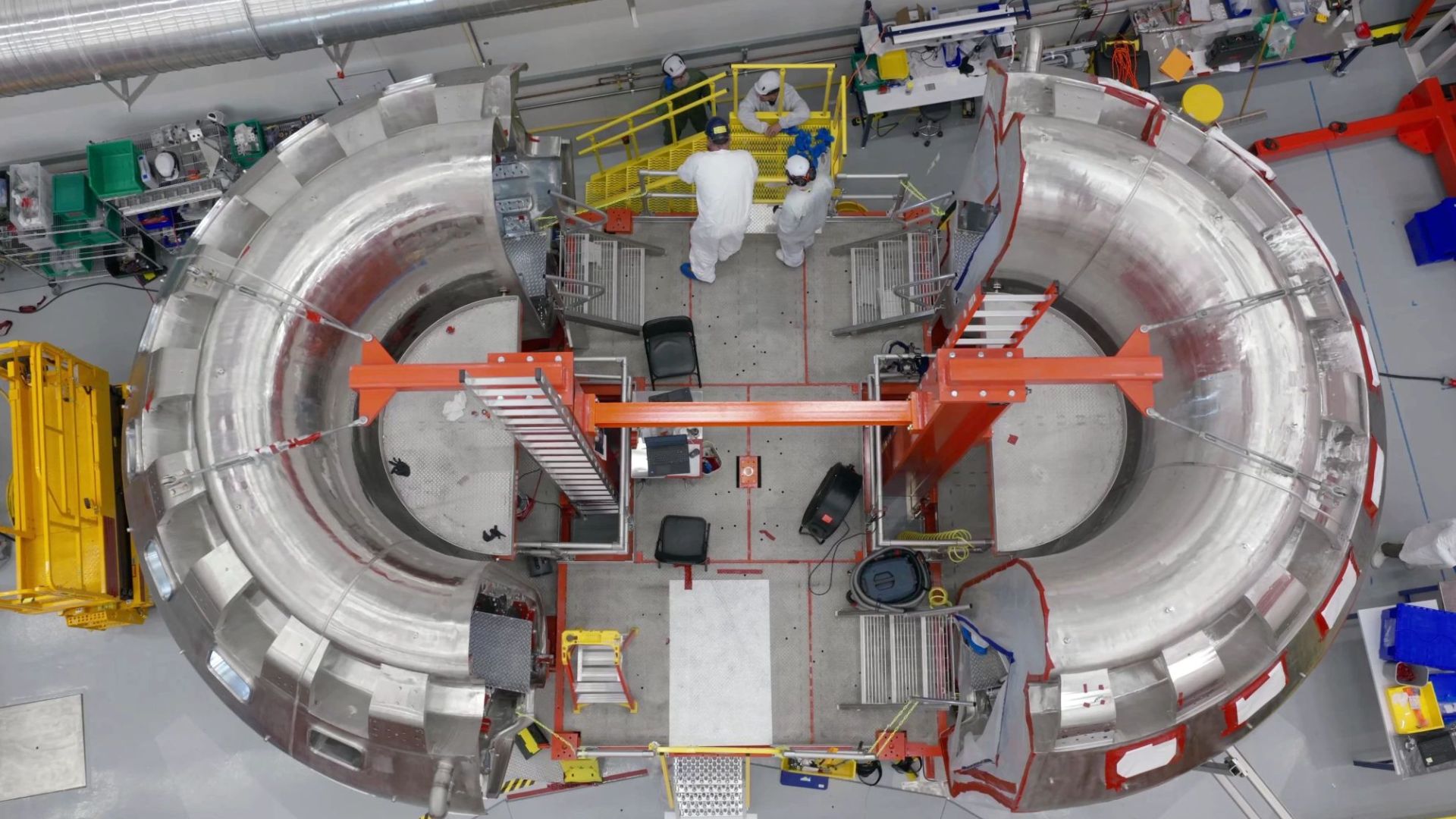
The industrial task CFS describes is repetition of a magnet design it has already built once. The high-temperature superconducting magnets were developed for SPARC, the net-energy demonstration tokamak under assembly at the company's Devens, Massachusetts facility, and ARC scales that same architecture up [8]. In June 2026, following a peer-reviewed study, CFS said it had verified the core plasma physics assumptions behind the ARC design [7].
That validated model is where the planning numbers come from, and they are smaller than the headline. ARC is designed to produce about 1.1 GW of fusion power to deliver 400 MW of net electricity to the grid [6]. So roughly 36 percent of the fusion power reaches the grid as electricity, and about 64 percent does not [1]. Google and Eni have already signed long-term power purchase agreements for more than half of Fall Line's total generation [3], which puts more than 200 MW under contract and leaves under 200 MW for everyone else [2].
Teams read an announcement like this as a manufacturer with plant-scale capability committing to build the machines. The record shows an equity investment and a stated intention to talk about engineering.
Commitments that hold up in a supply plan come in four kinds, hardest to walk away from last: cash received, signed offtake, a queue position with a grid operator, and a scoped fabrication contract with a number in it. Fall Line has the first three, including an interconnection application at PJM Interconnection, the operator of the largest wholesale electricity market in the United States [2]. Hyundai's money is in the first category, and a fabrication contract would be the fourth.
What to watch
- Whether the Hyundai exploration converts into a scoped fabrication or engineering contract with a disclosed value.
- Where the Fall Line application lands in PJM's interconnection queue and what study timeline it is given.
- Whether SPARC's assembly at Devens finishes and the machine demonstrates net energy.