Loading today’s stories
Invest1 distinct publisher3 min readUpdated
Vance's 'resource curse' clip drags dollar dominance into the 2028 primary
Resurfaced 2023 footage of the vice president questioning reserve-currency status turns a seminar argument into a political one. Rates desks now have a candidate risk to think about.
The Investor · Invest desk
What happened
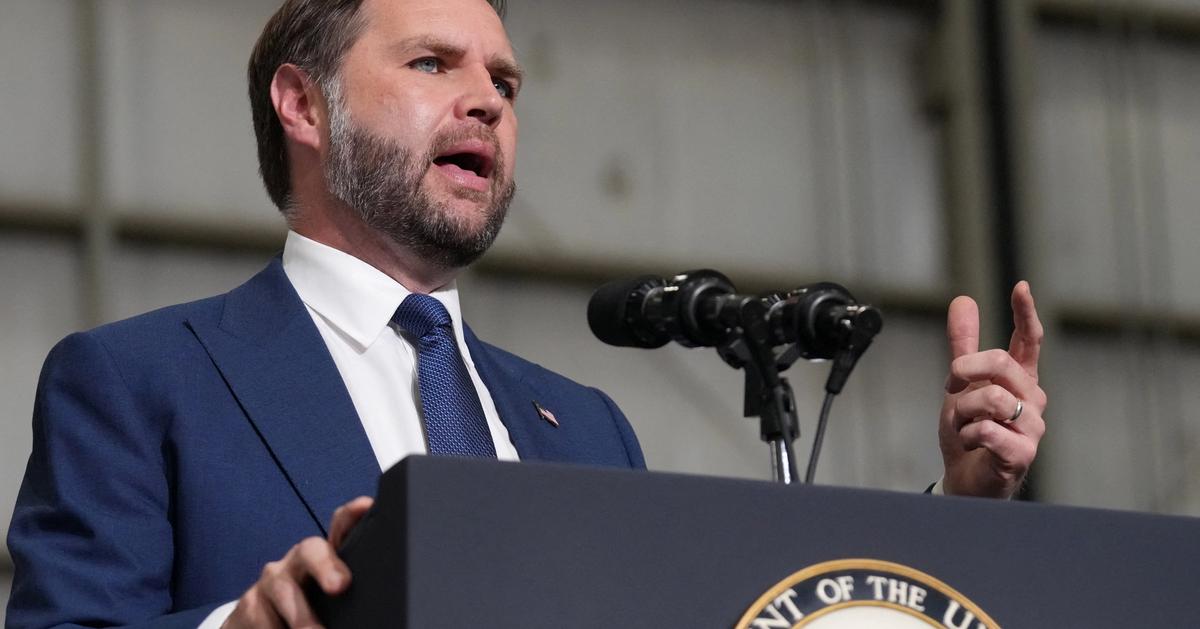
- Economic historian Phillip Magness, while researching tariffs, unearthed 2023 footage of JD Vance telling the populist group American Moment that he is "not sure" it is "actually good" that dozens of foreign central banks store their reserves in dollars.
- In the 2023 footage, then-senator Vance called reserve-currency status "a resource curse" like "coal in Appalachia" because it allows "consumers to consume very cheaply."
- Magness shared the video on X last week and it went viral.
- Magness told Semafor that "it's all over the place" and "I'm shocked."
- Vance's economic identity as the Republican presidential frontrunner for 2028 remains unclear.
Compiled by The InvestorSomething wrong?How this is made
Why it matters
Economic historian Phillip Magness, while researching tariffs, dug up 2023 footage of JD Vance telling the populist group American Moment that he is "not sure" it is "actually good" that dozens of foreign central banks store their reserves in dollars, and calling reserve-currency status "a resource curse" like "coal in Appalachia" because it allows "consumers to consume very cheaply" [1][2]. Magness posted it last week and told Semafor "it's all over the place," adding "I'm shocked" [3][4]. The consequence is not the clip. It is that a position previously confined to policy papers is now attached to the Republican presidential frontrunner for 2028 [5].
The clip has company. Magness followed it with another in which Vance says forsaking reserve-currency status could allow the US to "make enough weapons" to help Ukraine [6]. In a 2023 hearing, Vance called reserve status "a sacred cow of the Washington consensus," observed "our mass consumption of mostly useless imports on the one hand, and our hollowed-out industrial base on the other hand," and said "I wonder if the reserve currency status also has some downsides" [7][8]. Magness notes that Vance's own Senate aides posted the comments [9]. This is a stated view with a paper trail, roughly three years old, not an ambush [10].
The near-term guardrails are real. Vance has not explicitly called for displacing the dollar as reserve currency and is not in a position to act on it, and his office did not comment to Semafor [11][12]. Trump has vowed to protect reserve-currency status while occasionally paying lip service to the benefits of a weaker dollar, prioritising tariffs aimed at boosting exports instead [13]. Harvard's Kenneth Rogoff, author of "Our Dollar, Your Problem," told Semafor the second-term administration has shown little appetite for deterring foreign central banks from holding dollars, which suggests officials "may have been persuaded not to go that way over time" [14][15].
The economics is where operators should be unsentimental. Rogoff says reserve status "probably biases the dollar upward" but also brings greater geopolitical power and lower interest rates, at least before lenders factor in the national debt, and that US technology and agriculture also support the currency's value [16][17]. He puts Vance's theory at "one factor of a dozen" driving the dollar, while saying it is too strong to dismiss [18]. The firmer part of his argument is the funding side: "You can much more confidently say that the interest rate we pay is lower because of the dollar as the reserve currency" [19]. So the implied trade is not a clean currency devaluation for exporters. It is cheaper imports and lower borrowing costs surrendered for a hoped-for industrial gain, with the surrender falling on the Treasury curve first.
The factional lines are already drawn. Oren Cass of American Compass called Magness's critique "half-baked and pathetic" while conceding that it "clearly is starting to kind of lay out some of the contours for the conflicts that are going to emerge in the Trump administration over what right-of-center economic policy and thinking looks like in the future" [20][21]. Former Trump CEA chair Stephen Miran later embraced concerns about reserve-currency status [22]. Vance's backers read the episode as a campaign by free-market Republicans to discredit his economics ahead of a possible 2028 bid [23].
Watch Vance's Friday economy speech in Ohio for whether he repeats the "resource curse" framing, softens it, or leaves it unaddressed [24]. His economic identity remains unclear, and his Senate record ran populist, including proposals to penalise bank executives and rein in credit card companies, the latter of which he later cooled on [5][25].
Loading topic controls
Loading related stories