Product1 publisher2 min readPublished
NAVAIR asks industry for an anti-submarine torpedo that fits inside 7.5 inches
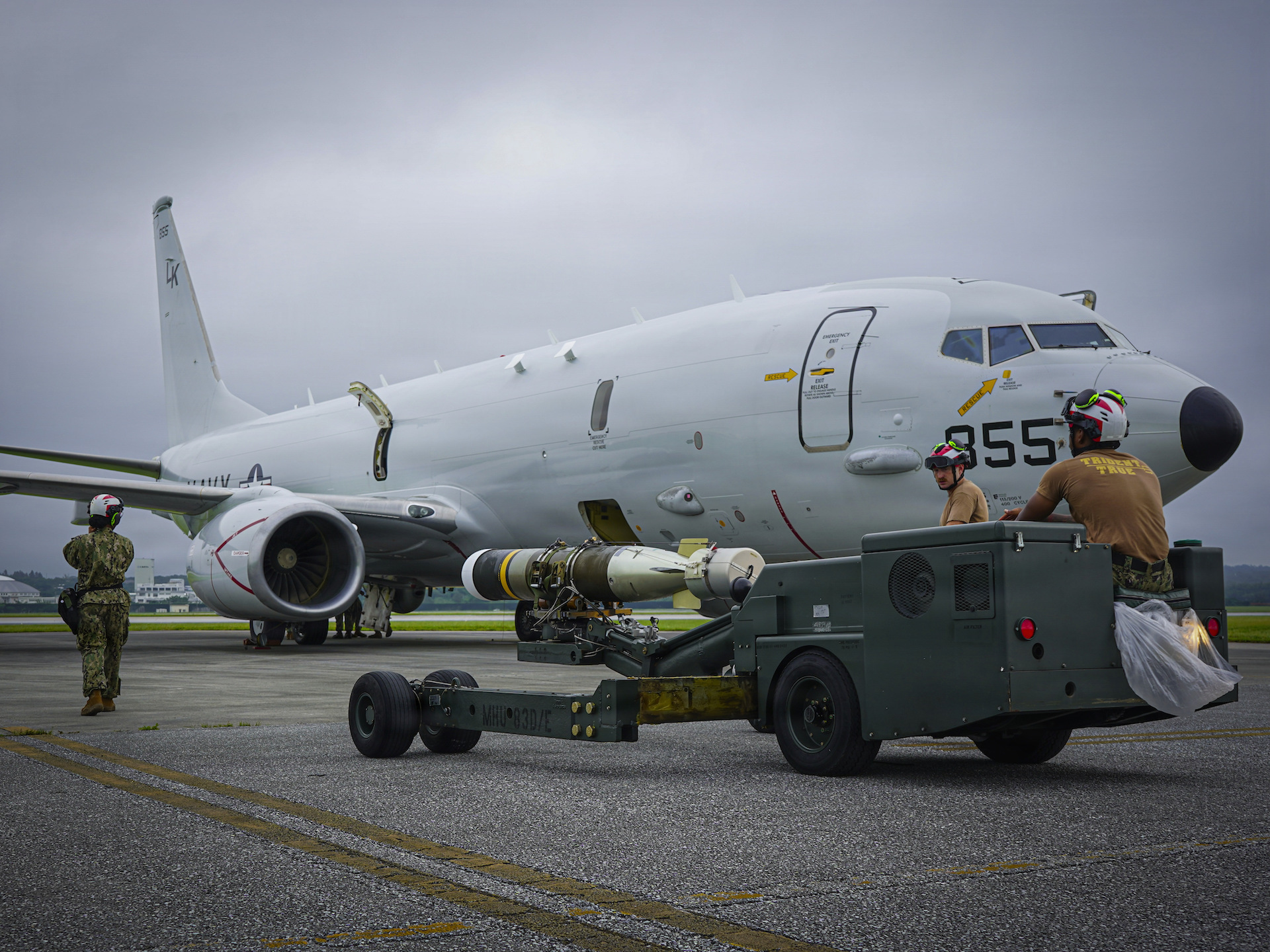
Naval Air Systems Command's Silent Anvil request for information publishes the weight, length and diameter a bidder has to design inside, and it offers two ways to build it around a torpedo the Navy may supply itself.
The Product Desk · Product desk
What happened
- Naval Air Systems Command issued a request for information to industry in August for the Silent Anvil Air-Launched Torpedo, a compact air-launched anti-submarine weapon.
- The stated objective is to put a standoff anti-submarine weapon on more aircraft types, including carrier-based aircraft and unmanned platforms, instead of concentrating it on dedicated maritime patrol aircraft.
- The Navy set the limits at a maximum 268 pounds, up to 70 inches of length and 7.5 inches of diameter, sizing the weapon to a wider range of aircraft than larger air-launched systems.
- Industry can propose either a complete weapon that integrates the glide vehicle and the torpedo, or an unpowered wing kit that carries a government-furnished anti-submarine weapon.
- The requirement asks for an end-to-end prototype demonstration within 18 months of an agreement, followed by roughly 180 prototype weapons over the next three years.
Compiled by The Product DeskSomething wrong?How this is made
Why it matters
- capability A weapon in this size class would put the attack end of submarine hunting back on carrier decks. USNI News made that point, decades after the S-3 Viking retired.
- constraint The distance between the roughly 250-pound class the Navy describes and its 268-pound ceiling is 18 pounds, about 7 percent. Every rack adapter, connector and datalink added during integration has to come out of something else.
- precedent The ask stops at 180 prototypes, so a supplier sizing a line off this document is sizing it for a demonstration run and would need a separate decision to get a fielded program.
- exposure Spreading the shot across drones and carrier aircraft makes the link the losable part, and Interesting Engineering notes communications in a heavily contested Indo-Pacific could be disrupted.
7.5 inches is the diameter a bid engineer has to check against the hardware already on the shelf [3]. Inside that, and inside 70 inches of length and a 268-pound ceiling, a supplier has to fit wings, guidance, a datalink and either a torpedo or the structure that holds the government's [3][5][11].
The carriage requirements narrow the space further. The request for information asks for compatibility with the BRU-61/A rack, for both internal and external carriage, and for the weapon to work with carrier storage and handling equipment [4]. The Navy already has a high-altitude option in HAAWC, which pairs a glide kit with the Mark 54 lightweight torpedo so a P-8A can release from altitude, and Silent Anvil is specified to be considerably smaller than that [10].
About 180 weapons across three years averages 60 a year [2], and the demonstration milestone plus that delivery window leave 54 months between an agreement and the last unit [3]. The requirement calls all 180 of them prototypes [6].
Silent Anvil covers the attack end. Interesting Engineering, which reported the request for information, calls finding the submarine the hardest part of anti-submarine warfare, and a smaller weapon does not change that [12]. What the document asks for instead is networked connectivity with tactical command-and-control systems [11], so the targeting track arrives from a platform that is not the one carrying the torpedo.
Two claims about the western Pacific carry the case for spreading the weapon around. US naval intelligence estimates China's submarine force will reach about 80 boats by 2035, roughly half of them nuclear-powered [7]. The second claim is about survivability: large aircraft such as the P-8A Poseidon could face increasingly contested operating environments there [14]. In July, satellite imagery examined by the South China Morning Post showed a previously unidentified submarine at Shanghai's Jiangnan Shipyard, with a reduced sail and larger dimensions, and its propulsion system remains unconfirmed [8].
For a company weighing bid money, sort the two paths by who owns the hard part. A supplier of airframes and guidance kits can treat the unpowered wing kit as the entire product, because the anti-submarine weapon arrives government-furnished [5]. A torpedo maker has to answer the dimensional question before anything else in the document matters: 7.5 inches, 70 inches, 268 pounds, on a rack that already exists [3][4].
What to watch
- A solicitation and a signed agreement, which would start the 18-month demonstration clock.
- Whether the government-furnished weapon for the wing kit path is named, since its weight sets what is left for the kit.
- Any quantity beyond the 180 prototypes, which would turn a demonstration run into a production line.