Product1 publisher2 min readPublished Updated
The Marine Corps picked a counter-drone turret that fires a machine gun it already owns
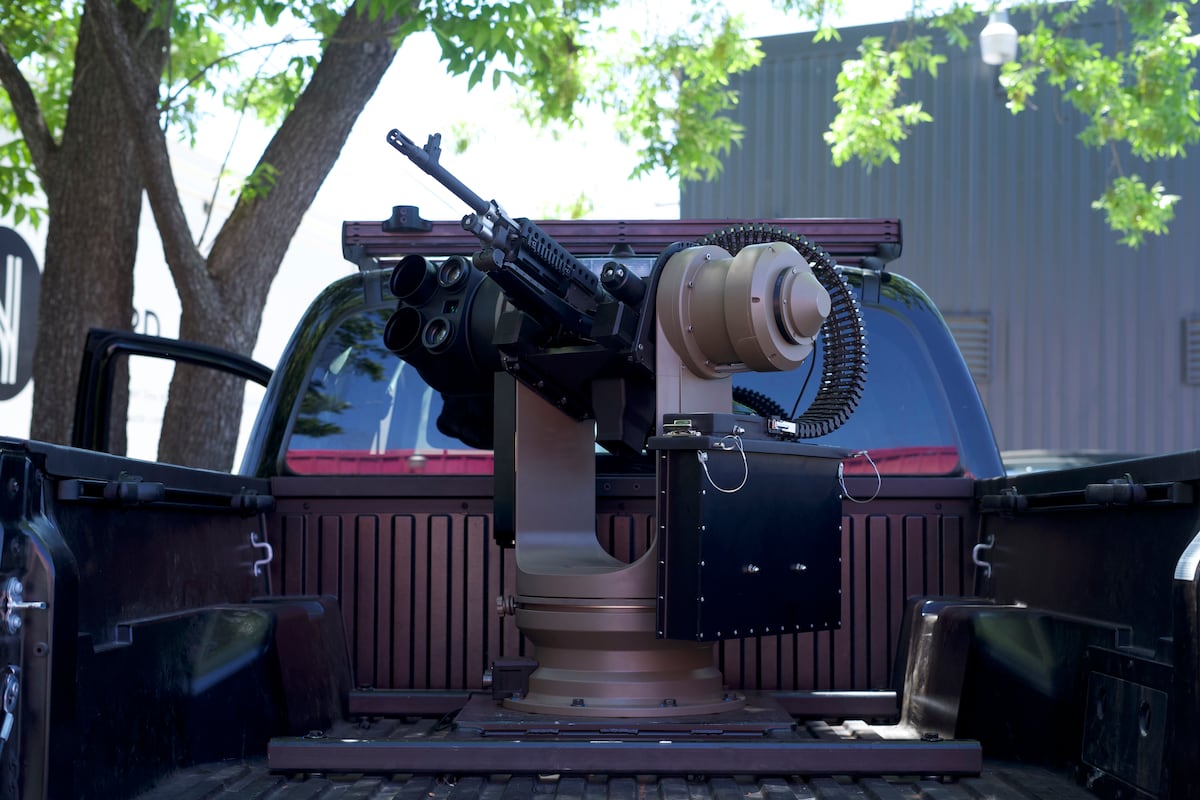
Bullfrog uses computer vision to hold the aim while a gun already in service does the firing. ACS is opening an Austin plant to build more of them for the Army, the Navy and now the Marine Corps.
The Product Desk · Product desk
What happened
- Alien Control Systems is opening a 191,000-square-foot plant in Austin to raise output of Bullfrog, the counter-drone weapon station it built against low-cost weaponised drones, citing U.S. and allied demand.
- Tectonic Defense reported that the Marine Corps selected Bullfrog for LMADIS, the vehicle-based counter-drone system under its Ground Based Air Defense program.
- ACS says the Army and Navy have deployed Bullfrog, and it holds more than $120 million in contracts with Special Operations Command, the Army, the Navy, Joint Interagency Task Force 401 and allies including the UAE and South Korea.
- The company says the plant will let it scale Bullfrog production quickly, with hiring across engineering, manufacturing, quality, testing and supply chain.
Compiled by The Product DeskSomething wrong?How this is made
Why it matters
- cost Because the station fires the unit's own machine gun, the recurring cost of counter-drone defence lands on the fielding unit's ammunition and barrel budget.
- exposure ACS has committed a full manufacturing building while its Marine Corps business is still an initial agreement, so a slipped or shrunken follow-on order hurts the company before it hurts the services.
- capability A unit that buys Bullfrog for small quadcopters may find it covers bigger airframes too, since Wior says the system has worked against Group 3 drones it was not designed for.
- precedent A Marine selection on top of Army and Navy use sets the shape rival counter-drone bids will be judged against: software and robotics bolted to a weapon the service already stocks and trains on.
The crew that takes delivery gets a turret and a gun it already maintains. ACS designed Bullfrog to be operated alongside a standard M240 machine gun [7], and Tectonic Defense reports the station can be installed on pickup trucks, unmanned surface vessels and fixed sites [9].
The press release calls Bullfrog an autonomous weapon station [3]. In practice that covers a narrow job, and a useful one: computer vision identifies and tracks the aerial target, autonomous control and precision robotics keep the muzzle on it, and an existing weapon fires [3][7].
At its top rate in the LMADIS fit, the station can put out 850 rounds per minute [12], about 14 rounds a second [17]. Whoever fields it takes on that consumption rate along with the better tracking.
Tectonic Defense put the initial Marine Corps other transaction agreement at roughly $6.2 million [11]. Set against the contract value ACS has disclosed, the Marine deal is about 5 percent of the book, and less than that if the real total sits above the floor the company has given [18]. So the plant is being built against demand ACS describes but has not sized: it did not disclose what the facility cost, how many stations it will produce, or when it opens.
"The United States and allied nations have sent us a clear message: they need Bullfrog to safeguard U.S. and allied forces and critical infrastructure from this omnipresent threat, now," said co-founder and chief executive Mike Wior [13]. Chief operating officer Laura Komkov said in the same release, "Advanced defense production is a national security imperative." [15]
For anyone signing for a system that rides on hardware they already own, two questions matter most. First, whether the station reduces demand on the input that is actually scarce, or adds to it; here the scarce inputs are trained crews and ammunition forward, while the factory makes turrets. Second, what the vendor still owes after delivery, meaning mounts, spares and the software updates that keep a tracker current against next year's airframes. ACS answered the first supply question directly, and the hiring it listed covers engineering, manufacturing, quality, testing and supply chain [2].
What to watch
- Whether the initial Marine Corps other transaction agreement converts into an LMADIS production order with quantities attached.
- Any disclosure of Bullfrog output or backlog in units, which would show whether the Austin plant is ahead of demand or behind it.
- Whether allied buyers beyond the United Arab Emirates and South Korea appear on the Bullfrog contract list.