Product1 distinct publisher3 min readPublished
A 45% slide from a 460% debut reads like a verdict on humanoid robots. The arithmetic says the market has not yet finished disagreeing with the offer price.
The Product Desk · Product desk

Compiled by The Product DeskSomething wrong?How this is made
Annualise the quarter in Unitree's own prospectus and the roughly $36bn the market still assigns the company after the slide works out near 1,500 times earnings [1][3]. At the intraday peak, the same crude sum gave about 2,800 [4]. Neither figure is a sensible read of a research-stage business, and that is the useful part: nothing in the filing sets a price, so the price came from somewhere else.
Somewhere else was the offer, and the offer was low. Analysts marked the company at $7bn or more in the weeks before the float [8], the listing price on 19 August valued it near $9bn [6], and the first-day peak was about seven times that [7]. Even after $30bn of value came off, the stock sits around five times the floor of those pre-float estimates [5]. A 45% fall sounds like a reckoning. It has not yet carried the price back to where the sell side began.
The plumbing explains most of the round trip. Chinese exchanges vet listing candidates and also guide IPO pricing, which caps how far bankers can lift an offer to meet feverish demand; analysts told Reuters this distorts prices [10]. Rules restrict short-selling, so an overpriced open meets nobody betting against it, bankers told Reuters [11]. The first day was therefore not price discovery so much as the release of a queue. Yuan Yuwei of Trinity Synergy Investments put the general case to Reuters bluntly: a stock worth 10 yuan can open at 100 and slide for years, and he called that a rip-off [14].
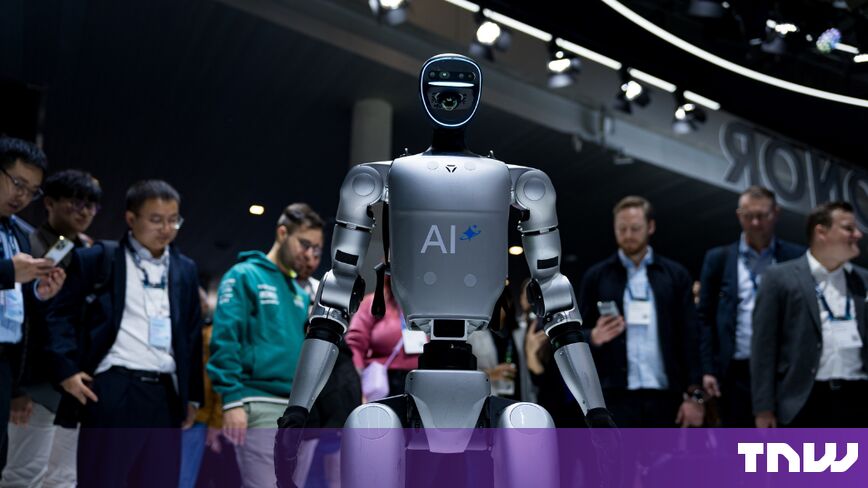
What the machines can do was never the disputed variable. One Unitree robot beat Usain Bolt's 100m record at the World Humanoid Robot Games in Beijing this month, a result roboticists were quick to qualify [15]. Broader commercial applications have been harder to come by [16]. Gao Xingkun, who manages a fund at China Southern Asset Management, told an online roadshow that judging these companies on profit alone is unfair, because many robot makers spend heavily on research while commercial orders are not yet in sight, and he likened the moment to the early years of China's electric vehicle industry [17]. That is the bearish case delivered in a bullish voice. The item he identifies as absent is orders, and China's EV makers earned their re-rating on volume they eventually shipped.
Wang Xingxing, who holds about a third of the shares, said days after the listing that robots are approaching a "ChatGPT moment" [18][20]. Possibly. But the three sessions of decline did not test whether a biped can sprint; they tested what the sprint sells. Between the vetting, the guided offer price and the restriction on shorts, the only investors positioned to register a view were the ones who had to buy on the tape after the open. They have now registered it, and the multiple they are left holding still assumes a revenue line the prospectus does not yet show.
Ranked by verification strength, evidence, and original report placement.
Unitree's shares have fallen roughly 45% from the peak they hit on their first day of trading in Shanghai.
The stock steadied on Tuesday after three consecutive days of decline, Reuters reported.
The valuation of the Hangzhou humanoid robot maker reached $66bn at one point, intraday, and has since dropped by $30bn.
Newly listed Chinese stocks have gained an average of 226% on their first day over the past three years.
Unitree listed on 19 August at 150.8 yuan a share, valuing the company near $9bn.
Follow any of these and your For You feed starts watching them — no settings page required.
Evidence-backed comparisons of source perspectives and observed adoption signals. Read the methodology
Which Builder, Operator, and Investor concerns the observed source mix emphasized—not a truth score.
Evidence, demonstrated adoption, hype gap, incentives, and confidence are assessed independently, each on its own current evidence. How these are measured.
Prospectus figures and named sources, relayed by one outlet
Core numbers are traceable to Unitree's own prospectus (Q1 2026 adjusted net profit down 53% to 40mn yuan) and to reported market data (listing price, 460% debut, 226% three-year average, 8,000x oversubscription), and the interpretive claims come from named, identified market participants. But the cluster holds a single publisher relaying Reuters, with no primary filing link, no company or exchange response, and no revenue or order data to test the commercial argument.
Capital demand intense, product adoption unproven
Adoption evidence for the underlying technology is thin: the source states broader commercial applications have been harder to come by, and the only capability datapoint is a robot sports result that roboticists qualified. What is heavily adopted is the equity, not the product, with record retail oversubscription and a queue of rivals preparing to list. No shipment, order or customer data appears.
Valuation narrative far ahead of disclosed fundamentals
Even after giving back $30bn, the implied ~$36bn valuation sits near 1,500 times annualised Q1 adjusted profit, and the intraday peak implied roughly 2,800 times, against profit that fell 53% and commercial applications the source calls scarce. The 'ChatGPT moment' and early-EV framings are forward claims with no order evidence attached. The positive gap describes the market and subject narrative; the article's own framing is comparatively restrained and arithmetic-led.
Nearly every voice holds a position
The commentary comes from parties with direct exposure: a hedge fund manager and a VC chairman critical of the debut in a market where short-selling is restricted, an asset manager fund holder arguing for patience on robotics, and the founder who owns about a third of the company talking up a 'ChatGPT moment' days after listing. Exchange vetting, guided pricing and STAR Market strategic-industry status add state-level incentives, and a queue of rivals waiting to list benefits from a supportive tone.
Figures checkable, but one outlet and annualised arithmetic
The headline facts are internally consistent (a 45% fall from $66bn matches the ~$36bn residual, and the derived multiples follow directly), and sources are named. Confidence is held down by the single-publisher cluster, reliance on relayed Reuters reporting with no primary documents attached, and the fact that the valuation multiples annualise a single quarter of profit in a business with lumpy, research-heavy economics.
invest
Unitree's 45% slide has unwound the abnormal half of a 460% pop, and none of the price2 distinct publishers
invest
Unitree's $905M Shanghai listing prices humanoids at 35x sales while profit halves1 distinct publisher
product
Unitree's $9bn Shanghai listing prices the humanoid story, not the robot-dog business1 distinct publisher
build
Unitree's 8,000x book is now the comparable every humanoid banker will quote2 distinct publishers
Distinct publishers with included, body-backed reporting in this cluster.
1 article · August 25, 2026