Science1 publisher2 min readPublished
A prior parasite infection trained lung macrophages to protect mice from lethal flu
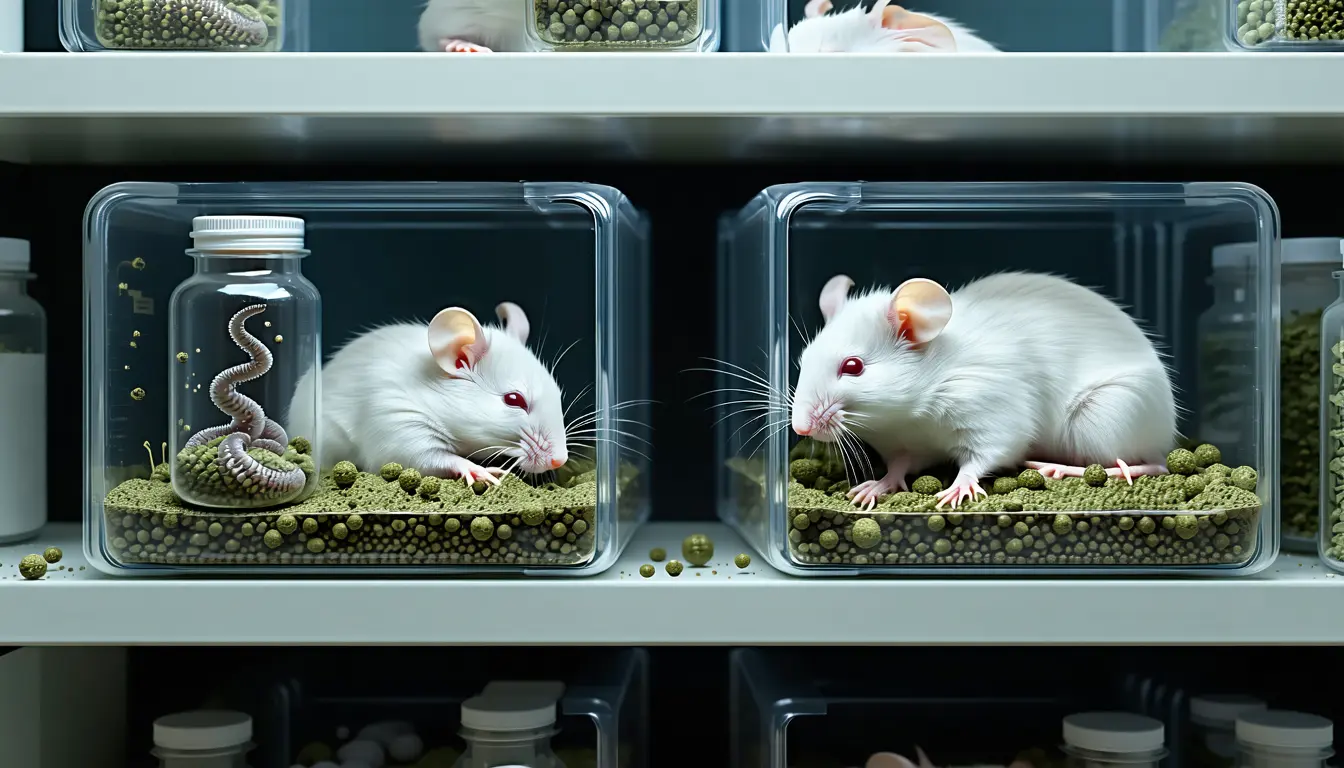
Mice given a parasite infection weeks before a lethal flu dose all survived, while every untreated control died by day five or six, a Nature study reports. Because viral load did not change, the finding points to disease tolerance as a treatment target separate from antivirals.
The Scientist · Science desk
Drafted by a language model from the sources cited here and checked against its claim ledger before publication. How we use AISend a correction
What happened
- Deleting the conditioned NAMs, or replacing them with unconditioned ones, abolished the survival benefit; the trained cells were necessary for it.
- Transferring conditioned NAMs into naive mice handed over the tolerance, and the transferred cells still did not speed up viral clearance.
- A meta-analysis of human lung single-cell atlases from healthy, fibrosis and COPD cohorts found NAM-like repair programs that switch on depending on context.
Compiled by The ScientistSomething wrong?How this is made
Why it matters
- capability Because transferring the trained cells alone conferred survival, disease tolerance could in principle be delivered as a cell or drug therapy without inducing a live parasite infection.
- constraint The survival results are entirely in mice, and the human data reach only as far as gene-program signatures in lung atlases, so whether a person would survive flu is untested.
- precedent It makes the pathways that limit tissue damage a drug target for severe respiratory infection, distinct from antivirals aimed at cutting viral load.
The experiment is a heterologous challenge. The team infected mice with the nematode Nippostrongylus brasiliensis, waited four to six weeks for that response to resolve, then gave them a lethal dose of H1N1 influenza [3]. Worm and virus are unrelated, so surviving the flu cannot be residual flu-specific immunity.
The protection traced to a small population of interstitial macrophages the authors call NAMs, for nerve- and airway-associated macrophages. They are CD169-positive, they sit around large airways and pulmonary nerves in both mice and humans, and they already run wound-repair, immunoregulatory and efferocytosis programs [1]. A worm infection drives type 2 inflammation, and after it these cells expand [2]. Alveolar macrophages, the lung's better-known resident population, die off in large numbers after influenza or SARS-CoV-2; NAMs instead expand early [15].
What rules out the obvious explanation is the viral count. Conditioned mice did not clear more virus, and their T cell responses were no stronger [5]. They lived anyway, while every unconditioned control was dead by day five or six [4]. The protected lungs showed less immunopathology, more clearing of dead cells, and faster repair [6]. The paper's term for this is disease tolerance: limiting immune-mediated damage without any change in pathogen load [11].
The causal test is the part I would weigh most. In mice engineered so the researchers could delete NAMs on command, removing the conditioned cells, or replacing them with unconditioned ones, abolished the survival benefit [7]. Transferring conditioned NAMs into naive mice handed over the tolerance, again without improving viral clearance [8].
Underneath sits a chromatin program built on IL-4, STAT6, PPAR-gamma and ARG1 that locks the cells into a pro-resolving, reparative state [9]. Trained immunity is a durable epigenetic and metabolic reprogramming of innate cells after a first stimulus [14]. This version is local, in the tissue. Most trained-immunity work instead reprograms bone marrow precursors to improve pathogen control [13].
Whether any of it protects a person is unproven. Every survival number here is from mice [4]. The human evidence is a meta-analysis of lung single-cell atlases from healthy people and patients with idiopathic pulmonary fibrosis and COPD, which found NAM-like repair programs that switch on depending on context [10]. That shows the cell state exists in human lungs. Whether it carries anyone through influenza is another question.
The authors present the trained-macrophage state as a therapeutic entry point for severe inflammatory respiratory infection, separate from drugs that lower viral load [16]. The rationale is clinical: severe respiratory viral disease varies widely between people and often reflects immunopathology rather than a failure to control the pathogen [12].
What to watch
- Whether a drug can switch on the IL-4-STAT6-PPAR-gamma and ARG1 program without a live parasite and still produce tolerance.
- Whether the NAM-like repair programs seen in human fibrosis and COPD lungs change how those patients fare against respiratory viruses.
- Whether transferring conditioned NAMs still protects when given after influenza infection has begun, not weeks before.