Science1 publisher3 min readPublished
Two children have died in separate Chinese gene-editing trials, one death announced by the company running it and the other uncovered by journalists. China's fast-track trial route requires no drug-regulator supervision.
The Scientist · Science desk

Compiled by The ScientistSomething wrong?How this is made
At least a dozen people have died in clinical trials of gene therapies in the United States, Europe and Russia over the past three decades [7], which averages out to fewer than one a year [8]. That is a numerator without a denominator: nothing in the record says how many patients were dosed to produce it, so two deaths in China cannot be read as evidence that Chinese trials carry more risk. What separates these two cases is who did the finding. One death was disclosed by the company running the trial and the other by reporters, not by a regulator [27].
Gene therapies can cause severe immune reactions that kill [6]. The objection researchers are raising here is narrower, and concerns a decision taken with harm data already in hand [9]. Fyodor Urnov, who studies molecular therapeutics at the University of California, Berkeley, says the trial should not have gone ahead once the therapy showed evidence of harm in animals [21], and that the research and medical team committed several "egregious wrongs" [18]. Every animal in the toxicology cohort was affected [24]. Philippe Campeau of the University of Montreal, who helped characterize Snijders Blok-Campeau syndrome, says the girl's symptoms were mild [23] - the other side of a risk-benefit calculation that the syndrome's fuller presentation, including impaired intellectual development, might otherwise support [16]. Zilong Qiu, who developed the treatment, also corresponded directly with the family [19]. Neither he nor the clinician Yongguo Yu answered Nature's questions about the toxicology studies [22], and Shanghai Jiao Tong University did not answer Nature's questions about its investigation [5].
Investigator-initiated trials let researchers test therapies quickly because the drug regulator is not supervising them [11]. That is also why the only parties positioned to read the monkey toxicology results before the girl was dosed were the people who had developed the therapy and the hospital administering it [20]. Jiayou Shi, a lawyer at the National Research Center for Civil and Commercial Law at Renmin University of China, expects gene-therapy regulations to be strengthened in response [12]. Joy Zhang, a sociologist of science at the University of Kent, puts a halt to gene-editing research or stricter funding requirements on the table [13], and says the damage to the credibility of Chinese institutions is already done [10].
The thing this does not tell you is cause. Nature's account places the girl's death after she received the therapy and states no cause of death for either child [25]. It does not say when HuidaGene learned of the boy's death, so the interval before the 5 August announcement is not in the record [26]. No partner, licensee or investor outside China appears in the account at all [28], which means the case that outside collaborators are newly exposed rests on rules not yet written rather than on anything documented so far. The measurable question is whether the May increase in oversight [11] puts an independent reader of animal data between a developer and a patient before the next first-in-human dose.
Ranked by verification strength, evidence, and original report placement.
Nature reports that the deaths of two children in separate gene-editing trials in China raise serious questions about oversight and could have a profound effect on the country's biomedical industry, according to researchers, ethicists and legal scholars.
On 5 August, HuidaGene Therapeutics, a Shanghai-based gene-editing company, announced that a young boy had died during one of its trials in 2025.
In July, an investigation by Science and Retraction Watch revealed that a six-year-old girl had died in March last year after receiving a different experimental gene therapy.
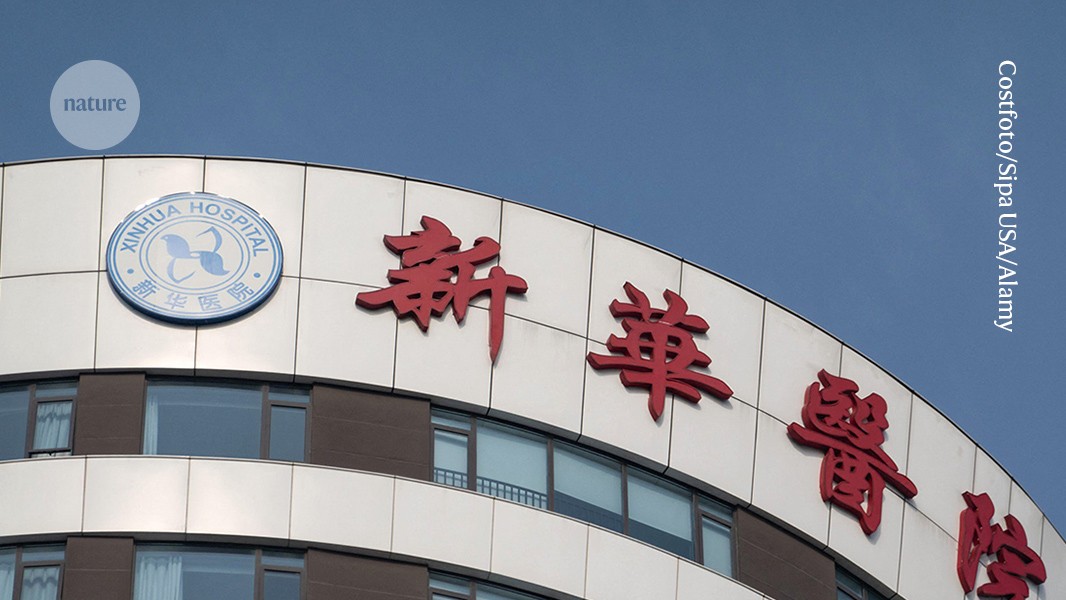
The trial in which the girl died was pioneered by neuroscientist Zilong Qiu at Shanghai Jiao Tong University and clinician Yongguo Yu at Xinhua Hospital, also in Shanghai.
On 26 July, Shanghai Jiao Tong University announced an investigation into the trial and into a related preclinical study the researchers had published in Nature; the university did not respond to Nature's questions about the investigation.
Gene therapies can have serious side effects, including severe immune reactions that cause death.
Follow any of these and your For You feed starts watching them — no settings page required.
Evidence-backed comparisons of source perspectives and observed adoption signals. Read the methodology
Which Builder, Operator, and Investor concerns the observed source mix emphasized—not a truth score.
Evidence, demonstrated adoption, hype gap, incentives, and confidence are assessed independently, each on its own current evidence. How these are measured.
Solid on the record but thin on the crucial detail
Named experts carry the interpretation, and the institutional events are dated: 26 July for the university investigation, 5 August for HuidaGene's announcement, May for the tightening of the fast-track pathway. The decisive fact is thinner than the rest. Liver damage in all four monkeys and the month that followed come to Nature from Science and Retraction Watch, and everyone positioned to confirm or rebut it, Qiu, Yu and their university, declined to answer. No cause of death is stated for either child.
An investigation has begun; the pathway itself remains untouched
What has actually moved is procedural. One university investigation was announced on 26 July, and oversight of investigator-initiated trials was tightened in May, before either death was public, so it is not a response to them. No suspension, licence action or statement from China's drug regulator appears anywhere, and the only word from a sponsor is HuidaGene's own announcement.
Told slightly below what the timeline carries
Nature keeps its forecasts hedged and attributed: Shi says rules will probably be strengthened, Zhang says a halt is possible. The harshest material in the piece, four animals with liver damage and a child dosed a month later, is laid out plainly and not embellished. The prediction of a profound effect on China's biomedical industry is researchers' expectation rather than anything measured, and it is presented as such.
The journal reporting on its own pages
The preclinical study Shanghai Jiao Tong University is investigating was published in Nature, and Campeau, quoted here on how mild the girl's symptoms were, was one of the paper's reviewers for the journal. HuidaGene set both the timing and the content of what is known about the boy's death, having disclosed it itself. Qiu, Yu and the university have plain reasons for the silence the piece records, while the sharpest voices, Urnov and Zhang, are outside critics without access to the trial records.
The paper trail holds up, though the medical cause stays unclear
Dates, names, affiliations and quotes hold up as reported, and the ethics case against the trial is made by identified specialists. What cannot be settled from this material is medical: why either child died, what HuidaGene's trial was testing, and whether the monkey toxicology data reads as Science and Retraction Watch described it. Any reader treating the deaths as caused by the therapies is going beyond what is here.
product
Two deaths, one pathway: gene therapy's risk story is about oversight, not the edit1 publisher
product
A 1MW perovskite array outyielded a co-sited 3.5MW TOPCon plant, per watt, for three months1 publisher
science
A pole-on magnetar hands vacuum birefringence its first astrophysical candidate1 publisher
science
The skull is running a lymph node, and it has opinions about your brain tumour3 publishers
Publishers with included, body-backed reporting in this cluster.
1 article · September 7, 2026