Science1 publisher2 min readPublished
Artemis II's Wiseman and Glover become volunteer NASA mentors ahead of Artemis III
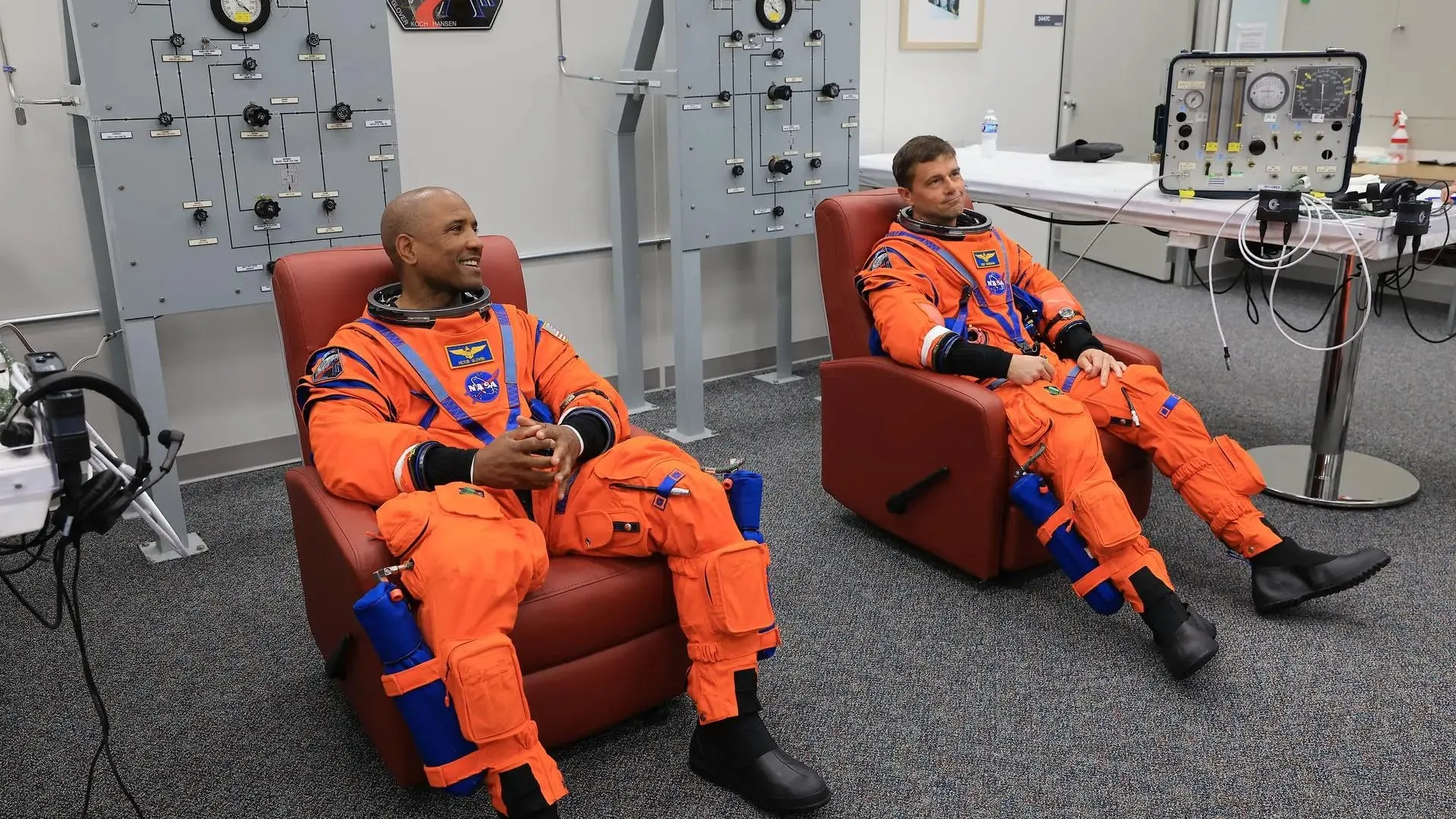
Artemis II commander Reid Wiseman and pilot Victor Glover moved to emeritus advisory roles at NASA to help teams prepare Artemis III for 2027. Their Orion experience will now reach that Earth-orbit docking test through volunteer mentoring.
The Scientist · Science desk
What happened
- Victor Glover and Reid Wiseman moved to emeritus status at NASA's Johnson Space Center in Houston in September, months after flying Artemis II around the Moon.
- NASA's emeritus program keeps experienced staff involved as volunteer consultants who train and mentor employees, with more freedom to take work outside their former full-time jobs.
- Wiseman commanded Artemis II after 165 days on the International Space Station; Glover, a naval aviator, test pilot and Crew-1 astronaut, flew as pilot.
- Artemis III is planned for low Earth orbit, where it will test rendezvous and docking between Orion and commercial human landing systems.
- Glover is expected to hand his knowledge of Orion and its systems to the teams preparing later Artemis missions.
Compiled by The ScientistSomething wrong?How this is made
Why it matters
- constraint Artemis III teams get the pair's experience only as far as their volunteered hours stretch, since emeritus status frees both to take work outside the full-time jobs they held.
- capability Trainers and crews working on Artemis III's Orion docking test can consult a pilot who has flown Orion with people aboard, without him holding a crew seat.
- contradiction NASA pitches the pair's value toward a return to the lunar surface, yet the first mission they advise stays in Earth orbit, so Orion handling matters more to it than the lunar leg of their flight.
NASA Administrator Jared Isaacman said the pair would keep "sharing what they learned with our astronauts, flight controllers, and engineers as we prepare for Artemis III in 2027 and the missions that follow" [3]. Wiseman said NASA "supported me through two space missions, and my time as chief astronaut" [8]. Of the new role, he said, "I'm thrilled to continue serving future missions and programs through the emeritus program" [7].
Glover spoke of the Moon missions as flights his colleagues will make. "I'm excited to keep uplifting my friends and cheering them on as they reach for the Moon," he said [10]. He plans to stay involved in aerospace, leadership and public service, both at NASA and beyond it [11].
NASA's stated route for moving Artemis II experience into Artemis III is mentoring and advice [2][3]. Reading the move as a decision to have flown crews advise instead of fly again goes further, and the evidence for that is thin. The release presents the move as the astronauts' own transition [1]. Johnson Space Center director Vanessa Wyche said the center was "glad that this is not the end of their journey with the agency" [13]. The sample is two people. Two cases cannot show a rule for what happens to Artemis crews after they fly.
The thing the release doesn't tell you is how much time either man will give, or whether either could still be named to a crew. The answers to those two questions decide how much of what Artemis II's commander and pilot learned reaches the 2027 docking test [3][4].
What to watch
- Artemis III crew assignments, and whether NASA describes Wiseman or Glover taking part in that crew's Orion docking training.
- Whether other flown Artemis crew members also take emeritus roles soon after landing; more cases would turn two career moves into a pattern.
- Any NASA statement on whether emeritus astronauts remain eligible for flight assignments.