Product1 publisher3 min readPublished
Sixty days to un-design a carrier: the order to put steam catapults back on the Doris Miller
Trump has told the Navy to strip EMALS from a hull already deep into construction. The plan is due in 60 days; the keel is due by the end of 2026.
The Product Desk · Product desk
Drafted by a language model from the sources cited here and checked against its claim ledger before publication. How we use AISend a correction
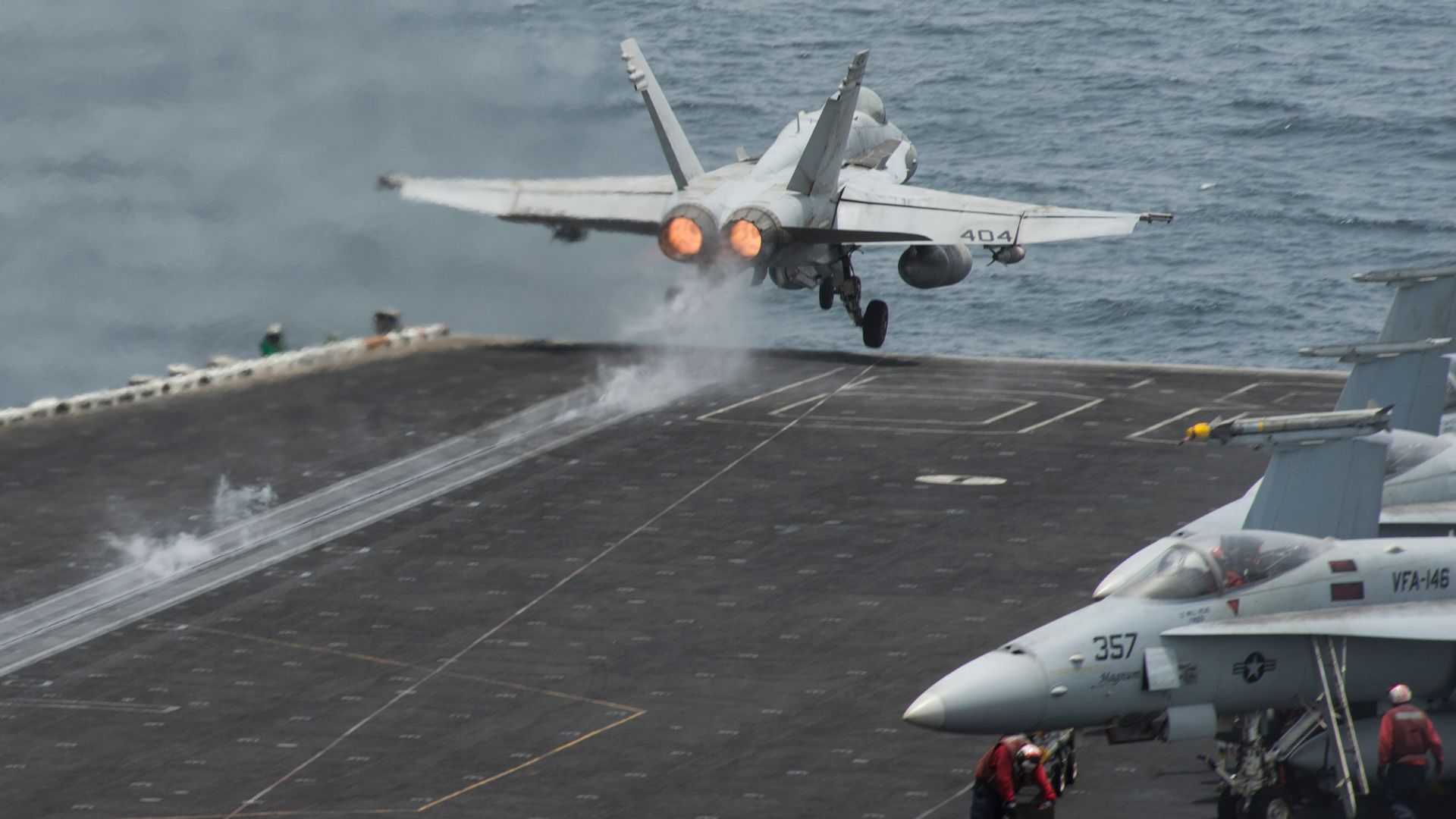
What happened
- President Donald Trump has ordered the U.S. Navy to return to steam-powered aircraft catapults on future Ford-class aircraft carriers, reversing the service's move toward electromagnetic launch technology. The directive calls for replacing EMALS with traditional steam catapults on the future USS Doris Miller and subsequent carriers.
- The Pentagon has been given 60 days to produce the replacement plan.
- The Doris Miller, the fourth Ford-class carrier, is scheduled to have its keel laid by the end of 2026 and is currently planned for delivery in 2034.
- The Navy is not making this decision before a new carrier is designed; it is being asked to change the launch architecture of a ship already deep into development.
- Steam catapults use high-pressure steam to drive a piston along a track, accelerating an aircraft to takeoff speed over a relatively short section of the flight deck.
Compiled by The Product DeskSomething wrong?How this is made
Why it matters
President Donald Trump has ordered the U.S. Navy to drop the Electromagnetic Aircraft Launch System on the future USS Doris Miller and subsequent Ford-class carriers and go back to steam catapults, and the Pentagon has 60 days to produce a plan for doing it [1][2]. The Doris Miller is the fourth ship of the class, scheduled to have its keel laid by the end of 2026 and to deliver in 2034, which means the decision is not a design choice but a change order against a design that already exists [3][4].
That distinction is the whole story. A catapult is not a bolt-on. Steam catapults work by driving a piston along a track with high-pressure steam [5], while EMALS uses a linear electric motor to accelerate a launch carriage electromagnetically [6]. According to The War Zone's analysis, cited in reporting on the order, reverting means extensive redesign to accommodate steam machinery, piping, water requirements and integration with the carrier's existing electrical and internal systems [7]. General Atomics, which builds EMALS, has warned that pulling the system out after substantial design and construction work could create major cost and schedule problems, according to The Guardian [8]. Reports have put the potential financial impact in the billions of dollars [9].
The engineering case that produced EMALS in the first place has not changed. The system offers more precise control of the launch profile, handles a wider range of aircraft weights including lighter future unmanned types, and cuts the steam and fresh water a carrier has to generate for launch operations [10]. It also earned its critics honestly: EMALS and the Advanced Arresting Gear both caused significant problems during Ford-class development and testing [11]. Trump has argued for years that EMALS is more expensive and less reliable than the steam catapults it replaced, according to Reuters, and the directive sits inside a broader push to change how the Navy builds and maintains ships [12][13].
Two second-order costs are worth more attention than the catapult itself. First, the first three Ford-class carriers keep EMALS [14], so if the order holds, a single class of ship ends up operating two different launch architectures, with the training, spares and maintenance overhead that implies [15]. Second, the Navy has spent years moving away from steam, and going back means rebuilding an industrial and maintenance ecosystem that the newer system had already displaced [16]. Meanwhile China's Fujian carrier launches aircraft electromagnetically [17].
Watch what the 60-day plan actually proposes, because the deadline is the only firm number in this story. The useful test is whether it applies the change to the Doris Miller or quietly pushes it to a later hull, and whether it carries a cost and schedule estimate at all. Watch the keel-laying date: with delivery planned for 2034, there are roughly eight years of build sequence downstream of that milestone, and slipping the keel is the cheapest way to absorb a redesign [18]. And watch for a named supplier for steam catapult hardware, since a plan with no vendor behind it is a study, not a conversion.