Product1 publisher3 min readPublished
State Department letter would make 35 countries pick an AI side, and the workaround already exists
Reuters reports the letter offers Pax Silica membership only to signatories that skip China's WAICO. A Hong Kong startup is already selling Chinese model access for a Trump-linked stablecoin.
The Product Desk · Product desk
Drafted by a language model from the sources cited here and checked against its claim ledger before publication. How we use AISend a correction
What happened
- The State Department is preparing a document that will warn countries that working with China on AI initiatives is likely to get them cut off from America's AI efforts, per Reuters.
- The letter will reportedly go to 35 signatories who joined the United States' AI Opportunity Statement in June of this year.
- Those countries will have the opportunity to join Pax Silica, a US-created framework for securing supply chains for AI, but only if they choose not to join China's competing framework, the World Artificial Intelligence Cooperation Organization (WAICO).
- There are currently several overlapping members in these initiatives, most notably Kazakhstan, which is rich with the minerals and materials needed to build AI infrastructure; losing Kazakhstan would be a major blow for the US.
- The administration has been mulling ways to ban Chinese AI models from being used in the US, despite the urging of businesses that prefer those options because they are cheaper than American alternatives.
Compiled by The Product DeskSomething wrong?How this is made
Why it matters
The State Department is preparing a document warning countries that working with China on AI is likely to get them cut off from American AI efforts, according to Reuters as summarized by Gizmodo [1]. Reuters reports the letter is going to the 35 signatories of the US AI Opportunity Statement from June of this year, offering them entry to Pax Silica, a US-created framework for securing AI supply chains, on the condition that they do not join China's competing World Artificial Intelligence Cooperation Organization [2][3].
That condition is the whole story. A supply-chain framework is a procurement club; an exclusivity clause turns it into an alignment test, and the test is administered to governments rather than to vendors. Reuters notes that several countries already hold overlapping memberships, most prominently Kazakhstan, which has the minerals and materials needed to build AI infrastructure [4]. If the letter goes to all 35 signatories with exclusivity attached, at least one of them has to exit an existing arrangement to qualify, and it happens to be the one holding the inputs [12].
For anyone building on models, the relevant second front is domestic. The administration has been considering ways to ban Chinese AI models from use in the US, over objections from businesses that prefer them because they are cheaper than American alternatives [5]. That is a cost line, not a preference. Any buyer who has priced a high-volume inference workload against a Chinese open-weights option knows the gap is the reason the option is on the shortlist at all, and a ban reprices that workload rather than eliminating the demand.
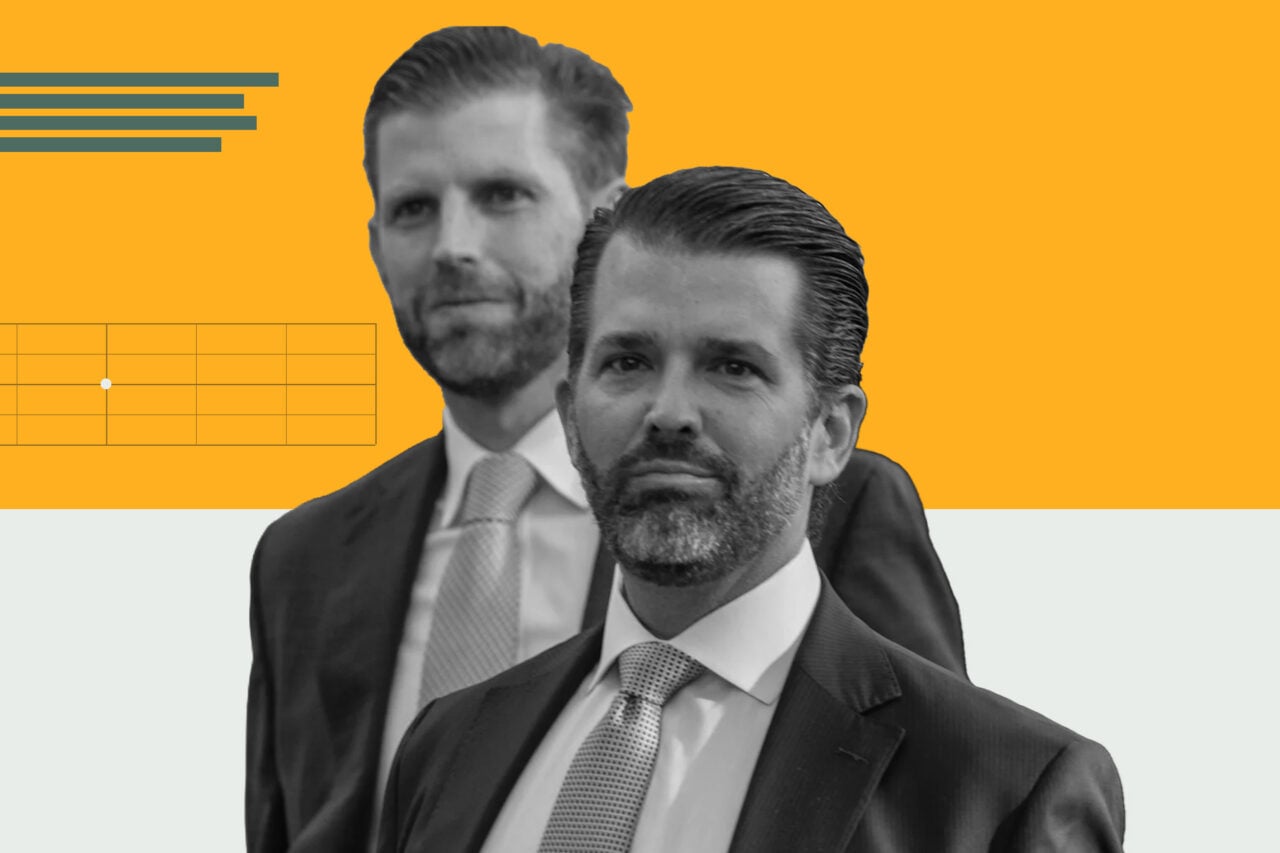
Which is why the leak is already visible. Reuters reports that a Hong Kong-based startup called WorldClaw offers access to Chinese models, including the ones subject to the contemplated crackdown, and that one way to pay for that access is USD1, the stablecoin owned and operated by World Liberty Financial, a company partly owned and operated by Eric Trump and Donald Trump Jr. [6][7]. Reuters reports World Liberty Financial does not own any part of WorldClaw [8]; Gizmodo notes that the company nonetheless profits from every transaction involving USD1 [9]. Both Trump sons posted promotions of WorldClaw accepting USD1 for model access, including the Chinese options [10]. Gizmodo also points out that USD1 launched ahead of the administration loosening stablecoin rules [11].
The operational lesson is about enforcement surface. A firewall around model weights is not a firewall; weights move, endpoints are hosted offshore, and the only chokepoints that bite are payments and corporate presence. When one of the payment rails is a dollar-pegged token affiliated with the President's family, the chokepoint is not going to be squeezed hard, and every procurement officer weighing a cheaper Chinese model now has a documented route and a plausible read on which routes carry political risk. Compliance teams should assume that an official ban and an unofficial bypass will coexist, and that the bypass will be priced as a feature.
Three things to watch. Whether Kazakhstan signs Pax Silica, since it is the test case for whether exclusivity survives contact with a country that holds leverage [4]. Whether the contemplated US ban on Chinese models names payment rails and resellers rather than only the models [5][6]. And whether any of the 35 signatories declines the letter outright, which would tell you the price of exclusivity is higher than Washington has budgeted for [2][3].