Invest1 distinct publisher3 min readPublished
Trezor's hardware held, but its logistics vendor gave away the one input an AI phishing operation otherwise has to guess at: a payment-verified list of buyers, 11,742 of them with full contact details.
The Investor · Invest desk

invest
Copilot built the fake Ledger app. A human still only made 20 lookups in two weeks.1 distinct publisher
security
Prompts, shell history, a jailbreak: AI assistants turn up inside a crypto-fraud build pipeline1 distinct publisher
security
A North Korean IT worker got hired by a federal agency. Vetting is a security control now.1 distinct publisher
build
A session that read "finished" and "still executing" was a slow queue, not a dropped handshake1 distinct publisher
Compiled by The InvestorSomething wrong?How this is made
The interesting term here is the qualification step, and Rapid7's account of Operation ASTERIX prices it for us: before anyone could be steered toward a counterfeit app, the attackers had to query exchange APIs and filter for accounts likely to hold balances worth the trouble [4]. That is inference with a wide error band, because an exchange balance tells you someone trades, not that they hold their own keys. A fulfilment record is the opposite kind of evidence, a payment-verified statement that a named and contactable person bought a device whose only job is holding keys away from an exchange, and 11,742 of the 13,689 people in the ShipMonk file had precisely that exposed, names and contact details in full [1][2], which is 85.8 per cent of the list [12]. The remaining 1,947 got off with less [13].
Now price it from the other side of the table. A recovery seed is twelve or twenty-four words, and whoever reads it owns the wallet outright [8], so a crew working this list needs one person in 13,689 to type or recite theirs to clear a hit rate of 0.0073 per cent [14]. There is no defensive comfort available at that denominator. The AI part of the story, the cloned Trezor environment that harvested seeds into a Telegram channel [5], is a manufacturing improvement in the lure; the breach is an improvement in the aim, and aim was the scarcer input.
What Trezor can actually do about it is the part worth watching, because the answer is nothing structural. Its head of security, Jan Komarek, names phishing and AI-assisted social engineering as the top threats to crypto users [10] and his remedy is a habit, never type a seed into anything online [9], plus a standing negative promise that the company will never call and ask for one [7]. The hardware was not touched in any of this [3]. So the engineering budget that makes the device trustworthy buys nothing against a customer table sitting in a third party's system, and the security lead's public voice is now spent on user conduct rather than on the product he controls. That is the allocation cost, and it does not appear on anyone's income statement.
This is probably wrong in the direction of over-crediting the file, and the counter-thesis deserves saying in the same breath: a buyer list is not a balance list. The source describes names and contact details, not addresses on chain or holdings [2], and some fraction of those 13,689 bought gifts, resold, or never funded anything, so conversion could sit near zero. The likelier place this lands is the voice channel, where a caller who can recite your order details walks you through a fake security procedure and asks you to read the words aloud [6], because credibility is the input phishing has always been short of. Komarek's warnings arrive into a market where phishing against crypto users has been climbing steadily through 2025 and 2026 across multiple firms' tracking [11], meaning the capacity to work a list like this already exists.
The falsification is clean enough. If reported losses over the next year show no concentration among ShipMonk-exposed customers, or if API-side filtering stays cheaper per victim than working a stale 13,689-name file, then the manifest was a nuisance rather than an input, and self-custody's threat model survives having its customer list published.
Ranked by verification strength, evidence, and original report placement.
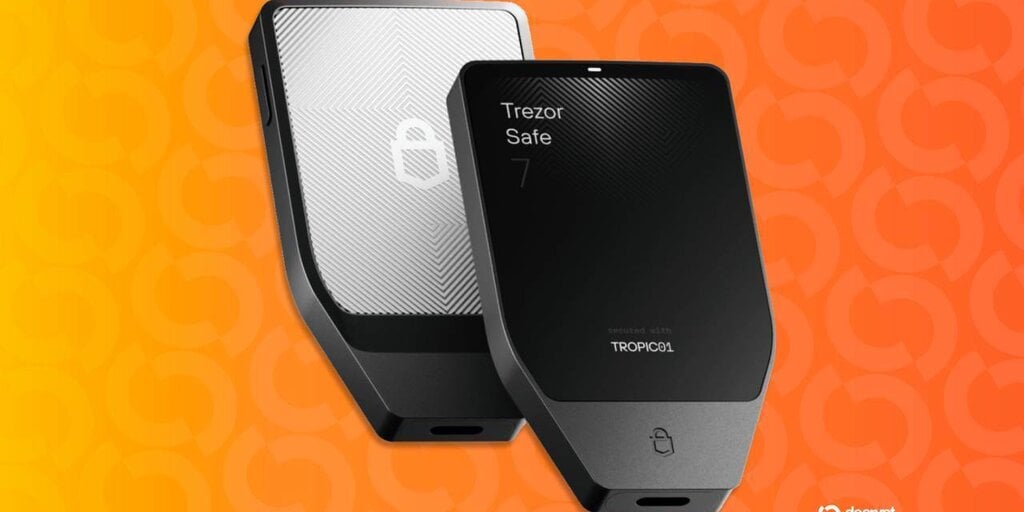
ShipMonk, a fulfillment and shipping company that handles logistics for Trezor, suffered a data breach in August 2026 affecting 13,689 customers.
Of the 13,689 affected customers, 11,742 had their full information exposed, including names and contact details.
Trezor issued warnings immediately after the breach became known, cautioning affected users to be alert for phishing emails, fraudulent phone calls and fake customer support outreach; the hardware itself was not compromised.
Cybersecurity firm Rapid7 detailed an operation it named Operation ASTERIX, in which attackers first identified potential victims by querying exchange APIs and filtering for users likely to hold meaningful crypto balances.
In Operation ASTERIX, attackers used AI tools to build counterfeit applications mimicking Trezor's software environment, directed users to them, and the apps prompted users to enter recovery seeds, funneling that input to the attackers via Telegram.
Voice phishing is part of the toolkit: attackers call users impersonating Trezor support staff and walk them through a fake security procedure that ends with the user reading their seed phrase aloud, a vector Komarek flagged as a growing concern.
Distinct publishers with included, body-backed reporting in this cluster.
cryptobriefing.com
1 article · August 30, 2026
Follow any of these and your For You feed starts watching them — no settings page required.
Evidence-backed comparisons of source perspectives and observed adoption signals. Read the methodology
Which Builder, Operator, and Investor concerns the observed source mix emphasized—not a truth score.
Evidence, demonstrated adoption, hype gap, incentives, and confidence are assessed independently, each on its own current evidence. How these are measured.
Precise numbers, one relay
13,689 and 11,742 are exact enough to have come from a real notice, but in our coverage they come only from Crypto Briefing paraphrasing Trezor. ShipMonk's own disclosure is never quoted, and Rapid7's Operation ASTERIX write-up is described secondhand rather than cited, so the two pillars of the story both stand on one retelling.
Two real incidents, no measured damage
These are not hypotheticals: a breach with a specific headcount and an attack operation a named security firm bothered to catalogue. What is missing is the far side of the funnel. Nobody reports a single seed taken, a wallet drained, or a call placed to anyone on the exposed list, so the reach of the technique is documented while its yield is not.
The bridge between the two halves is asserted
The headline logic is that a leaked buyer list opened the door for an AI phishing operation. Read the mechanics as reported and the door is somewhere else: ASTERIX's attackers shortlist victims through exchange APIs, not through ShipMonk. The AI claim is thin in the same way, telling us counterfeit apps were built with AI tools without saying what the tooling contributed that a competent designer could not.
Vendor leaked, device held, user must be careful
Every framing choice here happens to favour the one company that spoke. Trezor's head of security supplies the threat ranking, the reassurance that the hardware was untouched, and the remedy, which is user discipline. All of it may be accurate; none of it is disinterested. ShipMonk, the party actually holding 11,742 full contact records, gets named as the failure point and never gets asked anything.
Plausible, unverified, one-sided
Nothing here reads as invented, and the operational advice is sound regardless of who gave it. But a single trade outlet, a single interviewee, a secondhand research citation and a silent third party leave little to lean on if any figure turns out to be wrong.