Product1 publisher3 min readPublished
TP-Link's $220 Tapo D260 doorbell keeps person and package detection off the monthly bill
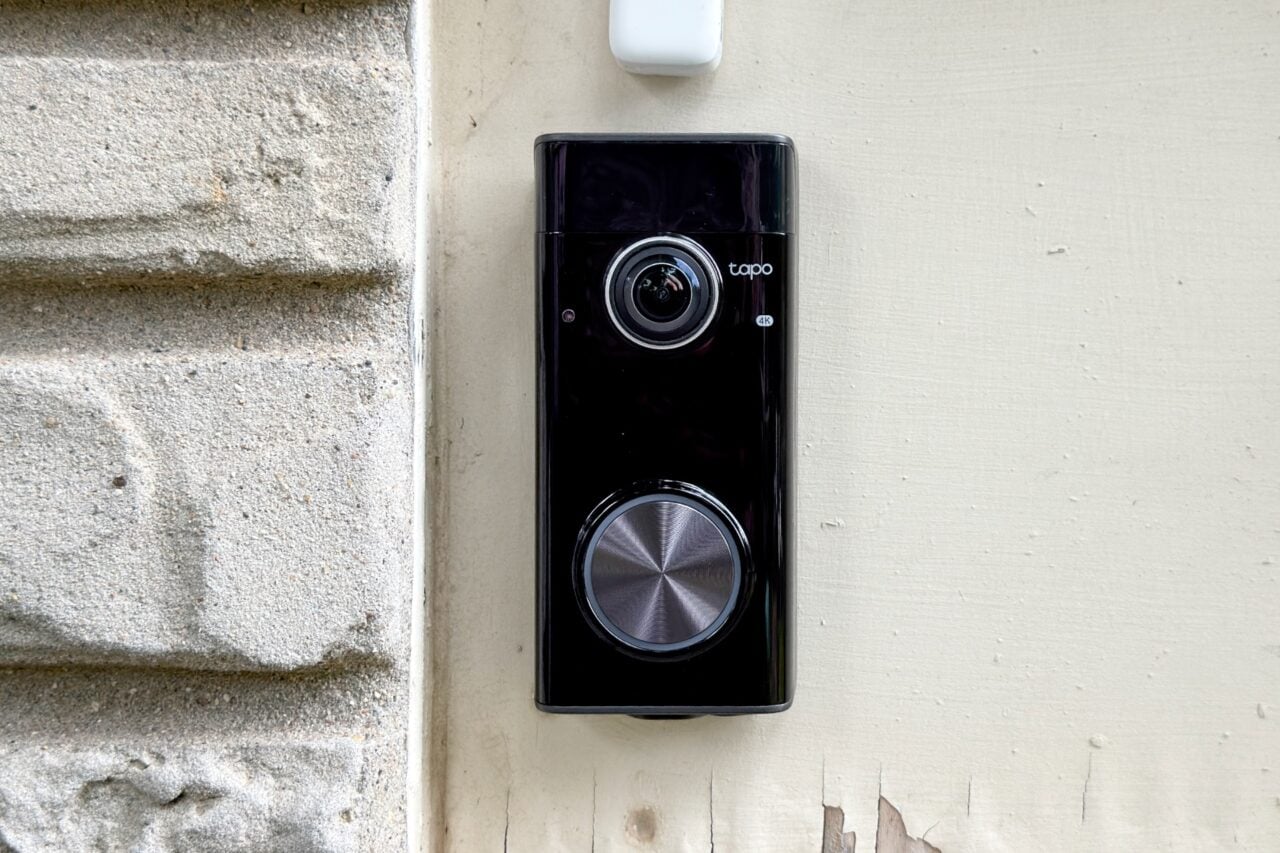
TP-Link's $220 Tapo Doorbell Pro D260 runs person, animal and package detection on the device and records to microSD, with no subscription required. Gizmodo's reviewer would recommend it to almost anyone who can live without Apple Home.
The Product Desk · Product desk
Drafted by a language model from the sources cited here and checked against its claim ledger before publication. How we use AISend a correction
What happened
- Gizmodo's reviewer called the $220 hardware price "pricey but not exorbitantly so" for what the doorbell includes.
- The doorbell runs on existing 8-24VAC doorbell wiring or on battery, and it can ring a home's existing wired chime.
- The reviewer rated the 4K footage "not quite the best of the best" but "very far from the worst" they had seen.
- An Aerial View feature uses dual PIR sensors to plot visitors as dots on a satellite image, though the reviewer said the sensors caught nothing the camera missed.
Compiled by The Product DeskSomething wrong?How this is made
Why it matters
- decision Choosing battery power over existing wiring now has a feature cost, because the review lists 24/7 recording only as a wired-mode feature.
- precedent With detection included at $220, shoppers have a reference price to hold against any rival that charges monthly for person or package alerts.
- contradiction The review's own cons box lists "No local storage" and "Expensive hardware and subscriptions," so a shopper who reads only the summary box gets the storage and fee story backwards.
Partway through setup, once the D260 is plugged in over USB-C and found in the Tapo app, the app asks whether to opt into Tapo Care, TP-Link's cloud footage plan [18][5]. Saying no is the point of the product. Footage then goes to a microSD card the owner supplies, and the review says there is no monthly fee unless the owner wants cloud storage [2][4]. Gizmodo's reviewer said installation and setup took around 10 minutes [13].
The review's verdict line is the pitch: "A fantastic video doorbell with all the features other companies charge a subscription fee for." [11] The review does not name those companies or say what they charge. So the claim that the D260 undercuts them rests on the reviewer's judgement, and a buyer has to look up rival prices on their own [2].
The pitch is free detection. What the reviewer actually used was detection that worked unevenly. The cons list includes "Inconsistent AI notifications" and says the "AI summaries are useless" [9][10]. Person, animal and package detection is the feature that replaces a subscription, so it is the one to judge the doorbell on [3].
A subscription-free doorbell is easiest to sell to the owner who gets a phone alert as a parcel lands and goes straight to the door. I'd expect an owner with unreliable alerts to do something else: open the recordings later and scroll back to find the delivery. The D260 suits that second owner, because keeping footage on the card costs nothing beyond the card [2][4].
The decision comes down to two questions. One is whether the household answers alerts in the moment or checks footage after the fact. The other is whether a copy on the card is enough or the footage also needs to be stored off the device.
The best fit is a household that checks later and keeps footage on the card. That costs $220 plus a card, and the uneven alerts matter least there [1][2]. A check-later household that wants cloud copies is also served, but Tapo Care brings back a monthly bill, and then the comparison with subscription rivals comes down to price [4]. For a household that answers alerts as they arrive and relies on the card alone, the case depends directly on the notifications the reviewer flagged [9]. The weakest case is the answer-now household that also wants cloud storage. The review describes Tapo Care only as cloud footage storage, so by its account, paying for the plan does nothing about the alert complaint [5].
I'd buy the D260 for the first of those households and hesitate for the last two. The price of skipping the plan is living with alerts that Gizmodo's review found inconsistent [9].
What to watch
- Further hands-on reviews or a firmware update showing whether the D260's person and package notifications arrive consistently.
- TP-Link's Tapo Care pricing, which buyers need to compare the cloud option against subscription doorbells.
- Whether TP-Link adds Apple Home support to the D260.