Product1 publisher3 min readPublished
Tomahawk's $22.9B award turns surge talk into a rate hundreds of suppliers must hold
Raytheon's multiyear Navy contract pushes Tomahawk output above 1,000 missiles a year. The hard part sits below final assembly, in tooling and hiring at hundreds of small suppliers.
The Product Desk · Product desk
Drafted by a language model from the sources cited here and checked against its claim ledger before publication. How we use AISend a correction
What happened
- Raytheon has secured a $22.9 billion contract to expand production of Tomahawk cruise missiles for the U.S. Navy.
- The multiyear award will push annual Tomahawk production beyond 1,000 missiles.
- Hundreds of small and midsized suppliers across the United States will support the Tomahawk production effort, and their role will become increasingly important as the program moves toward annual production above 1,000 units.
- An annual rate above 1,000 missiles is more than 19 missiles per week.
- Scaling production requires more than expanding final assembly: component suppliers must increase their own output, while Raytheon needs enough skilled workers and manufacturing capacity to keep the line moving.
Compiled by The Product DeskSomething wrong?How this is made
Why it matters
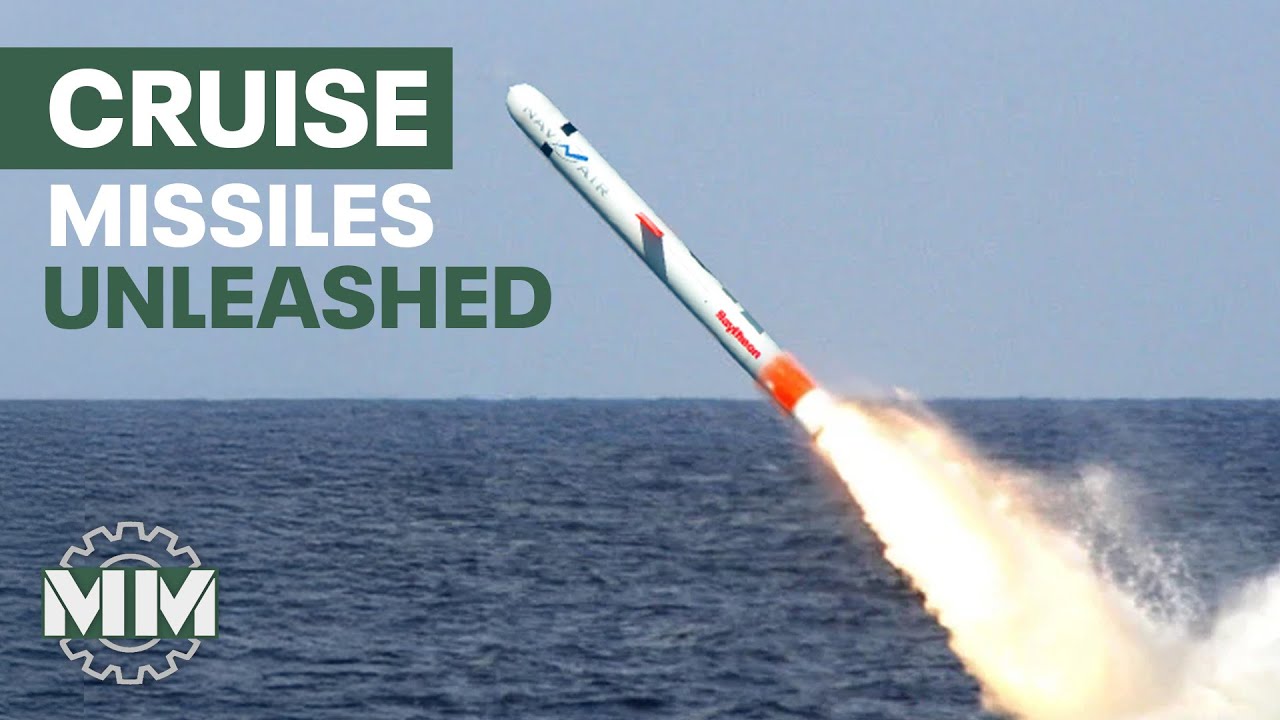
Raytheon has been awarded a $22.9 billion multiyear contract to expand Tomahawk cruise missile production for the U.S. Navy, an award that will push annual output beyond 1,000 missiles [1] [2]. That number matters more than the dollar figure, because a rate is a commitment: it has to be held every week by a supply base that Raytheon says runs to hundreds of small and midsized U.S. suppliers [3].
Above 1,000 a year works out to more than 19 missiles a week, every week [4]. For a final assembly line, that is a takt time problem. For a tier-two machine shop with 40 people, it is a capital and hiring decision made against a schedule someone else controls. The source material is clear that scaling this program is not a final-assembly exercise: component suppliers have to raise their own output while Raytheon secures enough skilled workers and manufacturing capacity to keep the line moving [5].
The company is not starting from zero, and the delivery data is the most useful number in the announcement. RTX delivered three times as many Tomahawks in the first half of 2026 as in the same period of 2025 [6], a tripling that Raytheon attributes to several years of investment in Tomahawk and other critical munitions ahead of this award [7] [8]. That is evidence the supply base can absorb a step change, though a tripling from a low base is a different problem than sustaining a four-figure annual rate indefinitely.
Phil Jasper, president of Raytheon, called Tomahawk "the Navy's most important strike weapon" and said it can "target hostile forces hundreds of miles away without ever risking the lives of our sailors" [9]. Jasper also said the company is making "significant investments" in workforce, technology, supply chain and facilities to raise capacity and meet demand [10]. Read as an operator, that sentence is a list of four separate lead times, and the supply chain one is the longest, because qualifying a new source on a mature missile is slower than buying a machine.
The reason the Navy is buying rate on an old airframe rather than waiting for a new one is stated plainly: expanding an existing production line adds capacity without waiting for an entirely new weapon system to enter service [11]. Tomahawk has decades of operational use, launches from multiple platforms, and reaches targets 900 to 1,000 miles away [12] [13]. The award also covers support for the Navy and allied forces, and it lands as the United States pushes to expand domestic weapons production and replenish long-range munitions stocks [14] [15].
The unresolved engineering question is throughput without reliability drift on a mature program [16]. The unresolved commercial question is who carries the fixed cost downstream. The reported award gives a total value and a rate but no contract end date and no total unit quantity [17], so suppliers being asked to tool up are sizing plants against a rate they can read and a duration they cannot.
Watch the second-half 2026 delivery figures against the first-half tripling, and watch whether Raytheon's supplier investments show up as long-term agreements rather than purchase orders. The rate is only real once the tier-two shops have signed for it.