Product1 distinct publisher3 min readPublished
A new Navy document swaps case-by-case engineering assessments for one repeatable substitution pathway, which moves the constraint on printed submarine parts from the print shop to the safety-critical carve-out.
The Product Desk · Product desk

Compiled by The Product DeskSomething wrong?How this is made
The engineer who has already qualified an alloy and a set of machine parameters, and who then gets sent back for first-article testing on the next part out of that same machine, is paying for a judgment somebody already made. The Navy's own description of the old route names three review events per swap: an engineering assessment done part by part, a manual drawing modification, and a repeat first-article test [3]. Across a hull's worth of candidate components that is three reviews per substitution, most of them re-deciding a process rather than judging a part [12].
What PPD 802-8436658 changes is the unit of approval. It attaches the technical pathway to the substitution rather than to each instance, which is why the Navy describes it as repeatable [2]. That distinction carries the whole story, and it is the one program and product teams skip most often: buy the capability, leave the per-instance gate standing, then describe slow uptake as a culture problem.
Read the result as two lanes. Vice Adm. Robert Gaucher's line that "moving faster does not mean accepting less" [11] is doing real work, because the high-consequence tier keeps its existing regime and gains rigorous tracking and non-destructive inspection on top [7]. So what speeds up is everything outside that tier. Whether that is worth much depends on a figure the announcement does not supply. The Navy frames printing as alternative sourcing for long-lead parts and a way around suppliers that no longer exist [8], and how many of those parts sit outside the carve-out is not stated [16].
What is in hand: the requirements were written by the Submarine Industrial Base Program Office's Advanced Manufacturing team with shipbuilders and suppliers rather than handed down to them [10], and they are authorized now for design, construction, overhaul and repair [9]. All of it reaches us through Interesting Engineering's account of a Navy release, not the document itself [14].
For anyone holding a review queue of their own, the sort runs on two axes. Ask whether a given review re-decides a method already settled or judges this specific instance, and whether the failure it guards against is recoverable. Per-instance review of a settled method where failure is recoverable is the box the Navy just emptied [4]. Per-instance review where failure is not recoverable is the box it deliberately left full. The box to distrust is a reusable pathway applied where failure is unrecoverable and nobody has inspection data to catch drift, which is exactly why the carved-out tier pairs its requirements with tracking and inspection [7].
Authorization is an input. The output worth counting is substitutions actually fielded per quarter, plus the share of them reusing a pathway already qualified instead of opening a new one, and neither number appears in this announcement [16].
Ranked by verification strength, evidence, and original report placement.
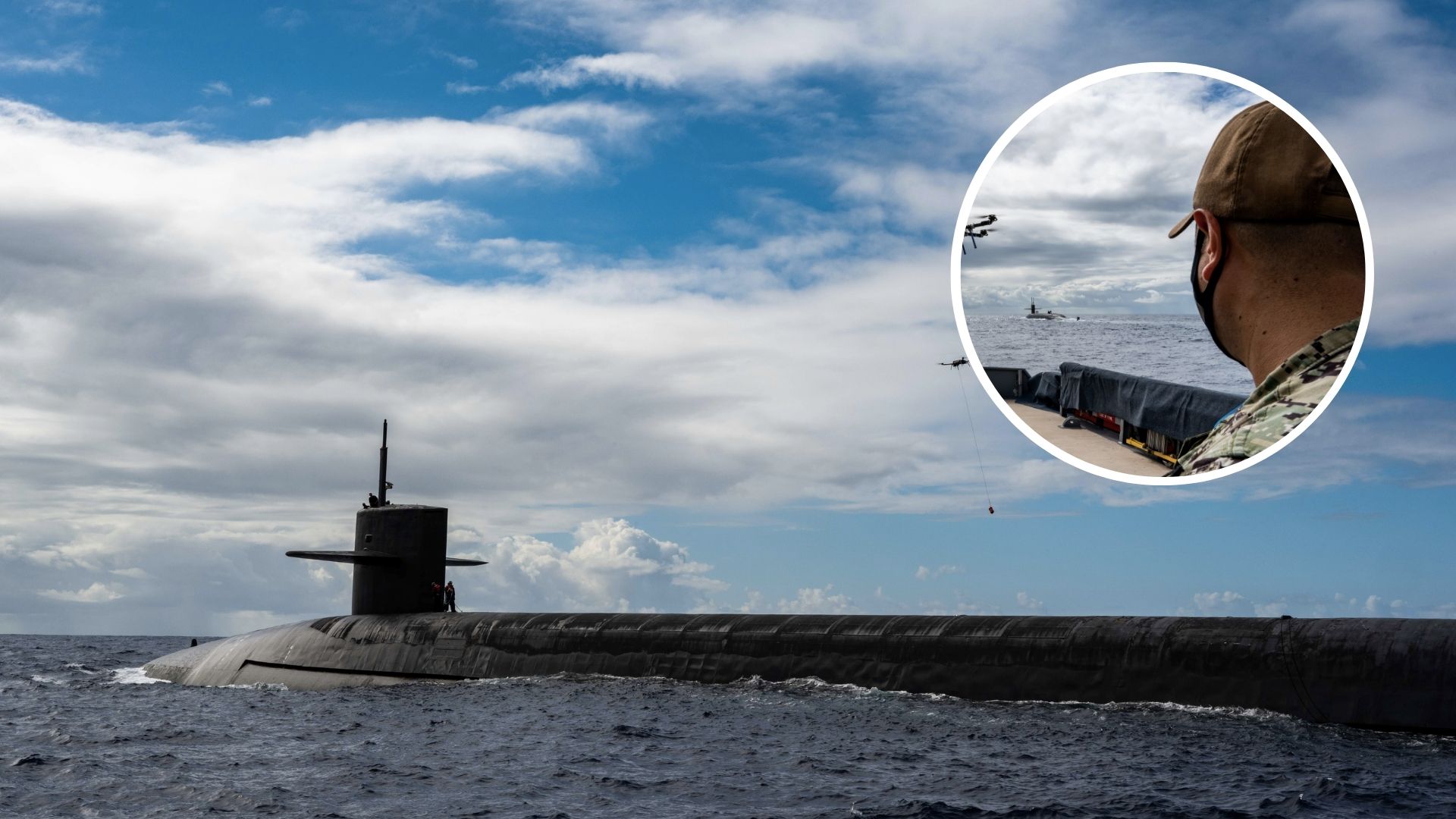
The U.S. Navy released new technical requirements on August 11 designed to rapidly scale the use of metallic 3D-printed materials across the submarine enterprise.
The newly approved Project Peculiar Document (PPD) 802-8436658 establishes a streamlined, repeatable technical pathway to substitute legacy cast and wrought parts with 3D-printed metallic materials.
Historically, swapping a traditional component for an additively manufactured equivalent triggered slow part-by-part engineering assessments, manual drawing modifications, and repetitive first-article testing.
Vice Adm. Robert Gaucher, Director of Submarine Programs, said the directive "hands our engineers, shipbuilders, and suppliers authority to execute at scale."
Additively manufactured metal components are already performing in deep-sea operations aboard USS Washington and USS Nevada, according to the Navy.
For high-consequence applications, including Level I material control and SUBSAFE systems, additively manufactured materials remain subject to applicable Navy quality requirements, augmented by rigorous tracking and non-destructive inspection.
Distinct publishers with included, body-backed reporting in this cluster.
Follow any of these and your For You feed starts watching them — no settings page required.
product
Boeing locks in seven years of SM-3 parts before anyone commits to a missile count1 distinct publisher
product
Vigor unveils USAV Craney Island, and the Army's landing craft plan finally has a hull1 distinct publisher
product
Navy moves countermeasure qualification off the jet and onto a 578-foot rail1 distinct publisher
build
A "$100M contract" that is a prize ceiling: how to read a vendor's procurement claim1 distinct publisher
Evidence-backed comparisons of source perspectives and observed adoption signals. Read the methodology
Which Builder, Operator, and Investor concerns the observed source mix emphasized—not a truth score.
Evidence, demonstrated adoption, hype gap, incentives, and confidence are assessed independently, each on its own current evidence. How these are measured.
One release, retold once
The specifics are real and checkable in principle, a document number, a named flag officer, two hull names, but they all arrive through a single retelling of a single Navy release. Nobody in this coverage has read the requirements, and no shipbuilder or supplier is quoted confirming what changed for them.
Two hulls and an authorization
Real deployment exists and is narrow: printed metal parts on USS Washington and USS Nevada, plus a directive cleared for immediate use across four lifecycle phases. That is a starting position, not scale, and the reporting offers no part counts, no participating yards and no printed-component tally to move it higher.
Headline outruns the paperwork
'Thousands of tons of submarines could be made much faster' is doing work the document does not do. The substantive move is procedural, one substitution pathway replacing per-part reviews, and the same release leaves Level I and SUBSAFE systems under their existing requirements. Until someone says how much of the parts pool lives outside that carve-out, faster tonnage is aspiration dressed as consequence.
The issuer sets the frame
The Navy is announcing that it has cleared its own obstacle, and Gaucher's stated goal, getting submarine programs 'on plan and ahead of the threat', is exactly the pressure a program office is under. Words like 'flawlessly' and 'speed of relevance' survive into the copy unchallenged, which tells you whose language governs this story.
Firm on the what, thin on the so-what
That the directive exists and is authorized for immediate use is easy to believe and specifically stated. Everything downstream, how many parts move, how fast, and whether the carve-out swallows the benefit, rests on one party's word carried by one outlet.