Science1 publisher2 min readPublished
Bolivia's cloud-forest tilcayo becomes one of five recognized tiger cat species
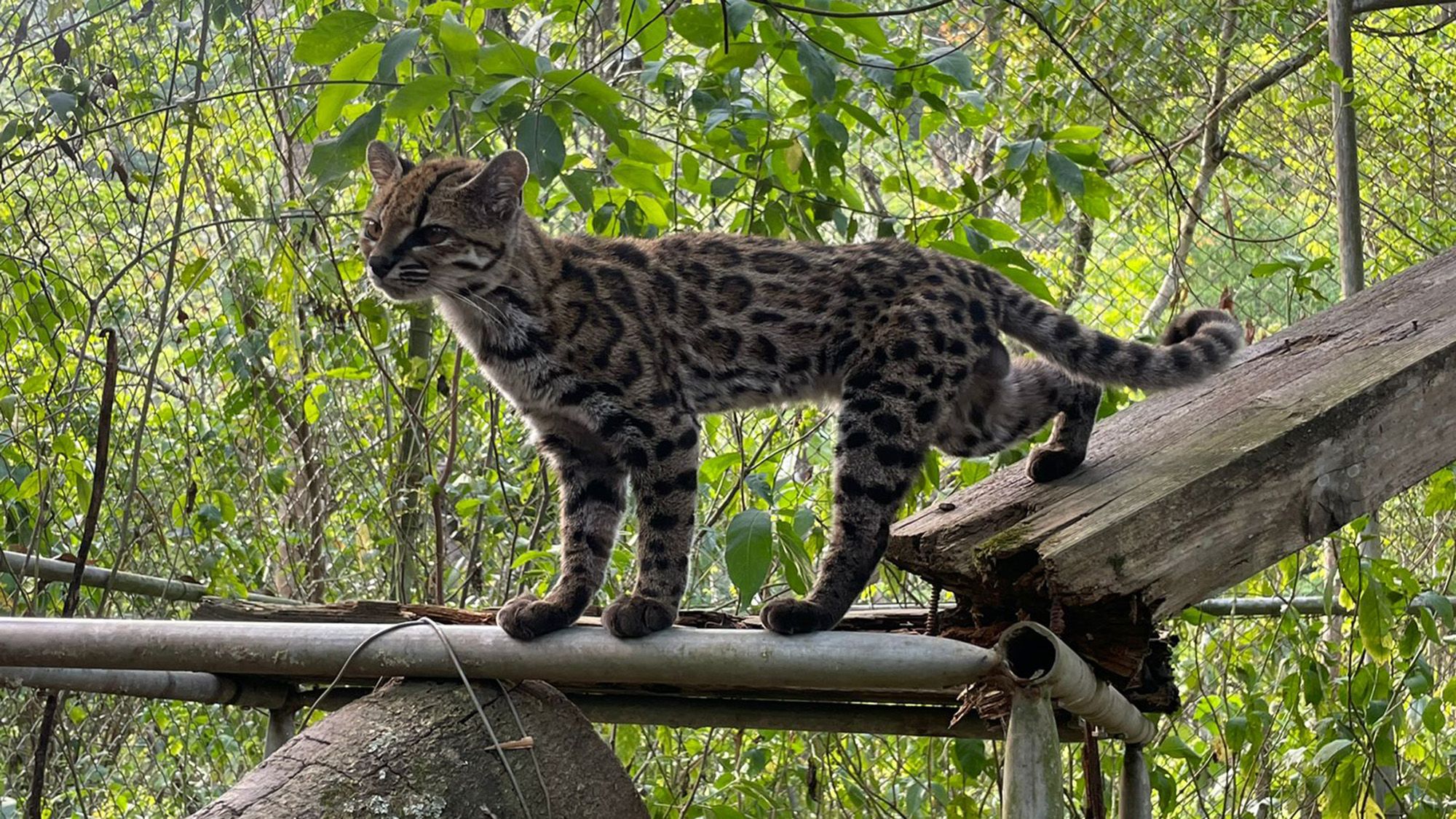
Scientists have recognized Bolivia's Leopardus tilcayo as a new tiger cat species, the first new wild cat described in over a century. It is one of five tiger cat species, though what the split means for conservation depends on data the coverage does not include.
The Scientist · Science desk
What happened
- A stray named Tigrino, whom a family tried and failed to keep as a pet, ended up at a wildlife sanctuary, and genetic tests later confirmed his lineage.
- Because these cats look alike, scientists compare genetic differences between groups and use statistical methods to decide which differences mark a separate species.
- Jim Sanderson says Geoffroy's cats and Atlantic Forest cats are interbreeding in southern Brazil's human-altered landscapes, with a sixth species emerging.
- Scientists have identified 1.5 million to 1.7 million species out of an estimated 8 million to 20 million, adding about 16,000 a year, according to Stephanie Eby.
Compiled by The ScientistSomething wrong?How this is made
Why it matters
- decision Anyone ranking which small wild cats need protection now has five tiger cat species to evaluate one at a time, including a cloud-forest cat that only recently got a scientific name.
- constraint How firm the five-way split is cannot be judged until the sample sizes and statistical cut-offs behind it are published and examined.
- precedent If the southern Brazil hybrids are formally recognized, the tiger cat count rises to six, and any assessment built on five would have to be revisited.
Tiger cats are small wild cats of the ocelot lineage [1], and they give a taxonomist very little to look at. Even in broad daylight, they all resemble "a bunch of little leopard-spotted cats," said Stephanie Eby, a marine and environmental studies professor at Northeastern [5][15]. Jim Sanderson, founder and director of the Small Wild Cat Conservation Foundation, said felines share a surprising number of physical traits [6][15]. "Once nature reaches perfection, she only tweaks a little," he said [6].
Eby started her explanation of the genetic method with the noise. "Even within the same species, DNA varies a bit," she said [8]. The differences grow as populations adapt to different environments. So the statistical cut-off that separates variation within a species from a new species is a judgement made on a continuous measure [8][7]. Eby said scientists use the subspecies category for groups still in transition [10].
The thing this reporting doesn't tell you is where the tiger cat cut-off sat. It does not name the paper, the number of cats sampled or the statistical test. Nor does it report ranges, population sizes or threat status for any of the five species [2]. Without those figures, the case that existing conservation assessments must now be redone is plausible but not demonstrated. Tigrino's genetic tests confirmed one animal's lineage [4]. A five-way split is a claim about groups of animals.
The count may also move. The sixth species Sanderson sees forming in southern Brazil is coming about through hybridization. Eby described that route: animals from different groups interbreed and their descendants follow a separate evolutionary path [18]. "We're seeing evolution in action," Sanderson said [12].
By the article's account, the tilcayo is the first new wild cat described in over a century [3], while about 16,000 new species of all kinds are added each year [13]. On Eby's figures, the unnamed remainder is 6.3 million to 18.5 million species [1]. If the current pace held, naming them would take between about 390 and 1,160 years [2]. "We don't actually know how many species there are on Earth," Eby said [16].
She said the missing species include animals that are tiny, animals that live in hard-to-reach places, and animals that closely resemble known species [17]. Sanderson said roughly half of known beetle species were identified from a single specimen [14]. The tilcayo belongs with the look-alikes [17][5]. Local communities had known it for generations, and Eby said "there's a difference between a species being scientifically identified and a species being known" [9].
What to watch
- Publication of the tiger cat study's sample sizes, sampling localities and the statistical threshold used to separate the five species.
- Threat assessments for each of the five tiger cat species, starting with the tilcayo in Bolivia's cloud forests.
- Whether the interbreeding Geoffroy's and Atlantic Forest cats of southern Brazil are formally described as a sixth species.