Product1 distinct publisher3 min readPublished
The Humankind 2 trailer drew generative-AI accusations before Amplitude could show anything from the shoot. A location credit is not proof, and a flat denial would carry the same problem: that gap is the standing risk now for anyone publishing video.
The Product Desk · Product desk
Compiled by The Product DeskSomething wrong?How this is made
Follow any of these and your For You feed starts watching them — no settings page required.
product
From $50 to $2.25M: Niu Lai prices human authorship, not AI reputational risk2 distinct publishers
invest
The remedy New Mexico won at trial is the one Meta's $18 billion settlement does not contain1 distinct publisher
product
Texas siting risk moves from the county to the capitol as both Senate candidates run at data centers1 distinct publisher
product
Rockstar hands Netflix a six-hour head start on the GTA 6 trailer1 distinct publisher
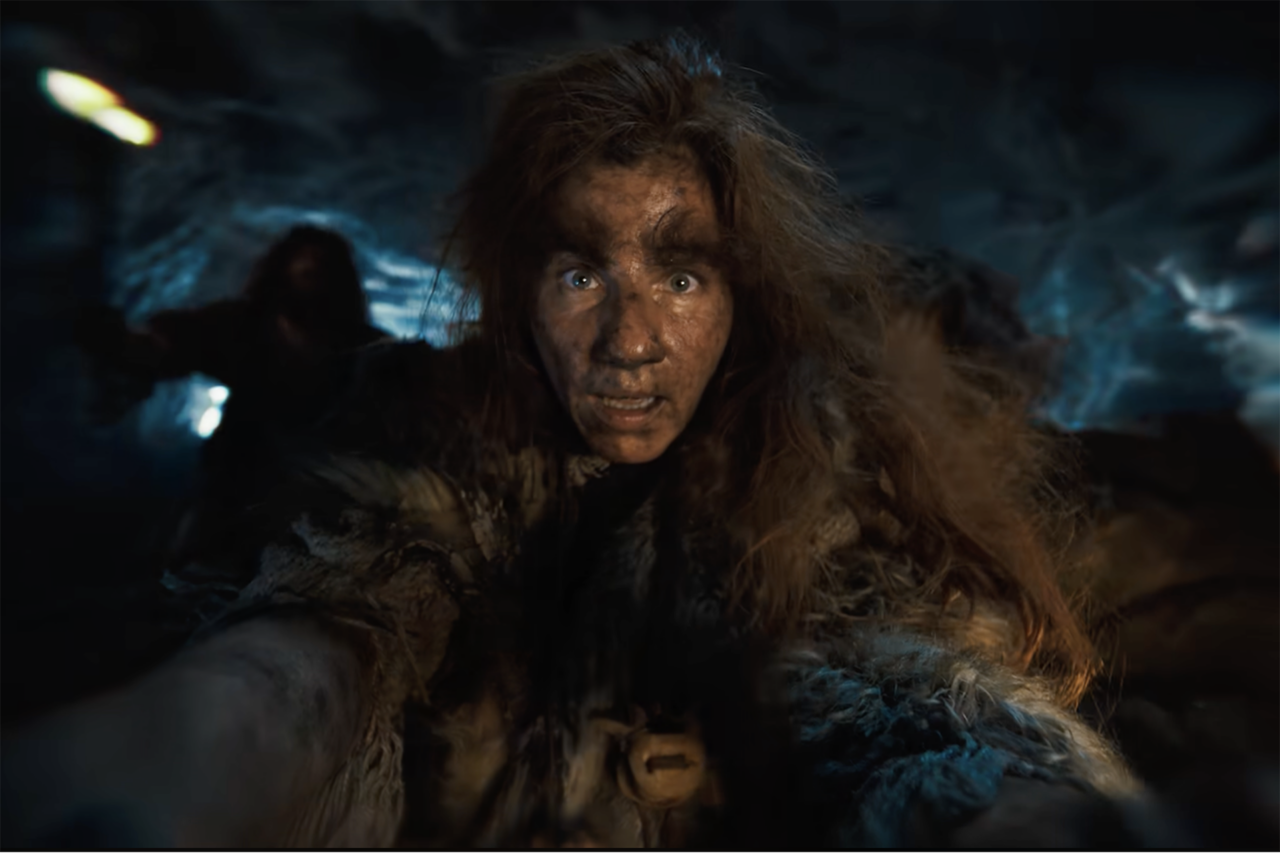
Gizmodo's specific complaint is a five-second stretch, 0:35 to 0:40, in which a woman sprints toward a camera that backs away from her and stays perfectly or almost perfectly in focus, with motion blur showing up only at the edges of the frame [8]. That is hard to buy on a real set: deep focus with real lenses wants a lot of light, and gets harder the moment the camera starts moving [9]. Five seconds out of ninety is 5.6 percent of the runtime [14], and it appears to be doing the work of judging the other 94 percent.
Viewers actually watch a trailer once, at whatever bitrate the storefront hands them, and file it as filmed or synthetic within the first few seconds, which is why Gizmodo also flags what Steam and YouTube compression does to an image before anyone sees it [10]. Marketing teams tell themselves viewers do something different: read the description, then the follow-up post, then the behind-the-scenes gallery, and revise that first impression. That revision rarely travels as far as the original accusation.
Amplitude's answer so far is a materials list and an address, real actors and practical sets at Nu Boyana in Sofia [4][5]. Per Gizmodo, the studio has stopped short of saying that no generative AI was involved anywhere in the trailer [11], and that gap is where the argument keeps living. A flat denial would face the same limit, since a viewer has no way to check one.
The grid worth drawing has two axes: whether you used generative video, and whether the finished cut reads as AI to a stranger on a phone. Three of the four cells are manageable. Used it and it reads that way: say so in the copy. Did not use it and it reads photographed: nothing to do. Used it and it reads photographed: you have a disclosure problem rather than a perception one. The fourth cell, no generative AI and it still reads synthetic, is the one Amplitude is sitting in [12], and it is the only cell where the fix is evidence rather than craft.
The test costs a morning. Cut a compressed version, give it to five people who were not on the project, and ask them what made it. If two say AI, there are two paths and both cost something. Change the image so it reads as photographed, which means grain and a focus puller who misses, and accepting a worse picture by every objective measure [15]. Or publish the proof in the same hour as the trailer instead of promising it soon [6], which means a stills photographer on the shoot day and clearances arranged before the premiere rather than after the pile-on.
Whoever signs off the cut owns that choice, and the cheap version of owning it is the stills budget. The damage itself is harder to price from outside the studio: the Gizmodo account records the chorus, not wishlist adds or watch-through, and Amplitude holds those numbers alone [17].
Ranked by verification strength, evidence, and original report placement.
Humankind 2 is Amplitude Studios' upcoming sequel to Humankind, their 2021 4X Civilization-alike.
The 90-second Humankind 2 trailer premiered during the opening night of Gamescom and was greeted with an immediate online chorus decrying it as AI slop.
Amplitude says the trailer was "live-action", insofar as it featured "real actors, practical sets, and custom-made props created specifically for the production."
The studio said the footage was shot at Nu Boyana Film Studios in Sofia, Bulgaria.
Amplitude said it will "be sharing behind-the-scenes images from the shoot soon."
Gizmodo writes that a lot of the video is still computer-generated, since Nu Boyana is unlikely to hold a storm-lashed ocean or a spare Tenochtitlan, and notes that entire films were shot in front of green screens long before generative AI.
Distinct publishers with included, body-backed reporting in this cluster.
1 article · August 27, 2026
Evidence-backed comparisons of source perspectives and observed adoption signals. Read the methodology
Which Builder, Operator, and Investor concerns the observed source mix emphasized—not a truth score.
Evidence, demonstrated adoption, hype gap, incentives, and confidence are assessed independently, each on its own current evidence. How these are measured.
One outlet's frame reading against an unverified studio statement
The observable facts are firm: a 90-second trailer premiered, a backlash occurred, and the studio issued a production statement naming actors, sets, props and Nu Boyana. Everything load-bearing beyond that is either self-reported by the party under scrutiny or inferred by a single publisher from pausing the video, and the promised behind-the-scenes images had not been published.
No uptake data published
The cluster records a trailer release and a production disclosure but no wishlist, viewership, watch-through or sales figures, and no measure of how widely the accusation spread. Any adoption number would be invention.
Both the accusation and the rebuttal outrun the evidence
The 'AI slop' verdict was reached within hours on the strength of an uncanny look, while the studio's answer was a location credit rather than proof; the source itself concedes generative AI involvement cannot be excluded. Claims on both sides are therefore overstated relative to what has been shown, and the sweeping generalisation about wrongful accusation across written and visual media rests on assertion rather than data.
Studio defending a pre-launch asset; outlet covering an AI controversy
Amplitude's statement is issued by the party whose unreleased sequel is at stake, giving it a direct commercial interest in the live-action framing and in the timing of behind-the-scenes proof. The single publisher writing the story is a technology outlet whose framing is explicitly sympathetic to accused creators, and the only counterweight - independent verification - is absent from the cluster.
Single publisher, unresolved central question
Basic facts about the premiere, the statement and the disputed shot are reliable, but the cluster has one source, no corroboration of the shoot, no promised behind-the-scenes material and no adoption data, so confidence in any verdict on AI use or commercial impact stays low.