Invest1 distinct publisher3 min readPublished
Treasury is doubling its purchases of long-term debt while the Fed plans to shrink its own book, and the former Kansas City Fed president told Semafor that nobody at Jackson Hole mentioned that for a reason.
The Investor · Invest desk

Compiled by The InvestorSomething wrong?How this is made
The collision is an accounting question before it is a political one. Buying back long-term debt takes long-dated paper out of private hands; letting a central bank portfolio run off puts Fed-held paper back into them; the two operations act on the same quantity with opposite signs, so what matters is the difference [18]. That difference has no published value, because the only figure attached to the Treasury side is a multiplier: Secretary Scott Bessent said earlier this month that Treasury would double its purchases of government bonds [4], and doubling adds an increment equal to the whole prior program without telling you what the prior program was [17].
The sentence worth keeping from Tom Hoenig's interview is about audience. If Fed Chair Kevin Warsh supports a hike next month, Hoenig said, he will need a lot of explanations beforehand, and he specified that he did not mean explanations to the market, he meant to the Treasury [8]. A central bank that pre-briefs its fiscal counterparty before tightening has conceded something about sequence even if it keeps the decision. Silence is the cheaper defence of the same independence: never naming the buyback program means never having to say whether it is pulling against your own runoff plan [1][6], which is Hoenig's reading, that the point is not to be identified with Treasury at all [2].
That reading gets shakier from a few angles. Hoenig is one former official at Mercatus with no vote [1], and Fed reticence about debt management is an old convention rather than a strategy. If the data does not move, Hoenig's own account of Warsh has him standing still [9], in which case nothing collides, although Hoenig thinks a hold needs explaining too because the market has already priced a move up [10]. And the communication story runs both ways: Hoenig calls the forward guidance Warsh has spurned a subsidy to markets and is glad to see it withdrawn [13], which pairs oddly with heavy private pre-explanation to Treasury [8].
This is probably wrong, but the more interesting version of the independence question is not really the rate decision at all. It is what the Fed is not doing while it stays quiet. Hoenig's stated preference is that the central bank talk to Treasury and congressional leadership about the deficit and the debt, and say plainly that its own job gets harder otherwise [15]. He does not know whether that conversation is happening [14]. He also thinks Bessent has no fiscal consolidation options beyond persuading Congress [16], which puts the entire adjustment burden back on the one body Hoenig wants Warsh to lobby before a crisis arrives [11].
What would prove the collision thesis wrong is a size comparison nobody has yet been able to make: if monthly runoff redemptions plainly exceed the buyback pace, Treasury is pushing against a bigger force and the clash is rhetoric. Semafor reports that some metrics show the buybacks are having an impact [5] without saying which metrics, and yields on particular issues are not the same object as the price of duration across the curve. Meanwhile the political pressure the whole story sits inside continues [3], including the effort to remove Governor Lisa Cook, which Hoenig expects to fail [12]. So far the only published number in the whole file is the multiplier of two that Bessent cited.
Ranked by verification strength, evidence, and original report placement.
Semafor reports that the buyback move risks clashing with Fed Chair Kevin Warsh's own plans to shrink the Fed's balance sheet, and with any Fed decision to tighten monetary policy.
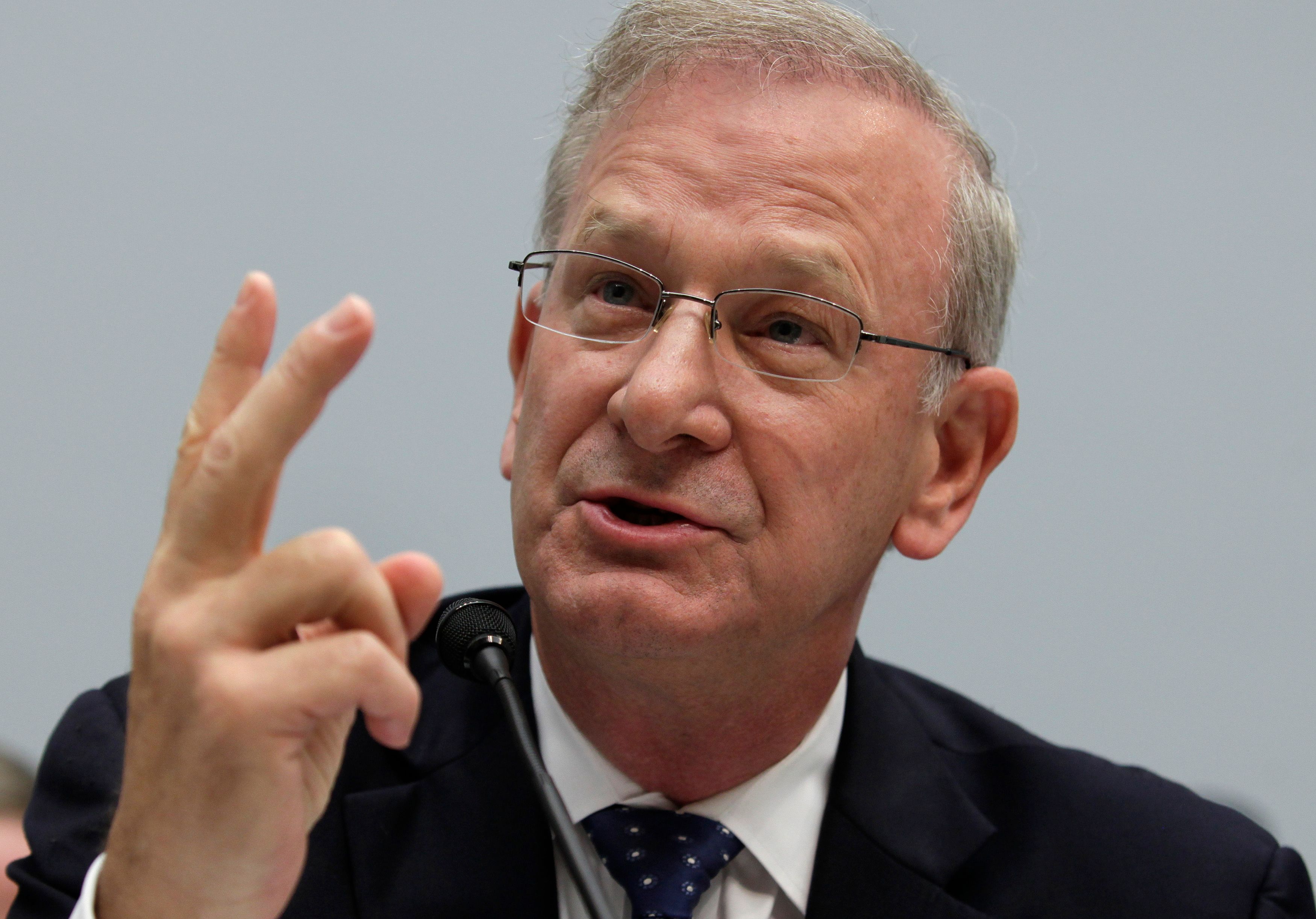
Former Kansas City Fed President Tom Hoenig, now with the Mercatus Center, told Semafor on the sidelines of the Kansas City Fed's Jackson Hole symposium that the Federal Reserve has so far "been a little too quiet" about the Treasury Department's campaign to bring down yields by buying back more long-term debt.
Hoenig said of the Fed's non-mention of Treasury: "What they're trying to do is not identify with Treasury, and so they're not going to mention it."
Semafor reports that coordination between monetary and fiscal policymakers could heighten concerns over Fed independence as the Trump administration continues trying to exert control.
Treasury Secretary Scott Bessent, who did not attend the Kansas City Fed symposium, said earlier this month that the Treasury would double its purchases of government bonds.
Hoenig said Warsh has "got a very difficult needle to thread" on whether to support an interest-rate hike at next month's meeting.
Distinct publishers with included, body-backed reporting in this cluster.
1 article · August 29, 2026
Follow any of these and your For You feed starts watching them — no settings page required.
invest
Bessent said the toolkit is big. Yields went up anyway.1 distinct publisher
invest
Fed disunity, not the Fed's path, is the risk in duration before Warsh speaks1 distinct publisher
invest
Two interventions, two round trips: the long end now sets the discount rate1 distinct publisher
invest
Treasury is managing $40 trillion by routing around its own bond market1 distinct publisher
Evidence-backed comparisons of source perspectives and observed adoption signals. Read the methodology
Which Builder, Operator, and Investor concerns the observed source mix emphasized—not a truth score.
Evidence, demonstrated adoption, hype gap, incentives, and confidence are assessed independently, each on its own current evidence. How these are measured.
One interview, published nearly whole
Semafor's decision to run the transcript is what carries this: Hoenig's words are quoted at length and are effectively undisputable as testimony. Everything surrounding them is thinner. Bessent's doubling arrives second-hand with no figure, the impact rests on "metrics" that are never named, and neither the Fed nor Treasury is given a line. Strong on what one former official said, weak on what the two institutions have actually done.
Nothing sized, nothing to count
The only thing in this story that has actually happened in a market is Treasury buying back more long-dated paper, and Semafor reports it without a size, a prior run rate, or a named indicator. Doubling a number nobody discloses remains a multiplier, so there is no footprint to measure here — not a small one, an unstated one.
Slightly ahead of what it shows
The lean is mild and it sits in the framing rather than the quotes. Casting the Fed's non-mention of Treasury as deliberate distancing is one former official's inference about other people's motives, offered as the explanation; and a piece premised on the Fed shrinking its book contains, unremarked, Hoenig's observation that the balance sheet is increasing. Against that, the reporting is notably unbreathless — he hedges the rate call in both directions and says outright he does not know whether the conversations he wants are happening.
Friendly critic, disclosed on the page
Hoenig is insider-adjacent and openly so: he ran the Kansas City Fed, he once hosted this very symposium, he now speaks from the Mercatus Center, and he is "very, very happy" with the chair whose judgement he is grading. That is a sympathetic critic reading the institution he came from. Semafor's own stake is the exclusive — a corridor interview from a conference the Treasury secretary skipped, which raises the value of getting somebody, anybody, to characterise Treasury's thinking. Both pressures are visible rather than hidden, which is the better case.
Firm on the quotes, softer past them
We are confident about what was said and much less confident about how far it reaches. The transcript pins Hoenig's positions precisely; nothing in our coverage settles whether the Fed's silence is strategy rather than convention, or whether buybacks and runoff are yet offsetting each other in amounts that matter. A second outlet, or a line from Treasury, would move this materially.